ASFROM Shoe Sole Pressing Machine FAQ
ASFROM Shoe Sole Pressing Machine FAQ
Shoe Sole Pressing Machine Base Q&A
一.Product Application FAQs
Q1: What is the AL-706 and what production process is it used for?
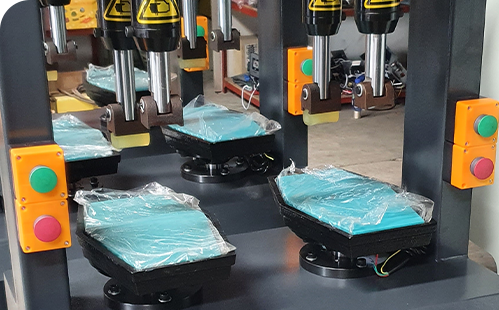
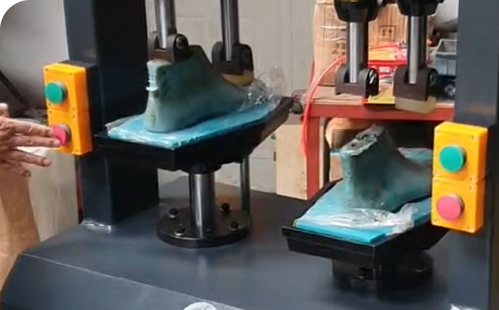
A1: The AL-706 is a gantry-type fully hydraulic pressing machine designed for footwear manufacturing. It is dedicated to the pressing process after glue application on rubber, EVA and other types of outsoles, to ensure firm and even bonding between sole components or between outsole and upper. It is widely deployed at the sole pressing station of shoe production lines, and fits continuous mass production of various footwear styles.
二. Core Features & Advantages FAQs
Q2:What are the advantages of its full hydraulic drive system?
A2: The machine adopts an integrated fully hydraulic drive architecture with an intelligent closed-loop hydraulic control system. It automatically calibrates the horizontality of the working platform in real time, which accurately avoids pressing deviation caused by platform tilt and ensures stable and consistent pressing quality across batches.
Q3: How does the lever balancing mechanism work?
A3:It is equipped with an innovative lever-type dynamic balancing system, which realizes adaptive height adjustment of the upper and lower working platforms. Molds of different heights can be switched quickly without manual calibration. The pressing plate is fitted with a pressure sensing feedback device, which ensures uniform force on the workpiece during the whole pressing cycle and achieves stable three-dimensional pressing.
Q4: How flexible is the pressing control?
A4:It is equipped with a programmable timer, which supports flexible setting of pressing duration. For different shoe sole structures, preset process parameters can be recalled quickly via the control panel, easily meeting diversified production requirements.
Q5: What about automation and safety performance?
A5:The machine integrates a hydraulic power unit and a PLC intelligent control system to form a closed-loop automated workflow, realizing unmanned operation of the whole process including pressure loading, pressure holding and pressure releasing. It is also fitted with dual pressure overload protection devices and an emergency power-off system to guarantee operational safety. The pressure output is flexibly adjustable, and with the segmented pressing mode, it adapts efficiently to compression molding processes of various sole materials such as TPU, EVA and rubber.
三. Technical Specifications FAQs
Q6: What are the complete technical parameters of the AL-706?
A6:
| Item | Specification |
|---|---|
| Modelo | AL-706 Gantry Hydraulic Pressing Machine |
| Power supply | 380V / 50Hz / 3-Phases |
| Potencia | 1.5kW |
| Oil pump pressure range | 0 – 70 kg/cm² |
| Rated current | 4.2A |
| Overall dimensions (L×W×H) | 880 × 630 × 1710 mm |
| Net weight | 425 kg |
| Control mode | PLC control + timer adjustment |
四.Installation & Site Requirements FAQs
Q7: What are the requirements for the installation environment and placement?
A7:Place the machine on a level surface in a well-ventilated and dry area. Adjust the leveling feet under the base to keep the machine horizontally balanced if needed. Do not place the machine in direct sunlight or in an environment with excessively high temperature, to avoid performance degradation of hydraulic oil and sealing parts.
Q8: What are the electrical requirements?
A8:A reliable protective earth connection is mandatory to ensure equipment precision and service life. The grounding position refers to the diagram inside the control cabinet. A voltage stabilizer is recommended if the machine is used in an area with unstable voltage. The thermal relay on the contactor shall have a specification matching the load, and shall be arranged separately from other electrical components.
Q9: What are the requirements for hydraulic oil?
A9:Use brand-new qualified anti-wear hydraulic oil for a new machine, which provides better protection for performance and components. Never use second-hand or counterfeit hydraulic oil, otherwise it will cause equipment damage and such damage is not covered by the warranty.
五.Operation Procedure FAQs
Q10:What is the standard start-up and operation flow?
A10:
- Start the oil pump motor and confirm it runs in the correct direction.
- Adjust the pressing time via the timer according to the shoe type and glue condition.
- Place the glued outsole (or shoe assembly) on the working tray.
- Adjust the position of the pressing plate properly for large size difference of workpieces.
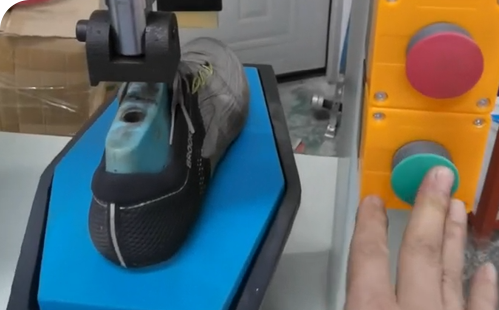
- Activate the hydraulic platform switch to lift the tray and start the pressing cycle.
- The pressing is completed when the pressing plate makes full contact with the workpiece.
- Press the emergency stop button immediately to reset the machine in case of any misoperation or abnormality.
Q11: What is the shutdown procedure?
A11: Stop the oil pump motor first, then cut off the main power supply. Clean the working area and equipment surfaces after operation.
Q12: What precautions shall be noted during operation?
A12:
- The left and right pressing mechanisms work independently, so operations shall be performed separately to avoid misoperation.
- Pressing time shall be adjusted according to actual bonding effect, on the premise that the adhesive quality is qualified.
- Do not put hands or tools into the working area during machine operation.
- Extend pressing time appropriately when stronger bonding is required.
六.Troubleshooting FAQs
Q13: What to do if the motor cannot start?
A13:
- Check for broken power circuit or phase loss, and repair the wiring.
- Check if the power switch is damaged, and replace with a new one if necessary.
- Check if the motor coil is burned out, and replace with a new one if necessary.
- Check if the fuse is burned or tripped; test for short circuit with a multimeter first, then replace the fuse or reset it.
Q14: What to do if the machine has no pressing action?
A14:
- Check whether the oil pump works normally, and repair or replace it if faulty.
- Check whether the solenoid valve is damaged, and repair or replace it if necessary.
- Check if the hydraulic oil supply is insufficient, and refill hydraulic oil to the standard level.
- Check whether each operation switch works properly, and adjust, repair or replace accordingly.
Q15: What causes unstable pressure and how to fix it?
A15:
- Malfunction of the pressure regulating valve: disassemble, inspect and reassemble the valve.
- Damaged pressure gauge: calibrate, repair or replace the gauge.
- Air mixed into the hydraulic pipeline: bleed air from the hydraulic circuit.
Q16: What causes poor pressing effect and how to solve it?
A16:Check if the sliding seats of the pressing arms are blocked by foreign objects. Clean the debris inside the sliding seats to ensure smooth movement of the mechanism.
七.Preventive Maintenance FAQs
Q17:What daily maintenance work is required?
A17:
- Keep the pressing plates clean; wipe the interior side of the plates with solvent.
- Clean the front and rear sides inside the working trays.
- Remove debris from the moving parts at the base, apply grease and check for loose screws.
- Clean dust around the machine and on the floor.
- Inspect for oil leakage inside the machine, and tighten oil fittings if leakage is found.
- Test the emergency stop function before each shift.
Q18:What monthly maintenance work is required?
A18:
- Perform all daily maintenance items.
- Lubricate the guide rods at the base and the sliding seats of the pressing arms with grease.
- Check the hydraulic oil quality by hand; check if there is sediment at the bottom of the oil tank, and replace the oil if it has deteriorated.
Q19:What quarterly maintenance work is required?
A19:
- Perform all daily and monthly maintenance items.
- Clean the oil filter screen: rinse with diesel and blow dry with compressed air.
- Comprehensively inspect the sealing and wearing parts of the hydraulic system.
Q20:What are the requirements for long-term storage?
A20:
- Place the machine steadily in a ventilated and dry place.
- Apply rust preventive oil on the machine body to prevent rust and oxidation.
- Touch up paint on peeled areas before cleaning to prevent oxidation.
- Cover the machine surface with plastic film or cloth, preferably sealed, to keep out dust.
八. Delivered Accessories & After-sales Service FAQs
Q21:What items are delivered with the machine?
A21:
- Technical documents: English operation manual, circuit diagram, hydraulic schematic diagram and spare parts list.
- Standard accessories: a full set of standard tools for daily adjustment and maintenance.
Q22:What is the warranty policy?
A22:The machine provides a 12-month warranty for non-consumable parts. Consumable and wearing parts such as sealing rings, oil filters and pressing pads are excluded from warranty. Damage caused by improper operation, use of unqualified hydraulic oil or unauthorized disassembly is not covered.
Q23:What after-sales support is provided?
A23:
- Remote video troubleshooting and technical guidance service.
- On-site installation, commissioning and operator training available upon request.
- Lifelong supply of spare parts at factory cost.
- Process technical support to help optimize pressing parameters for different shoe materials.