ASFROM Sole Bonding Machine FAQ
ASFROM Sole Bonding Machine FAQ
Sole Bonding Machine Base Q&A
一.Product Application FAQs
Q1: What is the AF-299 and what production process is it used for?
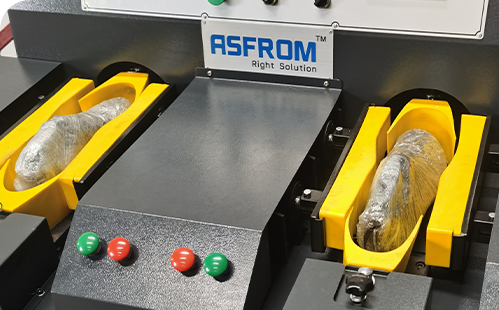
A1: The AF-299 is a double-station hydraulic cross edge covering machine specially designed for outsole edge pressing and bonding in footwear manufacturing. It adopts a cross-type pressing structure to apply pressure to the front, back, inner and outer sides of the sole edge at the same time, achieving full-coverage edge lamination and upgrading the overall bonding effect. It is deployed at the outsole edge-bonding station of shoe production lines, and is suitable for mass production of various footwear types.
二. Core Features & Advantages FAQs
Q2:What is special about its pressing structure?
A2: It adopts an innovative cross-type pressing design with double working stations. It completes pressing in four directions (front, back, inner side, outer side) in one single cycle, ensuring full and even fitting of the sole edge. This all-in-one structure simplifies the production flow, improves bonding stability, and replaces traditional multi-step cross edge pressing processes.
Q3: What efficiency improvement does the double-station design bring?
A3:Compared with traditional single-station edge pressing equipment, the double-station layout allows alternating operation between the two stations. While one station is pressing, the other can be loaded or unloaded, which significantly improves production efficiency and achieves both higher output and more stable quality.
Q4: How flexible is the pressure regulation?
A4:The pressure of each pressing zone can be adjusted independently, with a wide range from 5 to 38 kg/cm². This stepless pressure regulation meets diverse process requirements for different shoe materials, sole structures and bonding strength demands, with strong adaptability.
Q5: What control system is the machine equipped with?
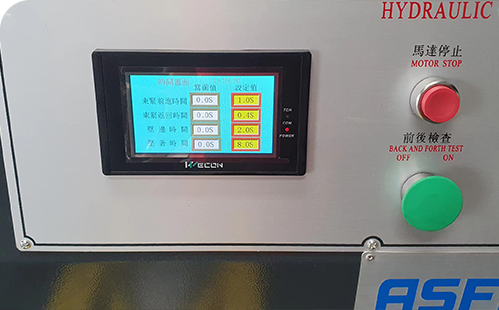
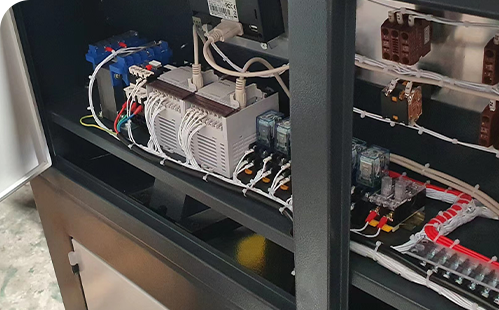
A5:The whole machine is controlled by a PLC program system, which ensures accurate and reliable operation, improves process consistency among batches, and enhances operational safety. It reduces manual errors and stabilizes product quality in long-term mass production.
Q6: What are the advantages in terms of footprint and operating cost?
A6:The machine features a compact body design, which saves workshop floor space and fits production lines with tight layouts. It has low energy consumption, easy operation and fast mold change, which effectively reduces comprehensive production costs for factories.
三. Technical Specifications FAQs
Q7: What are the complete technical parameters of the AF-299?
A7:
| Item | Specification |
|---|---|
| แบบ | AF-299 Double Station Hydraulic Cross Edge Covering Machine |
| Power supply | 380V / 50Hz / 3-Phases |
| พลังงาน | 0.8kW |
| Rated current | 2.1A |
| Recommended hydraulic oil | R68# anti-wear hydraulic oil |
| Pressure range | 5 – 38 kg/cm², independently adjustable per zone |
| Overall dimensions (L×W×H) | 660 × 760 × 1200 mm |
| Net weight | 370 kg |
| Control mode | PLC program control |
四.Installation & Site Requirements FAQs
Q8: What preparation is needed before installation?
A8:
- Power supply: Prepare a stable 380V/50Hz three-phase power circuit with reliable protective grounding.
- Hydraulic oil: Fill the tank with sufficient R68# anti-wear hydraulic oil before commissioning, and check the oil level gauge.
- Space: Reserve operating clearance in front of the machine for loading and unloading, and keep maintenance space on both sides.
- Environment: Place the machine in a dry, well-ventilated workshop, away from heavy dust and high humidity to protect hydraulic and electrical components.
- Floor: Install on a flat, solid level floor to ensure stable operation.
五.Operation Instructions FAQs
Q9:What is the standard operation flow from startup to shutdown?
A9:
- Pre-start inspection: Open the protective cover, add enough R68# hydraulic oil to the oil tank and confirm the oil level is within the standard range. Check that there is no foreign object in the working area.
- Power connection: Connect the power supply and test run the motor to confirm the rotation direction is correct.
- Pressure adjustment: Start the oil pump and adjust the system pressure to the value required by the production process.
- Parameter setting: Activate each function module on the control panel, and adjust the pressing time parameters.
- Formal production: Place the sole workpiece into the station and start the pressing cycle. Pay close attention to equipment operation during work; stop immediately and troubleshoot if any abnormality occurs.
- Shutdown: After work, clean up debris and glue residue on the machine, then stop the oil pump and cut off the main power supply.
Q10:What safety precautions must be observed during operation?
A10:
- Do not put hands or tools into the pressing area when the machine is running.
- Stop the machine immediately for inspection if abnormal noise, oil leakage or action failure is found.
- The equipment must be reliably grounded to avoid electric shock risk.
- Do not exceed the maximum pressure of 38 kg/cm² to avoid equipment damage.
六.Troubleshooting FAQs
Q11: What are the common faults and corresponding solutions?
A11:
- Insufficient pressing pressure: Check the hydraulic oil level; inspect the oil pump for wear or failure; readjust the pressure regulating valve.
- Abnormal or no action: Check PLC signal output; inspect solenoid valves for blockage or coil damage; check limit switches.
- Motor does not start: Check power supply connection; check fuse condition; verify motor wiring.
- Hydraulic oil leakage: Check sealing rings for aging; tighten loose pipe joints; replace damaged oil pipes.
- Large pressure fluctuation: Check for air mixed in the hydraulic system; replenish hydraulic oil and exhaust air; inspect the pressure gauge for calibration deviation.
七.Preventive Maintenance FAQs
Q12: What maintenance work should be carried out on a regular basis?
A12:
- Daily: Clean the machine surface and working area; check hydraulic oil level and system pressure; test the emergency stop function.
- Weekly: Tighten loose mechanical fasteners; inspect all hydraulic pipe joints for leakage; clean dust from the electric cabinet heat vents.
- Monthly: Check the cleanliness of hydraulic oil; inspect sealing parts for aging; calibrate the pressure gauge; verify the accuracy of PLC action parameters.
- Periodically: Replace hydraulic oil according to oil condition; replace severely worn seals and wearing parts in time.
八. Delivered Accessories & After-sales Service FAQs
Q13: What items are delivered with the machine?
A13:
- Technical documents: English operation manual, circuit diagram, hydraulic schematic diagram and spare parts list.
- Standard accessories: A full set of standard tools for daily adjustment and maintenance.
Q14: What is the warranty policy and after-sales support?
A14:
- Warranty: 12-month warranty for non-consumable parts of the whole machine. Consumable and wearing parts such as sealing rings, rubber pressing blocks and oil filters are excluded from warranty. Damage caused by improper operation or unauthorized disassembly is not covered.
- บริการหลังการขาย: Remote video troubleshooting and guidance; on-site installation, commissioning and operator training available upon request; lifelong supply of spare parts at factory cost; technical support for process optimization.