ASFROM Kneader Mixer Knowledge Base Q&A
ASFROM Kneader Mixer Knowledge Base Q&A
Kneader Mixer Knowledge Base Q&A
1. ข้อมูลพื้นฐานของผลิตภัณฑ์
Q1: What is the ASFROM Kneader Mixer?
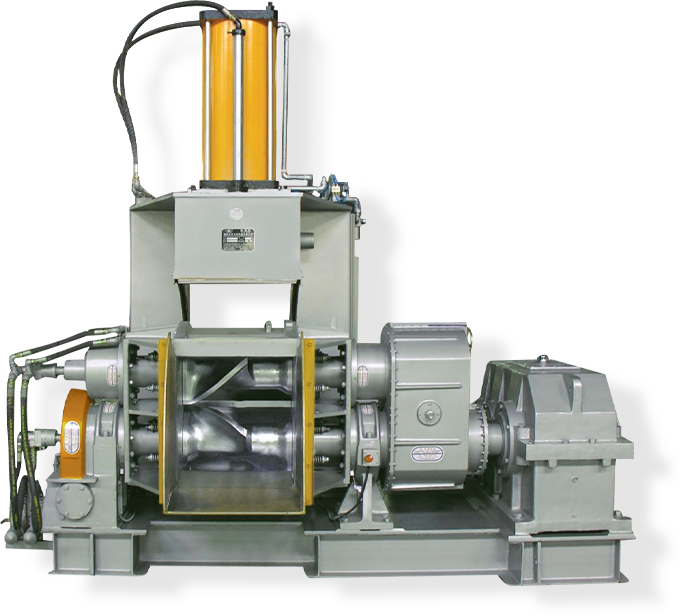
A1: The ASFROM Kneader Mixer is an enclosed mixing machine for high-viscosity materials. It adopts a closed chamber and high-shear rotors to realize mixing, plasticization and blending of materials. The fully enclosed structure delivers high mixing efficiency and powerful shearing performance, widely applied for processing high-viscosity materials including rubber, EVA, PVC and chemical color masterbatch.
Q2: What standard models does the ASFROM Kneader Mixer have? What are their corresponding mixing volumes?
A2: There are 6 standard models in the whole product line with mixing volumes as below: 1. K-35L:35L 2. K-55L:55L 3. K-75L:75L 4. K-95L:95L 5. K-110L:110L 6. K-150L:150L
Q3: What parameters are covered in the full technical specification of ASFROM Kneader Mixer?
A3: The specifications cover seven core items: mixing volume, main motor power, tilting motor power, temperature control system, feeding mode, total machine weight and overall dimension. All models are equipped with standard steam & water cooling temperature control system, supporting rear feeding or front & rear dual feeding modes. 1. Main Motor Specifications: K-35L(55kw/6p), K-55L(75kw/6p), K-75L(110kw/6p), K-95L(132kw/6p), K-110L(160kw/6p), K-150L(220kw/6p) 2. Tilting Motor Specifications: K-35L/K-55L(2.2kw/4p), K-75L(3.7kw/4p), K-95L/K-110L(5.5kw/4p), K-150L(7.5kw/4p) 3. Total Machine Weight: 6500kg~24000kg; Overall Dimensions Range: 3050*2400*2900mm ~ 4350*3000*4000mm


2. อุตสาหกรรมและวัสดุที่เหมาะสำหรับการใช้งาน
Q4: What raw materials can be processed by ASFROM Kneader Mixer?
A4: It is applicable to various high-viscosity materials: EVA, PVC, PE foaming materials, all kinds of rubber raw materials, color masterbatch, printing ink, electrical rubber fittings and chemical blending materials.
Q5: What finished products are mainly manufactured with ASFROM Kneader Mixer?
A5: Its finished products cover the whole rubber and plastic industrial chain: EVA/PVC/PE foaming shoe soles, rubber soles, rubber rollers, rubber sponge, tire tread compound, sports balls, rubber sealing rings, rubber tubes, rubber belts, shock-absorbing rubber, color masterbatch pellets, printing ink, electrical rubber parts, automotive rubber components and various chemical mixed materials.
Q3: What parameters are covered in the full technical specification of ASFROM Kneader Mixer?
A3: The specifications cover seven core items: mixing volume, main motor power, tilting motor power, temperature control system, feeding mode, total machine weight and overall dimension. All models are equipped with standard steam & water cooling temperature control system, supporting rear feeding or front & rear dual feeding modes. 1. Main Motor Specifications: K-35L(55kw/6p), K-55L(75kw/6p), K-75L(110kw/6p), K-95L(132kw/6p), K-110L(160kw/6p), K-150L(220kw/6p) 2. Tilting Motor Specifications: K-35L/K-55L(2.2kw/4p), K-75L(3.7kw/4p), K-95L/K-110L(5.5kw/4p), K-150L(7.5kw/4p) 3. Total Machine Weight: 6500kg~24000kg; Overall Dimensions Range: 3050*2400*2900mm ~ 4350*3000*4000mm
3. ความรู้พิเศษเกี่ยวกับรูปแบบการให้อาหาร (บทใหม่ที่ขยายเพิ่มเติม)
Q6: How many standard feeding modes are available for ASFROM pressurized kneader mixers? Which models support them?
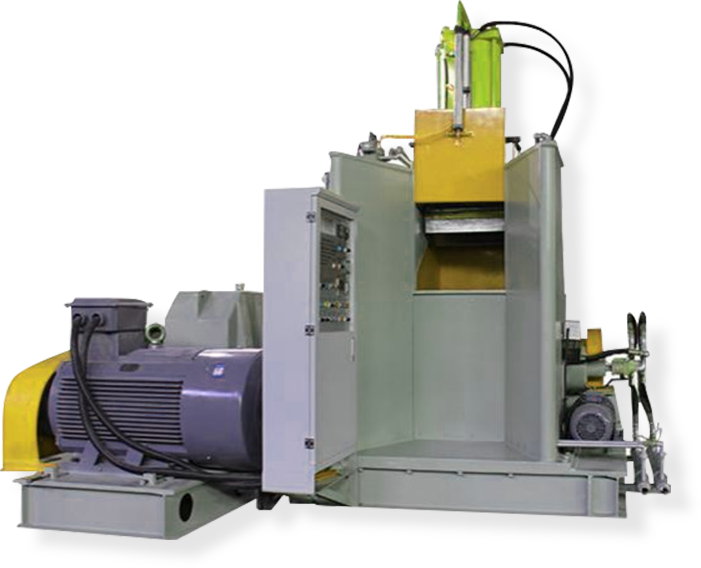
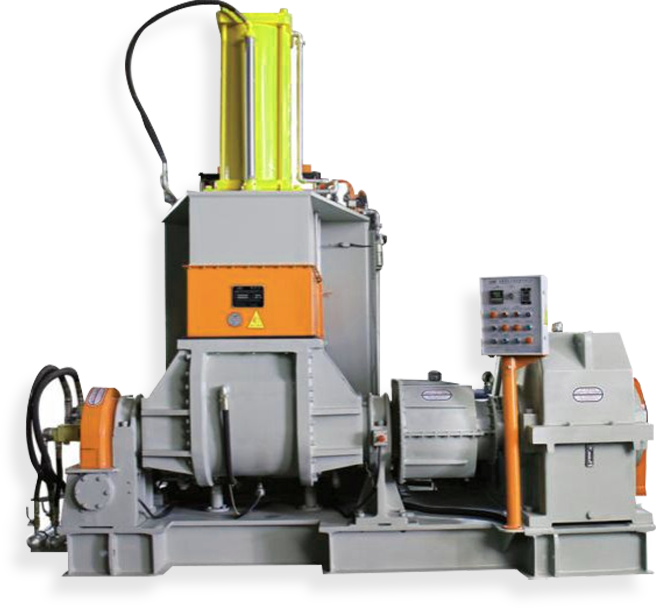
A6: All ASFROM kneader mixers of 35L and above provide two mainstream feeding solutions: Back Charging and Front & Back Dual Charging. Customers can select the proper type according to production line conditions, dust characteristics of materials and cleaning requirements.
Q7: What is a Back Charging kneader mixer? What are its advantages and disadvantages?
A7: Back Charging means the feeding port is set at the rear of the machine, and materials are fed into the mixing chamber from the back side. Advantages: The machine has excellent overall tightness without dust overflow during feeding, achieving outstanding dust suppression effect. It is suitable for producing dusty materials such as high-filler powder, carbon black, color powder and lightweight foaming powder, keeping the workshop clean. Disadvantages: There is no feeding port on the front side, so daily cleaning of mixing chamber and manual sampling are less convenient than front & back dual charging models.
Q8: What is a Front & Back Dual Charging kneader mixer? What are its advantages and disadvantages?
A8: The machine is equipped with both front and rear feeding channels, enabling flexible switching between two feeding modes. Advantages: The front feeding area has spacious operating space for manual cleaning of mixing chamber, rotor maintenance and sampling inspection. It combines dust-proof rear feeding and convenient front-side maintenance, ideal for production lines with frequent color and formula changes of multiple materials. Disadvantages: The front door design has more sealing surfaces, leading to slightly weaker dust control performance than pure back charging models. Supporting dust removal equipment is required for high-dust working conditions.
Q9: How to choose between the two feeding modes?
A9: Selection reference based on production material features: 1. Formulas with heavy dust such as carbon black, color masterbatch and calcium carbonate filler, or workshops with strict dust control requirements → Prioritize Back Charging. 2. Frequent color masterbatch replacement, shoe sole rubber, EVA foaming, frequent chamber cleaning and heavy manual operation → Prioritize Front & Back Dual Charging.
Q10: What is the complete standard operation process of ASFROM Kneader Mixer?
A10: A unified 6-step standard operating procedure applies to both feeding types: 1. Before Feeding: Ram lifted, mixing chamber emptied, machine on standby; 2. Feeding: Feed main materials and additives through front or rear port; 3. Mixing: Pneumatic ram descends to apply pressure, twin rotors perform differential shear mixing; 4. Secondary/Tertiary Feeding: Add auxiliary ingredients in batches for continuous mixing and dispersion; 5. Discharging: The entire mixing chamber tilts forward by 140° to automatically discharge finished rubber compound; 6. Reset: Mixing chamber returns upright, ram lifts up, ready for the next production cycle.
4. โครงสร้างและส่วนประกอบของเครื่อง
Q11: What are the 9 core components of the complete ASFROM Kneader Mixer?
A11: 9 modular core components in total: 1. Milling Chamber; 2. Thermal Resistor; 3. Agitator Shaft; 4. Heating & Cooling System; 5. Tilting Device; 6. Dust-Proof Sealing Assembly; 7. Main Transmission System; 8. Pneumatic Control System; 9. Electrical Control System & Motor
Q12: What are the structure and advantages of ASFROM Kneader Mixer milling chamber?
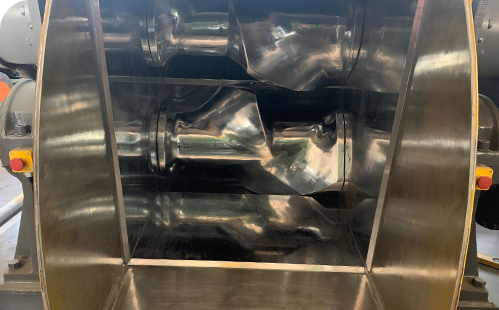
A12: It adopts wear-resistant alloy steel for M-type mixing tank and side clamping plates. The jacketed structure supports heating and cooling, with hard chrome plating on inner cavity. It features excellent wear and corrosion resistance with uniform heat exchange, suitable for both high-temperature and low-temperature mixing processes.
Q13: What processing advantages does the agitator shaft (rotor) of ASFROM Kneader Mixer have?
A13: The rotor is precision-machined from locomotive axle steel with long rib design. Cooling water channels are set inside the rotor core for temperature control. Rib peaks and end faces are overlaid with wear-resistant hard alloy, then polished and hard chrome plated. It delivers stable transmission, superior cooling performance and long service life. Twin rotors run in differential reverse rotation to strengthen material shearing effect.
Q14: What is the working principle of the heating & cooling system of ASFROM Kneader Mixer?
A14: Integrated pipeline system supports cold water, steam or thermal oil as heat transfer medium. Three independent pipelines connect rotor ribs, mixing chamber and top ram separately to realize uniform circulating heating or cooling, matched with an automatic temperature control system for precise temperature regulation.
Q15: What is the function of the tilting device of ASFROM Kneader Mixer?
A15: Composed of brake motor, cycloidal reducer and enveloping worm gear, it drives the mixing chamber to tilt forward by 140° for automatic discharging, simplifying material output and reducing manual labor intensity.
Q16: How does the dust-proof sealing assembly prevent dust leakage of ASFROM Kneader Mixer?
A16: Labyrinth sealing with curved grooves is adopted at the joint between mixing chamber and frame. Alloy steel bushings and spring-loaded non-lubricated seals are installed on rotor ends to achieve reliable dust prevention and high wear resistance. Back-charging models are further optimized at feeding port sealing to enhance dust suppression capacity.
Q17: What are the configuration features of the main transmission system of ASFROM Kneader Mixer?
A17: It consists of main motor, hard-tooth surface reducer and ratio gearbox to drive two rotors in differential reverse rotation. Hardened gear transmission features compact structure, high transmission efficiency, low operating noise and extended overall service life.
Q18: What is the function of the pneumatic control system (ram system) of ASFROM Kneader Mixer?
A18: Double-acting cylinder drives the top ram up and down to compress materials and improve mixing uniformity. When the machine is overloaded, the ram lifts automatically triggered by current signal to protect the main motor. Manual forced ram lifting is available in emergencies to guarantee machine safety. It cooperates with both feeding modes to complete ram pressing and lifting actions.
Q19: What is the standard configuration of the electrical control system of ASFROM Kneader Mixer?
A19: All electrical components and travel switches are imported. It is equipped with Shilin brand motors from Jiangsu for stable power output and energy conservation. Built-in thermal resistors monitor mixing temperature in real time with automatic temperature adjustment, and multiple feeding & mixing timing programs can be stored.
五.Core Functions & Features of Equipment
Q20: What core advantages does ASFROM Kneader Mixer have compared with ordinary kneader mixers?
A20: Four core highlights: 1. Greatly extended wear-resistant service life: Core parts including rotors, mixing chamber inner walls and ram contact surfaces are overlaid with wear-resistant hard alloy for anti-corrosion and anti-abrasion performance, with service life 3–10 times longer than ordinary mixers. 2. Automatic precise temperature control: Integrated steam & water cooling with automatic hot/cold switching simplifies operation and ensures uniform mixing & dispersion without temperature difference inside materials. 3. Durable transmission structure: Hardened gear reducer delivers compact layout, high efficiency, low noise and long-term stable operation. 4. Optional dual feeding designs: Back charging or front & back dual charging available to match production lines with different dust and cleaning requirements.
Q21: What capabilities does the temperature control system of ASFROM Kneader Mixer possess?
A21: Fully automatic temperature control system can automatically supply steam for heating or cooling water for cooling. Inserted thermal resistors at the bottom of mixing chamber monitor real-time temperature, and the electrical system adjusts temperature synchronously to keep consistent mixing temperature for every batch of materials.
Q22: What feeding modes are supported by ASFROM Kneader Mixer?
A22: All models of 35L and above provide two optional feeding configurations: pure rear feeding (Back Charging) and front & back dual feeding (Front & Back Charging), which can be freely selected according to production layout and dust control standards.
六.Safety & Performance
Q23: What overload protection designs are equipped on ASFROM Kneader Mixer?
A23: Dual overload protection: 1. When mixing load exceeds limit, the ram lifts automatically via current signal to reduce internal resistance and protect the main motor. 2. Manual forced ram lifting via pneumatic system is available for emergency material jamming to prevent motor burnout. High wear-resistant sealing and transmission parts reduce failure downtime. Front-charging models add safety interlock on feeding door to stop the machine automatically when the door is opened.
Q24: Why can ASFROM Kneader Mixer achieve excellent shear mixing effect?
A24: 1. Fully enclosed chamber locks materials without leakage for sufficient mixing duration. 2. Long-rib differential counter-rotating rotors provide high-speed shearing and kneading to materials. 3. Continuous compression from pneumatic ram presses materials tightly against rotors for better dispersion and plasticization. Both feeding types can guarantee tight chamber compression performance.
七.Brand & Applicable Production Lines
Q25: What downstream machines can be matched with ASFROM Kneader Mixer to form a complete production line?
A25: It is compatible with rubber open mixer, EVA pelletizer, extruder, foaming molding machine, shoe sole vulcanizer, etc. It can form full automatic production lines for rubber mixing, color masterbatch pelletizing and shoe material foaming. Back-charging models are more suitable for integrated powder production lines equipped with central dust removal systems.
Q26: What is the brand positioning of ASFROM Kneader Mixer?
A26: ASFROM focuses on rubber & plastic mixing equipment solutions with brand slogan “Right Solution”. It specializes in R&D and manufacturing of kneader mixers and rubber & plastic mixing machines, supplying high-durability automatic enclosed mixing equipment for shoe material, rubber, chemical and automotive rubber & plastic parts industries, with customizable feeding structures available.
八.Model Selection Consultation
Q27: How to select the suitable ASFROM Kneader Mixer model?
A27: Four core dimensions for model selection reference: 1. Single batch material volume to match 35L/55L/75L/95L/110L/150L volume models; 2. Raw material properties (rubber/EVA/color masterbatch): Back charging is recommended for hard, high-filler and dusty materials; 3. Workshop space and production layout: Check machine overall dimensions to confirm installation space; 4. Material switching frequency: Choose front & back dual charging for frequent color change and chamber cleaning; choose pure back charging for strict dust control requirements. Customized line layout solutions are available upon consultation with the brand.
Q28: Can customers choose the cooling mode of ASFROM Kneader Mixer?
A28: All models come standard with dual steam & water cooling temperature control system. Customers can switch freely according to factory heat supply conditions without extra machine modification.
Q29: Can the feeding structure be modified or replaced after delivery?
A29: The feeding structure (Back Charging / Front & Back Dual Charging) must be confirmed before factory delivery. The two types differ in frame, sealing and pneumatic frame structure, so they cannot be directly refitted later. It is recommended to confirm production conditions and complete the selection during model selection stage.