
ASFROM Latex Glue Applicator FAQ
ASFROM Latex Glue Applicator FAQ
Latex Glue Applicator Base Q&A
1. ข้อมูลพื้นฐานของผลิตภัณฑ์
คำถามที่ 1: What is the Y-300 Latex Gluing Machine?
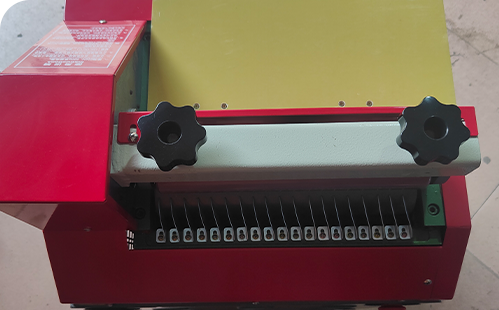
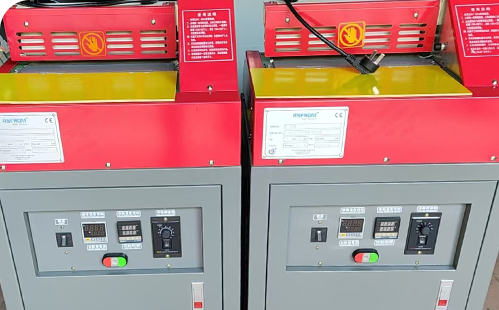
A1: The Y-300 Latex Gluing Machine is a hot melt adhesive machine coating equipment. It adopts an upper wheel seat, up and down floating and pressure adjustment structure, suitable for lamination and gluing of planes with a thickness of 0.5mm or more. The machine is easy to operate, meets the requirements of environmental protection, and improves work efficiency. It is an extremely economical and affordable machine. It is suitable for lamination and gluing of planes for products such as shoes, luggage, leather goods, stationery, cardboard boxes and sports equipment. The equipment has a patent and has passed CE certification. It is a reliable product among similar products.
คำถามที่ 2: What is the Y-300 used for?
A2: It is mainly used for lamination and gluing of planes with a thickness of 0.5mm or more. Specific applications include:
-
Shoes plane lamination and gluing.
-
Luggage plane lamination and gluing.
-
สินค้าทำจากหนัง plane lamination and gluing.
-
Stationery plane lamination and gluing.
-
Cardboard boxes plane lamination and gluing.
-
Sports equipment plane lamination and gluing.
คำถามที่ 3: What are the key technical parameters of the Y-300?
A3:Key technical parameters of the Y-300 are as follows:
-
Model No.: วาย-300
-
Machine Power: 2KW
-
Current Value: 9.5A
-
กำลังไฟฟ้า: 0.09KW
-
แรงดันไฟฟ้า: 220V/50HZ/1เฟส
-
Heating Barrels Capacity: 2.5L
-
Maximum Viscosity: 12000CPS
-
Operating Temperature Range: 0–250℃
-
Operating Temperature of The Heating Barrel: 165℃
-
Operating Temperature of Gluing Shaft: 100℃
-
Maximum Operating Temperature: 250℃
-
Gluing Roller Width: 310mm
-
Effective Gluing Roller Width: 300mm
-
ขนาดเครื่อง: 510×470×950mm
-
น้ำหนัก: 61 กิโลกรัม
The machine power and current affect power distribution requirements, voltage affects the usable region, heating barrel capacity affects the processing time per glue filling, viscosity range determines the applicable glue type, operating temperature range affects applicable processes, and gluing roller width determines the processable material width.
คำถามที่ 4:What are the main features of the Y-300?
A4:Main features include:
-
Innovative design: The upper wheel seat has the functions of up and down floating and pressure adjustment, which can adapt to the unevenness, different hardness and softness of the material, and the material with low front and low back, to achieve uniform gluing.
-
Power and speed control system: 1/15HP AC motor is used as the power source. After the power is decelerated by the gear box, the speed regulator performs preliminary speed control, and then the power is decelerated twice by two sets of chains and gears, so that the roller transmission can reach ten different glue adjustment speeds.
-
Electric heating system: The layout of the electric heating system is advanced and reasonable, with heaters installed in the glue storage barrel and rollers. After power is turned on, the rollers generate electric heat to quickly liquefy the solid hot melt adhesive. The resistance temperature detector is used to sense the temperature and transmit the signal to the temperature controller to control the temperature of the glue tank and rollers.
-
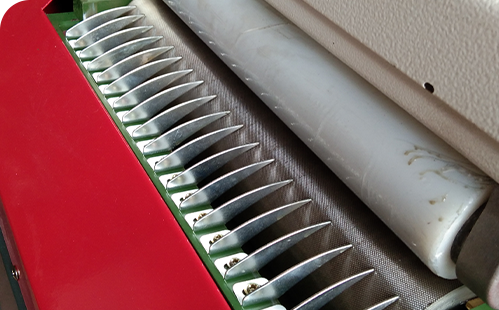
Special gluing operation design: The roller can realize point, strip and mesh gluing operations to meet different gluing needs.
-
European standard design advantages: The glue groove is treated with Teflon, and the glue changing operation is simple; the temperature can be adjusted according to the characteristics of the melt adhesive to effectively prevent the hot melt adhesive from carbonizing; the motor of this machine can be controlled by a frequency converter to achieve stepless speed adjustment.
-
Product advantages: The equipment has a patent and has passed CE certification. It is a reliable product among similar products, providing users with more choices.
2. อุตสาหกรรมและวัสดุที่เหมาะสำหรับการใช้งาน
คำถามที่ 5: What materials can the Y-300 process?
A5:The Y-300 is suitable for the following materials:
-
Materials with a thickness of 0.5mm or more.
-
Shoes
-
Luggage
-
สินค้าทำจากหนัง
-
Stationery
-
Cardboard boxes
-
Sports equipment
The machine can perform plane lamination and gluing on these materials.
คำถามที่ 6: What industries or factories use the Y-300?
A6:It is widely used in the following industries:
-
Shoe factories
-
Luggage factories
-
Leather goods factories
-
Stationery factories
-
Cardboard box factories
-
Sports equipment factories
And other manufacturers requiring plane lamination and gluing.
三. Functions & Performance
คำถามที่ 7: What is the function of the upper wheel seat floating and pressure adjustment on the Y-300?
A7:The main functions of the upper wheel seat floating and pressure adjustment include:
-
Adapts to uneven materials.
-
Adapts to materials of different hardness and softness.
-
Adapts to materials with low front and low back.
-
Achieves uniform gluing.
-
Improves gluing quality.
คำถามที่ 8:What are the features of the power and speed control system on the Y-300?
A8:Power and speed control system features include:
-
1/15HP AC motor is used as the power source.
-
Power is decelerated by the gear box.
-
The speed regulator performs preliminary speed control.
-
Then the power is decelerated twice by two sets of chains and gears.
-
Finally, the roller transmission can reach ten different glue adjustment speeds.
-
The motor of this machine can be controlled by a frequency converter to achieve stepless speed adjustment.
คำถามที่ 9: What are the features of the electric heating system on the Y-300?
A9:Electric heating system features include:
-
The layout is advanced and reasonable.
-
Heaters are installed in the glue storage barrel and rollers.
-
After power is turned on, the rollers generate electric heat to quickly liquefy the solid hot melt adhesive.
-
The resistance temperature detector is used to sense the temperature.
-
The signal is transmitted to the temperature controller.
-
This controls the temperature of the glue tank and rollers.
-
The temperature can be adjusted according to the characteristics of the melt adhesive to effectively prevent the hot melt adhesive from carbonizing.
คำถามที่ 10: What gluing operations can the Y-300 perform?
A10:The roller of the Y-300 can perform the following gluing operations:
-
Point gluing.
-
Strip gluing.
-
Mesh gluing.
Meeting different gluing needs.
คำถามที่ 11: How is the European standard design advantage of the Y-300 reflected?
A11:European standard design advantages are reflected in:
-
Glue groove treatment: The glue groove is treated with Teflon, and the glue changing operation is simple.
-
Temperature control: The temperature can be adjusted according to the characteristics of the melt adhesive to effectively prevent the hot melt adhesive from carbonizing.
-
Control method: The motor of this machine can be controlled by a frequency converter to achieve stepless speed adjustment.
-
Product advantages: The equipment has a patent and has passed CE certification. It is a reliable product among similar products, providing users with more choices.
四.Operating Procedures
คำถามที่ 12: What should be noted during Y-300 installation?
A12:Installation notes include:
-
When installing the power supply of the meter, a correct and effective grounding wire must be connected to avoid the risk of electric shock.
-
Make sure the meter is operating at the specified voltage.
-
Using a voltage other than the specified voltage may cause the meter to burn out.
คำถามที่ 13: What should be noted before operating the Y-300?
A13:Notes before operation include:
-
Avoid operating around volatile and explosive materials or gases.
-
Strictly prohibit the use of any water-based or oil-based adhesives other than hot-melt adhesives.
-
Start the motor to use the machine when the hot-melt adhesive is completely melted.
-
Operators must hold a certificate to work.
-
Wear safety gloves, goggles and long-sleeved overalls to avoid being burned by high-temperature hot melt adhesive or surface burns of high-temperature components.
คำถามที่ 14: What is the melting process of the Y-300?
A14:The melting process is as follows:
-
Pour the clean and dry hot melt material into the plastic storage barrel and close the cover (Note: switch the power switch to OFF).
-
Start the external main power supply to provide heater electric heating.
-
Switch the power switch to the ON position.
-
Check whether the setting position on the thermostat is correct and whether the temperature is normal.
-
Set the temperature of the rubber storage barrel at 150–170℃.
-
Set the temperature of the roller at 120–150℃.
คำถามที่ 15: What is the gluing process of the Y-300?
A15:The gluing process is as follows:
-
Heat until the green light of the motor start switch automatically lights up to start the motor.
-
Adjust the handle to adjust the work object to apply glue to the best ideal gap.
-
Thin material rotates clockwise, thick material rotates counterclockwise.
-
Then it can work normally.
คำถามที่ 16:How to shut down the Y-300?
A16:The shutdown procedure is as follows:
-
Stop working 5–10 minutes before shutdown.
-
First turn off the power switch of the heater to reduce the temperature of the rubber storage tank and the rubber roller to prevent carbonization of the hot melt adhesive on the roller.
-
Then adjust the governor to zero position.
-
Then turn off the power switch.
-
Finally turn off the total power.
五.Maintenance
คำถามที่ 17: What are the daily maintenance requirements for the Y-300?
A17: Daily maintenance requirements include:
-
Before each shift, add an appropriate amount of high-temperature lubricating oil to the bearing.
-
From time to time, add high-temperature resistant grease to the sprocket to ensure the normal operation of the mechanical rotation.
-
The inner cavity of the plastic storage barrel should be kept clean, so as to keep the Teflon-plated surface with the characteristics of release and non-stick glue.
-
Keep the silicone wheel clean. Once glue or cloth scraps stick to it, stop the machine immediately, wipe it clean with kerosene, and then maintain it with silicone oil.
-
Add the right amount of rubber material according to the capacity of the rubber bucket. If you insist on filling and blocking the rubber material randomly, it will cause the liquid glue to overflow and damage the electrical components. In severe cases, the motor will be burned.
-
If overflowing glue is found, stop the machine immediately, remove the overflowing cured glue, and check that the electrical components are not damaged before starting the machine.
คำถามที่ 18: How to change glue on the Y-300?
A18:The glue changing method is as follows:
-
First, please heat the roller and the rubber vat at the same time. When the hot melt adhesive is completely melted into a liquid state and has fluidity.
-
Then tilt the machine back at an angle of 15°, so that the liquid hot melt adhesive flows to the front of the rubber vat and is easy to remove.
-
Turn off all power and wait for the hot melt adhesive to cool down.
-
After the hot melt adhesive is cooled, pull it apart by hand to separate it from the rubber vat.
-
At the same time adjust the roller temperature controller (do not heat the rubber vat at this time).
-
When the roller is heated to a certain temperature, you can pull up the whole piece of hot melt adhesive.
-
If you want to clean more cleanly at this time, please turn on the temperature of the rubber tank, let the residual glue on the roller flow out along the slope, and then remove it.
-
Since the surface of the glue tank is treated with Teflon, please do not scrape the surface with metal sharp tools to prevent the Teflon from being damaged and affect the release effect.
Q19: How to clean the rubber wheel on the Y-300?
A19:The rubber wheel cleaning method is as follows:
-
Cloth scraps, paper scraps or carbides and other sundries often fall into the rubber storage tank during operation, and are driven by the continuous operation of the rubber roller, resulting in being stuck between the roller and the scraper, affecting the uniformity of glue application. It should be cleared at this point.
-
First of all, the silicone wheel must be adjusted up (to prevent glue sticking).
-
Then run the roller at a slow speed.
-
Turn the fine-tuning handle of the amount of glue applied to the work object clockwise, so that the amount of glue output becomes very large, and the roller and scraper are increased.
-
In this way, the cloth scraps will pass through the gap naturally, and the cloth scraps will be brought out along the surface of the roller at a slow speed.
-
Please stop the operation of the roller immediately after being taken out.
-
Then remove the cloth scraps with bamboo chopsticks or paper.
-
The repeated actions can quickly remove miscellaneous debris stuck between the scraper and the roller.
-
After all the cleaning is completed, re-adjust the amount of glue applied and the pressure wheel to the appropriate position to continue working.
六.Troubleshooting
Q20: What to do if the Y-300 plastic storage tank will not be hot or the temperature will not reach the set temperature?
A20:If the plastic storage tank will not be hot or the temperature will not reach the set temperature, troubleshoot as follows:
-
The power is not fully turned on or there is a problem with the switch: Check whether the switch is fully switched, whether the power connector is loose, replace the switch.
-
The thermostat of the glue barrel is not adjusted to the correct indication temperature: Re-adjust the temperature of the thermostat.
-
The heating rod at the bottom of the rubber bucket is burnt out, the joint is falling off, and the contact is poor: Check the wire connection and reconnect it, and replace the heating rod.
-
The temperature probe is malfunctioning: Replace with new thermocouple.
Q21: What to do if the Y-300 rubber roller will not be hot or the temperature will not reach the set temperature?
A21:If the rubber roller will not be hot or the temperature will not reach the set temperature, troubleshoot as follows:
-
The main power fuse is short-circuited or the power switch is faulty: Replace the fuse (10A), replace the air opening.
-
The thermostat is not adjusted to the set temperature: Re-adjust the indicated temperature.
-
The transmission line is damaged: Check the wire connection and replace it.
-
The heating rod is burnt out: Replace the heating rod.
-
The temperature probe is malfunctioning: Replace with new thermocouple.
Q22: What to do if the Y-300 motor power light is on but the motor will not start?
A22:If the motor power light is on but the motor will not start, troubleshoot as follows:
-
Motor power fuse short circuit: Replace the fuse (2A).
-
Damaged governor knob: Replace the governor knob.
-
The transmission line is damaged and disconnected: Check wiring and replace and reconnect.
Q23: What to do if the Y-300 silicone wheel is often dipped in hot melt adhesive?
A23:If the silicone wheel is often dipped in hot melt adhesive, troubleshoot as follows:
-
The work object is too thin, and the gap between the silicone wheel and the rubber roller is too small: Reasonably select the wheel speed of the melting machine to keep the wheel surface clean; working materials and double or multi-layer folding.
-
The surface of the silicone wheel is dirty and covered with cloth crumbs and debris: Immediately stop the machine and wash it with kerosene to remove cloth debris.
Q24: What to do if the Y-300 gluing is uneven?
A24:If gluing is uneven, troubleshoot as follows:
-
The silicone wheels are not parallel to each other: Readjust the silicone wheel.
-
There is debris stuck to the scraper: Re-clean to remove dandruff.
-
Insufficient glue in the glue bucket: Add glue.
Q25: What to do if the Y-300 work object will be drawn when passing the rubber roller?
A25: If the work object will be drawn when passing the rubber roller, troubleshoot as follows:
-
The temperature of the rubber roller is not enough: Re-adjust the temperature of the stick wheel.
-
The CPS of the rubber material is too high, which is not suitable for the operation of this machine: Replace the melter with the appropriate model.
Q26: What to do if the Y-300 plastic storage barrel has yellowing and carbonization due to melted glue?
A26:If the plastic storage barrel has yellowing and carbonization due to melted glue, troubleshoot as follows:
-
The temperature of the rubber roller is too high: Readjust the temperature of the roller to the continuous wire.
-
The glue application time is too long: Intermittently stop the glue wheel from running.
-
The rubber compound has poor oxidation resistance and aging ability: Re-election of hot melt adhesives.
Q27:What to do if the Y-300 glue is involved in the rubber storage tank during glue application?
A27:If the glue is involved in the rubber storage tank during glue application, troubleshoot as follows:
-
The gap between the inclined iron and the rubber roller is too large: It is best to adjust the gap with a cross screwdriver.
-
The temperature of the rubber roller is insufficient: Moderately increase the temperature of the rubber roller.
-
The working material is too thin and too soft to apply roller glue: Should stop using the roller model, choose the spray model.
Q28:What to do if the Y-300 working material is rolled back into the silicone wheel during coating?
A28:If the working material is rolled back into the silicone wheel during coating, troubleshoot as follows:
-
The silicone wheel has been stuck to the hot melt adhesive and has not been removed: Stop immediately if found, wipe clean with kerosene or white mineral oil.
-
Work material already coated with hot melt adhesive: Due to the glue sticking to the silicone wheel in real time and causing the rewinding phenomenon, it is not possible to use the glued work object for secondary glue application.
Q29:What to do if the Y-300 roller is stuck and does not work?
A29:If the roller is stuck and does not work, troubleshoot as follows:
-
The bearing burns to death without refueling for a long time: Replace the bearing.
-
Cloth scraps and miscellaneous slag are often blocked in the rubber tank for a long time, and the roller resistance is large, causing excessive load on the motor and burning the motor: Clean the rubber storage tank frequently, strictly follow the operating procedures, and carry out overhaul and accountability for the burned motor.
七.Selection & After-sales
Q30:How to choose the Y-300 Latex Gluing Machine?
A30:Choose based on the following factors:
-
Actual production needs: Confirm whether plane lamination and gluing functions are needed.
-
Processing industry: Confirm whether it is shoes, luggage, leather goods, stationery, cardboard boxes, sports equipment, etc.
-
Material thickness: Confirm whether it is 0.5mm or more.
-
Gluing shape: Confirm whether it is point, strip or mesh.
-
Viscosity: Confirm whether the glue viscosity is within the range of 12000CPS.
-
Heating barrel capacity: Confirm whether 2.5L meets the processing time per glue filling.
-
Gluing width: Confirm whether the effective gluing width of 300mm meets requirements.
-
Power conditions: Confirm whether the factory has 220V/50HZ/1เฟส power.
-
Installation space: Confirm whether 510×470×950mm can be placed.
-
Machine weight: Confirm whether 61 กิโลกรัม requires consideration for handling and load-bearing.
-
After-sales support: Confirm whether the manufacturer provides installation guidance, operation training and after-sales service.
Q31:What should I consider when buying the Y-300?
A31:Buyers should consider the following factors:
-
Machine power and current: Confirm whether 2KW and 9.5A meet power distribution requirements.
-
Voltage: Confirm whether 220V/50HZ/1เฟส meets local power conditions.
-
Heating barrel capacity: Whether 2.5L meets production needs.
-
Viscosity: Whether 12000CPS covers the glue used.
-
Operating temperature range: Whether 0–250℃ meets process requirements.
-
Gluing roller width: Whether 310mm gluing roller width and 300mm effective gluing width meet requirements.
-
Machine size: Whether 510×470×950mm fits the installation space.
-
Machine weight: Whether 61 กิโลกรัม requires consideration for handling and load-bearing.
-
Glue type: Confirm whether the glue used is compatible with the machine.
-
Spare parts availability: Confirm supply of heating rod, thermocouple, silicone wheel and other consumables.
-
After-sales support: Confirm installation guidance, operation training and after-sales service.
-
Delivery time and warranty period: Confirm delivery time and warranty policy.
Q32:Can the Y-300 be customized?
A32:Customization can be confirmed with the manufacturer according to actual requirements. Possible customization directions include:
-
Working voltage
-
Power interface
-
Gluing width
-
Heating barrel capacity
-
Roller gluing shape
-
Appearance color
Before customization, clarify production needs, material types, glue type, gluing width requirements and installation space so the manufacturer can provide a suitable solution.
Q33:Does the manufacturer provide installation and technical support?
A33:The manufacturer can provide the following services:
-
Installation guidance
-
Commissioning support
-
Operation training
-
บริการหลังการขาย
-
Spare parts supply
Specific service scope depends on order and region. Please confirm with the supplier before purchase. It is recommended to clarify installation, training, warranty and spare parts supply in the purchase contract.