
ASFROM Fabric Rewinding Machine FAQ
ASFROM Fabric Rewinding Machine FAQ
Fabric Rewinding Machine Base Q&A
1. मूल उत्पाद जानकारी
Q1: What is AM‑170BD Automatic Edge‑alignment Straight & Bias‑grain Rewinding Machine?
A1: AM‑170BD Automatic Edge‑alignment Straight & Bias‑grain Rewinding Machine is flexible‑material rewinding equipment, specially designed as pre‑process matching machine for AM‑170ZMB strip‑cutting machine. It performs straight‑grain and 20‑70° bias‑grain rewinding. It is equipped with infrared electronic edge‑alignment, meter/yard preset‑length auto‑stop and adjustable winding‑tension mechanism. It supports forward/reverse rotation, inching‑auto mode switch. It is used for round‑roll packaging or pre‑rewinding before strip‑cutting, to guarantee uniform strip width in downstream process.
Extension: Compare with AM‑635 fabric‑inspection rewinder: AM‑635 focuses on fabric defect‑inspection & slitting without bias‑grain winding; AM‑170BD specializes in straight /bias‑grain rewinding, without inspection light‑box, prepared for strip‑cutting process. Typical process chain: laminator → AM‑635 inspection rewinder → AM‑170BD rewinder → AM‑170ZMB strip‑cutting machine.
Q2: What are the core technical parameters of AM‑170BD Automatic Edge‑alignment Straight & Bias‑grain Rewinding Machine?
A2:
1.Model No.: AM‑170BD
2.Standard working width:1.7M; Optional width:2.05M /2.4M /2.8M /3.2M
3.Max roll diameter:300mm, customizable up to 400mm
4.Max rewinding speed:80m/min
5.Motor power: rewinding motor 0.75KW; small blade motor 0.12KW
6.Power supply: optional 220V single‑phase / 380V three‑phase
7.Machine dimension:2500×850×1300mm
8.Packing size:2900×1150×1350mm
9.N.W:450KG;G.W:550KG
Extension: Do not run continuously at full 80m/min in mass‑production. Reduce speed for thin & stretch‑prone material. Lower running‑speed under bias‑grain winding mode to keep good edge‑alignment accuracy.
Q3: What are the main features of AM‑170BD Automatic Edge‑alignment Straight & Bias‑grain Rewinding Machine?
A3:
1.Infrared electronic edge‑alignment device keeps neat roll edge, ensures uniform strip width for downstream strip‑cutting.
2.Independent adjustable winding tightness adapts to soft, hard, thick and thin materials, avoid stretch‑deformation, wrinkle and roll collapse.
3.Meter/yard preset‑length auto‑control: machine auto‑stop when reaching target length to reduce manual counting error.
4.Stepless rewinding‑speed adjustment up to 80m/min. Slow‑down for thick material, speed‑up for thin material, balance quality and throughput.
5.Multi‑mode operation: forward‑reverse rotation, inching‑auto switch. Convenient for commissioning, roll unloading and fine‑tuning, single‑operator friendly.
6.Bias‑grain winding angle adjustable within 20°‑70°, support standard 45° bias‑grain rewinding.
7.Stainless‑steel cloth barrel with anti‑rust & anti‑corrosion performance, prevent material contamination and lower cleaning workload.
8.Matched for AM‑170ZMB strip‑cutting machine. Rewound rolls can be fed directly to strip‑cutter for streamlined workflow.
Extension: Skip partial guide‑rollers for thin stretch‑prone material to reduce friction. Keep infrared eyes clean periodically for reliable edge‑tracking under bias‑grain mode.
२. लागू उद्योग एवं सामग्री
Q4:What products and materials can AM‑170BD Automatic Edge‑alignment Straight & Bias‑grain Rewinding Machine process?
A4:Process cloth, non‑woven fabric, foam, leather, paper, reflective material, acetate cloth, reinforcing tape and conductive cloth. Produce straight‑grain rolls and 20‑70° bias‑grain rolls for round‑roll packaging or pre‑rewinding before strip‑cutting.
Extension: Reduce roller friction for thin stretch‑prone material. Prevent roll wandering for high‑slippery material. This machine only performs rewinding without defect‑inspection function. Use AM‑635 inspection rewinder upstream if quality checking is required.
Q5:What production scenarios is AM‑170BD Automatic Edge‑alignment Straight & Bias‑grain Rewinding Machine mainly used for?
A5:Applied in textile‑accessory factories, shoe factories and luggage‑processing plants. Used for pre‑rewinding before strip‑cutting and round‑roll material packaging, especially for 45° bias‑grain strip‑making.
Extension: Mainly oriented to pre‑process of strip‑cutting. Not suitable for scenarios where fabric defect‑inspection is primary goal.
三. Utility, Installation & Commissioning
Q6: What utility conditions are required for AM‑170BD Automatic Edge‑alignment Straight & Bias‑grain Rewinding Machine?
A6:Power supply: optional 220V single‑phase or 380V three‑phase, reliable protective earthing is mandatory. No compressed‑air source required. Avoid strong direct light hitting infrared sensor. Reserve space for fabric threading, roll handling and maintenance.
Extension: Machine net weight 450KG, load‑bearing floor required. Direct sunlight will interfere infrared edge‑tracking sensor.
Q7: What are requirements for installation & placement of AM‑170BD Automatic Edge‑alignment Straight & Bias‑grain Rewinding Machine?
A7:Place machine on flat hard load‑bearing floor and level whole unit. Reserve surrounding clearance for threading, roll handling and maintenance. Keep away from heavy‑dust environment. Prevent strong direct light onto infrared sensor eyes.
Extension: Check doorway & aisle dimension before machine delivery. Reserve space for roll lifting & handling.
Q8:What is complete test‑running operating procedure for AM‑170BD Automatic Edge‑alignment Straight & Bias‑grain Rewinding Machine?
A8:
1.Confirm reliable power earthing. Clean infrared edge‑tracking sensor lenses, verify smooth rotation of all rollers.
2.Fabric threading: select roller‑passing path according to material property. Skip small double‑thread roller for thin stretch‑prone material. Apply sewing oil on stainless‑steel supporting tube for easily‑deformable thin material to reduce friction.
Extension: Minimize roller‑pass count for thin material to lower stretch risk.
3.Edge‑alignment initialization: Power‑on, move U‑shaped infrared‑edge‑alignment slider & knurled‑roller bearing block to middle collinear position, temporarily disable edge‑alignment. Rewind 1‑2 meters fabric, then align sensor eyes to fabric edge and enable edge‑alignment function.
4.Process setting: Select straight‑grain or bias‑grain mode. Set angle 20‑70° for bias‑grain. Reference check for 45° bias‑grain: A‑B distance 10mm longer than A‑C; E width 0.5‑1cm narrower than D width.
5.Set winding tightness: Keep looser roll for strip width>20mm; keep tighter roll for strip width<20mm.
6.Set target length on meter‑yard counter; choose inching mode for commissioning, auto‑mode for mass‑production; adjust speed, reduce speed under bias‑grain condition.
7.Perform trial rewinding, inspect edge neatness and winding tightness. Start formal production after sample acceptance. Machine auto‑stop when preset length is reached.
8.Use forward‑reverse rotation for roll unloading after production. Do not disassemble electric components upon failure, contact manufacturer support.
Q9: What precautions for bias‑grain winding and winding‑tightness adjustment?
A9:Edge‑alignment is harder under bias‑grain winding, lower running‑speed is required. Use dimension reference to verify 45° bias‑grain. Adjust winding tightness corresponding to target strip‑cutting width. Do not over‑tighten thin material to avoid permanent stretch. Over‑loose roll will cause strip‑width fluctuation in downstream cutting.
Extension: Re‑verify angle and tightness after material‑batch change, do not reuse old parameters directly.
४. मशीन की संरचना और घटक
Q10: What are the 5 core assemblies of AM‑170BD Automatic Edge‑alignment Straight & Bias‑grain Rewinding Machine?
A10:5 modular core assemblies:
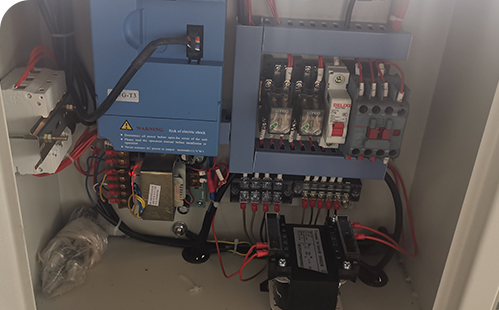
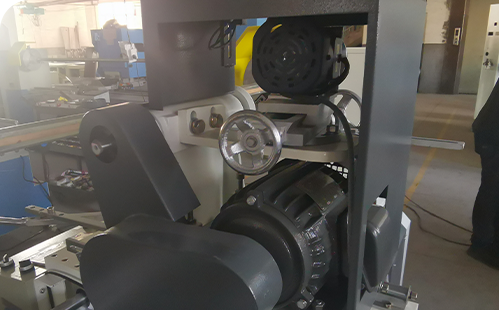
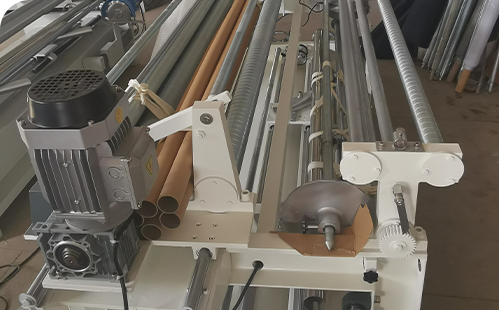
1.Main machine frame assembly; 2.Feeding‑guide‑roller & stainless‑steel barrel unit; 3.Infrared edge‑detection assembly; 4.Bias‑angle adjustment & winding‑tightness actuator; 5.Electric variable‑frequency meter‑counter control system.
‑Main machine frame: machine base.
‑Feeding‑guide‑roller & stainless‑steel barrel unit: guide rollers, stainless‑steel barrel, small blade assembly.
‑Infrared edge‑detection assembly: U‑shape infrared sensor eyes, sliding slider, knurled‑roller bearing block.
‑Bias‑angle adjustment & winding‑tightness actuator: bias‑angle adjusting mechanism, winding‑tension adjusting assembly.
‑Electric variable‑frequency meter‑counter control system: inverter, meter‑yard counter controller, forward‑reverse & inching operation unit.
Extension: Wearing‑parts list: infrared sensor lens, roller rubber coating, small blade. Spare‑part stock is recommended for less downtime.
Q11: What is the function of infrared electronic edge‑alignment device?
A11:Track fabric edge in real‑time and automatically correct rewinding position to keep neat roll edge. Guarantee uniform strip width for downstream strip‑cutting. Edge‑alignment initialization must be completed before operation.
Q12: What is the function of bias‑grain angle adjusting mechanism?
A12:Realize continuous bias‑grain angle adjustment within 20°‑70°, produce bias‑direction rolls for 45° bias‑strip cutting requirement of shoe‑material & accessories.
五.Safety, Maintenance & Troubleshooting
Q13:What safety notes for AM‑170BD Automatic Edge‑alignment Straight & Bias‑grain Rewinding Machine?
A13:
1.Machine must be reliably earthed against electric‑shock hazard.
2.Keep hands away from rotating rollers and fabric‑roll nip zone during running to avoid winding injury.
3.Keep hands away from blade edge while using small blade. Cut off main power before maintenance and cleaning.
4.Do not open electrical protective cover while machine is running.
5.Use inching‑mode when adjusting bias angle or tension mechanism; do not put hands into moving mechanism.
Extension: Operators with long hair shall wear safety cap to prevent hair winding into rollers.
Q14: What is maintenance schedule for AM‑170BD Automatic Edge‑alignment Straight & Bias‑grain Rewinding Machine?
A14:Per shift: Clean lint on roller surface; wipe infrared sensor lens; test inching, forward‑reverse and meter‑counting function; check barrel rotation status.
Weekly: Check smooth rotation of all rollers; apply small amount of lubricant on sliding slider; inspect blade sharpness & wear.
Every half‑year: Fasten all electrical terminals; check motor abnormal noise; inspect roller rubber‑coating wear.
Yearly: Complete machine overhaul. Evaluate wear of motor, bearings and sliding mechanism; replace aged & worn spare‑parts.
Extension: Remove fabric rolls from barrel for long‑term shutdown, to avoid roller deformation under sustained load.
Q15: Common faults and troubleshooting guidelines?
A15:
- Wandering & uneven roll edge: Perform full edge‑alignment initialization again; clean infrared sensor lens; check whether slider bearing is stuck.
- Fabric width narrows after rewinding: Over‑tension of stainless‑steel supporting tube; reduce roller‑pass quantity; skip double‑thread roller for thin material and apply sewing oil for friction reduction.
- Machine does not auto‑stop at preset length: Check meter‑yard encoder wiring, confirm counting signal is normal.
- Incorrect bias‑grain angle: Re‑check angle‑adjustment mechanism; verify dimension A‑B, A‑C, D, E; inspect guide‑roller parallelism.
- Wrinkled roll: Improper winding‑tightness setting; check whether fabric is twisted in threading path. Extension‑added frequent site faults:
- Continuous edge‑drift under bias‑grain rewinding: Moderately reduce running‑speed; ensure sensor eyes aim accurately at fabric edge; rule out wavy‑edge defect of raw material itself.
- Collapsed loose roll: Insufficient overall winding tension, moderately increase tightness setting.
六.Model Selection
Q16: Which customers are suitable for AM‑170BD Automatic Edge‑alignment Straight & Bias‑grain Rewinding Machine?
A16:Recommended for textile‑accessory factories, shoe factories and luggage‑processing plants. For straight‑grain /20‑70° bias‑grain rewinding, mainly as pre‑rewind device for AM‑170ZMB strip‑cutting machine, also for round‑roll material packaging. Up‑stream can connect laminator and AM‑635 inspection rewinder.
Extension:
✅ Suitable scenarios: Require 45° bias‑grain rewinding; downstream matched with strip‑cutting machine; various flexible‑roll material rewinding.
❌ Unsuitable scenarios: Main demand is fabric defect‑inspection; only need inspection & slitting without bias‑grain winding.
Alternative suggestion: Choose AM‑635 fabric inspection & rewinding machine if defect‑inspection and slitting are primary requirements.