
ASFROM Automatic Cementing Heel and Side Lasting Machine FAQ
ASFROM Automatic Cementing Heel and Side Lasting Machine FAQ
Automatic Cementing Heel and Side Lasting Machine Base Q&A
1. आवेदन और बाज़ार स्थिति संबंधी अक्सर पूछे जाने वाले प्रश्न
Q1: What shoe styles and production scenarios is AB‑680M machine suitable for?
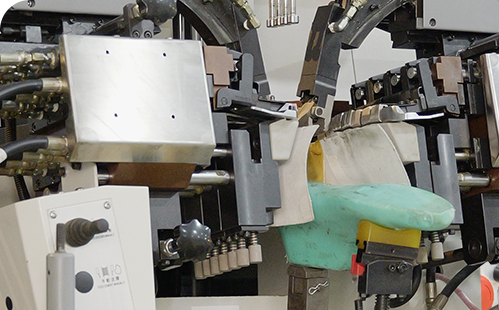
A1: AB‑680M is a cost‑effective automatic‑gluing intelligent heel‑and‑side lasting machine, developed for large‑volume assembly‑line production. It integrates automatic hot‑melt gluing function with infrared glue positioning and inner‑waist glue‑pen automatic retraction mechanism. It is widely used for mass‑production of sports shoes, military safety shoes and ice‑skating shoes. It fits medium‑and‑large shoe factories with frequent multi‑style mixed‑batch orders, and supports stable single‑shift or two‑shift high‑intensity continuous production.
Q2: यह उपकरण जूता कारखानों की कौन-कौन सी मुख्य समस्याओं को हल कर सकता है?
A2: Conventional manual waist‑heel lasting and manual gluing highly rely on experienced skilled workers, bringing unstable finished‑shoe quality. Common defects include heel “double‑eyelid” folds, waist loose‑edges, uneven glue thickness, glue overflow and glue smearing on upper surface. Ordinary hydraulic heel‑side lasting machines easily generate excessive oil temperature in long‑time operation, leading to pressure drift and shortened service life of hydraulic components. Without recipe memory function, operators need repeated manual debugging for each new shoe‑last, which causes long production‑line downtime.
AB‑680M is equipped with low‑temperature constant‑temperature hydraulic system and PLC shoe‑last recipe memory, together with integrated automatic gluing unit. It lowers operator skill threshold, shortens shoe‑style change‑over cycle, reduces reject rate and cancels independent manual gluing workstation.
Q3: इस मॉडल के पूर्ण मुख्य प्रतिस्पर्धात्मक लाभ क्या हैं?
A3:
- Integrated auto‑cement gluing system: Infrared glue positioning + inner‑waist glue‑pen automatic retraction; accurate glue track, prevent glue from smearing uppers and save gluing‑station labor;
- Low‑temperature constant‑temperature hydraulic system: Maintain oil temperature around 50℃, restrain over‑heating faults and extend hydraulic‑parts service life;
- PLC auto‑memory recipe function: Store up to 200 groups of shoe‑last parameters, one‑click recall to greatly cut debugging downtime for frequent style switching;
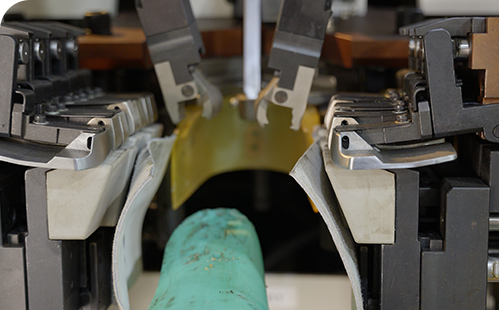
- 15‑group core special‑skill mechanisms: Optimize waist‑heel fitting performance and effectively eliminate typical lasting defects;
- Dual‑pressure independent control for waist and heel: Two‑stage pressure output adapts to diverse upper‑material hardness;
- Dual‑cylinder bidirectional precise control: Match suitable running speed and pressing force for different shoe lasts;
- Circuit integrated modular design: Stable hardware performance, convenient inspection and component replacement for easy daily maintenance;
- Optional center‑seat forward‑backward moving function: Optimize heel‑waist joint transition for special‑shape shoe lasts and speed‑up wiper replacement.
二. Intelligent Control System FAQs
Q4: What are the key features of AB‑680M control system?
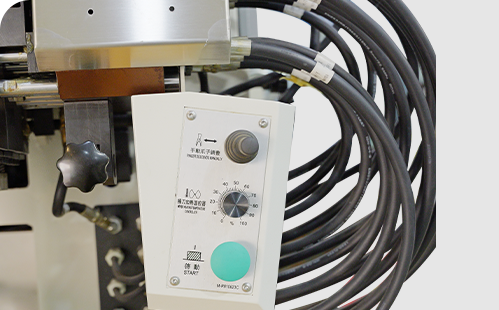
A4:It adopts industrial PLC plus color touch‑screen HMI. It can store up to जूते के साँचे के पैरामीटर रेसिपी के 200 समूह, covering gluing position, gluing volume, pressure, speed and travel parameters for various shoe lasts. Operators can recall pre‑saved parameters with one‑click during shoe‑model replacement to avoid repeated manual debugging. Built‑in shortcut keys for pointed‑toe, round‑toe and square‑toe shoes for quick selection. It supports machine self‑inspection and shift‑based production‑output counting function for factory production‑data statistics.
Q5: उत्पादन-प्रबंधन-उन्मुख कौन-कौन से अंतर्निहित कार्य हैं?
A5:Built‑in shift‑output counting module for production‑data statistics. Machine self‑check monitors hydraulic status, gluing‑system status and executing‑mechanism signals and pops‑up alarm for abnormal conditions. Operation log records parameter‑modification history to realize production‑quality traceability.
Q6: पैरामीटर संशोधन के लिए अनुमति प्रबंधन है?
A6:Yes, two‑level authority is configured. Ordinary‑operator account is limited to recipe calling and basic start‑stop operation. Modification of core gluing, pressure, stroke and timing parameters requires engineer‑level password, preventing mass upper scrap caused by mis‑operation of front‑line staff.
三. Low‑Temperature Hydraulic Core System FAQs
Q7: इस हाइड्रोलिक प्रणाली की मुख्य विशेषता क्या है?
A7:Equipped with efficient heat‑dissipation circulation device, it keeps hydraulic oil temperature stably around 50℃. Under long‑term two‑shift continuous‑running conditions, it avoids hydraulic‑oil viscosity decline, oil leakage and pressure fluctuation caused by overheating. It improves overall‑machine running stability and extends service life of hydraulic sealing rings and valve blocks.
Q8: हाइड्रोलिक सिस्टम के लिए क्या अंतर्निहित सुरक्षा तंत्र मौजूद हैं?
A8:Equipped with hydraulic over‑pressure protection and oil‑temperature over‑limit alarm. When pressure or oil temperature exceeds safe threshold, the system triggers alarm and restricts machine executing actions to prevent pipeline burst and component damage. Recommended hydraulic oil: 68# anti‑wear hydraulic oil; select 46# hydraulic oil for low‑temperature cold‑climate workshops.
四.Fifteen‑Group Special‑Skill Mechanism FAQs
Q9:What are the fifteen‑group core special‑skill functions of AB‑680M?
ए9:
- Infrared glue positioning: Precise glue position, fast adjustment adapting for different shoe lasts;
- Analog and true tensioner: Computer‑simulation optimized tensioner structure, wide adaptability for various shoe‑last data;
- Last‑back highest adjustment: Ultra‑wide height adjustment range, compatible from children’s‑shoe lasts up to high‑top‑shoe lasts;
- Last self‑balance stock: Automatically balance according to shoe‑last contour to guarantee flat lasting effect for irregular lasts;
- Low‑temperature hydraulic system: Stabilize oil temperature near 50℃, enhance stability and component service life;
- Double‑finger force‑flat function: Apply sufficient even pressure on upper material to make lasting surface flatter;
- Extrusion side‑angle leveling function: Eliminate heel‑edge “double‑eyelid” folded quality defects;
- Press‑edge double‑balance attach‑last mechanism: Dual interactive balance structure, maximize fitting area between upper and shoe‑last;
- Pincer lasting pull‑rear‑strap mechanism: Pincers pull heel upper to achieve tighter fitting effect;
- Auto‑cement automatic gluing function: Improve lasting quality, keep side wire unchanged and save manual‑gluing labor;
- Inner‑waist rubber‑pen automatic retraction function: Inner‑waist glue pen automatically retracts, prevent glue from smearing upper and ensure accurate glue position;
- Waist & heel lasting high‑low‑press function: Two‑stage pressure control to acquire better lasting result for waist‑heel zones;
- Press‑cylinder bidirectional precise control: Dual‑hydraulic‑cylinder design to match suitable running speed and pressure output;
- PLC auto‑memory function: Store 200 shoe‑type parameter groups, one‑click recall to cut adjustment time;
- Circuit integrated modularization: Compact modular electrical layout, durable and easy‑maintenance.
Optional: Center‑seat automatically moves forward and backward, optimize heel‑waist joint transition effect and assist fast wiper replacement.
Q10: पारंपरिक उपकरणों की तुलना में स्टाइल परिवर्तन के दौरान कितना समय बचाया जा सकता है?
A10: For existing shoe‑types, operators only need one‑click recipe recall (including gluing‑track parameters). For brand‑new shoe lasts, combined with multi‑group mechanical quick‑adjust knobs and infrared glue‑position fine‑tuning, the whole re‑adjustment cycle is largely shortened compared with conventional heel‑side lasting machines, effectively reducing assembly‑line downtime loss caused by frequent order switching.
५.कोर लास्टिंग फॉर्मिंग और ऊपरी-संरक्षण तकनीकी अक्सर पूछे जाने वाले प्रश्न
Q11: What key technologies guarantee stable finished‑shoe quality?
A11:
- Last‑seat self‑balancing technology: Automatically adapt to irregular shoe‑last shapes for uniform stress distribution, reduce risk of upper tearing;
- Integrated auto‑cement with infrared positioning & glue‑pen retraction: Realize accurate, clean gluing; avoid glue contamination on upper material;
- Dual‑pressure independent control for waist‑heel area: Set separate high/low pressure for shoe waist and heel according to upper‑material hardness and shoe‑last structure;
- Press‑edge double‑balance attach‑last mechanism: Up‑and‑down symmetrical dual press‑edge units, raise fitting rate between upper and shoe‑last;
- Extrusion side‑angle leveling function: Greatly reduces heel‑edge “double‑eyelid” fold defects;
- Pincer pull‑heel tightening function: Pincer mechanism pulls rear upper to fit shoe‑last tightly without loose edges;
- Dual‑cylinder bidirectional precise control: Ensure stable speed and pressing‑force output in each lasting cycle;
- एकीकृत डेटा-सिम्युलेशन उपकरण-डिज़ाइन प्रौद्योगिकी: Optimize movement track of tensioner, pincers, wiper and gluing‑head, improve product consistency in mass‑batch production.
Q12: मोल्डिंग गुणवत्ता को और बेहतर बनाने के लिए कौन से वैकल्पिक यांत्रिक मॉड्यूल उपलब्ध हैं?
ए12:Center‑seat forward‑backward moving function (optional): Optimize transition effect of heel‑waist joint for special‑curve shoe lasts; also help wiper quick‑replacement. For mass‑production of regular‑contour sports shoes and military safety shoes, this option can be omitted to save procurement cost.
प्रश्न 13: ये तकनीकें बड़े पैमाने पर निरंतर दो-शिफ्ट उत्पादन के तहत कैसे प्रदर्शन करती हैं?
A13: Benefiting from low‑temperature constant‑temperature hydraulic system, pressure output remains stable in long‑time high‑intensity operation. The infrared‑positioned automatic gluing system keeps stable glue‑track quality. Multi‑dimensional mechanical optimization restrains common defects including heel wrinkle, waist loose‑edge, “double‑eyelid” folds and glue‑pollution. According to official evaluation indicators, it gains high scores on side‑angle flatness, fabric freedom, lasting true‑congruence, production efficiency, adjustment efficiency and operability.
६. वैकल्पिक कार्यात्मक मॉड्यूल और चयन सुझाव अक्सर पूछे जाने वाले प्रश्न
Q14: What production benefits will optional center‑seat forward‑backward moving function bring?
A14:This optional module optimizes the natural transition of heel‑waist joint position for special‑curve shoe lasts, improves finished‑shoe appearance quality. Meanwhile it simplifies wiper disassembly‑replacement steps and shortens part‑changing time. For mass‑production of regular‑contour sports shoes and military‑shoe orders, users can skip this option to lower procurement investment.
७.पूर्ण तकनीकी पैरामीटर अक्सर पूछे जाने वाले प्रश्न
Q15: What are the full official specifications of AB‑680M?
A15: ‑ Model: AB‑680M Auto‑Cement Intelligent Heel And Side Lasting Machine
‑ Power supply: 380V / 50Hz / 3‑Phases
‑ Heating Power: 2500W
‑ Motor Power: 2HP
‑ 8‑Hour Production Capacity: 1200 Pairs
‑ Working Hydraulic Pressure: 40‑45KG/CM²
‑ Hydraulic Oil Tank Volume: 100 Liters
‑ Recommended Hydraulic Oil: 68# anti‑wear hydraulic oil (46# for cold‑climate workshops)
‑ Overall Machine Dimension: 1550 mm × 1350 mm × 1900 mm
‑ Export Package Dimension: 1700 mm × 1300 mm × 2200 mm
‑ Net Weight: 1150 KG
८. ऑन-साइट इंस्टॉलेशन और पर्यावरण मिलान अक्सर पूछे जाने वाले प्रश्न
Q16: स्थापना से पहले क्या बिजली, स्थान और पर्यावरणीय आवश्यकताएँ हैं?
ए16:
- विद्युत आपूर्ति: स्थिर तीन-चर 380V विद्युत स्रोत आवश्यक है; विद्युत सुरक्षा के लिए विश्वसनीय ग्राउंडिंग कनेक्शन पूरा किया जाना चाहिए।;
- Space: Reserve at least 1.2‑meter operating clearance around the machine for operator movement and consumable‑part replacement;
- Environment: The workshop shall maintain good ventilation; avoid heavy‑dust and high‑humidity circumstance to protect hydraulic valve blocks, gluing‑nozzle assembly and modular electrical components;
- भूमि: स्थापना की भूमि समतल और मशीन के वजन को सहने के लिए ठोस होनी चाहिए, ताकि दीर्घकालिक कंपन से उपकरण के विस्थापन को रोका जा सके।.
९. मानक स्टार्टअप और उत्पादन संचालन एसओपी अक्सर पूछे जाने वाले प्रश्न
प्रश्न 17: पावर-ऑन से बड़े पैमाने पर उत्पादन तक की पूरी मानकीकृत संचालन प्रक्रिया क्या है?
ए17:
- Pre‑startup inspection: Check power‑supply grounding condition; confirm hydraulic‑oil level stays within normal scale; test emergency‑stop‑button validity; clean glue residues on gluing‑nozzle, tensioner, pincers and wiper surfaces; inspect glue‑supply status of auto‑cement unit;
- Power‑on: Switch on main power supply, enter PLC touch‑screen interface; recall corresponding shoe‑last recipe or manually set gluing‑track, pressure‑related parameters; pre‑heat automatic gluing system up to working temperature;
- Idle test run: Execute multiple empty cycles without shoe last, check for abnormal noise, oil‑leakage, glue‑dripping or system‑alarm prompts; observe whether hydraulic‑oil temperature rises normally and inner‑waist glue‑pen retraction action;
- Sample debugging: Place shoe last and upper on working station, produce test‑sample piece. Fine‑tune gluing‑position, gluing‑volume, pressure and tension parameters until gluing quality & waist‑heel lasting quality fully meets factory internal‑quality standards;
- Formal mass‑production: Launch batch production; operators conduct random‑sampling inspection focusing on glue‑track accuracy, heel‑edge flatness and waist fitting effect during each shift;
- Shift‑end shutdown: Clean residual glue on nozzle and mechanical surfaces; turn off heating & gluing function firstly, then stop main motor; cut off total power supply for long‑time off‑duty.
१०. सामान्य असामान्यता और समस्या निवारण युक्तियाँ अक्सर पूछे जाने वाले प्रश्न
Q18: दैनिक कार्यशाला में अक्सर कौन-सी खराबी आ सकती हैं, और ऑपरेटरों के लिए त्वरित जांच बिंदु क्या हैं?
ए18:
• Phenomenon 1: Upper tearing in waist‑heel lasting process
Check points: Verify whether hydraulic pressure value is over‑high; check tensioner pressure setting; inspect whether pincer jaws have sharp wear burrs.
• Phenomenon 2: Heel “double‑eyelid” fold / waist wrinkle & loose‑edge defect
Check points: Recheck shoe‑last recipe parameters; inspect wiper and tensioner wear status; verify last‑seat self‑balance working status.
• Phenomenon 3: Glue dripping, glue offset, glue smearing upper or no glue output
Check points: Check glue‑raw‑material supply; verify infrared glue‑position parameter and gluing‑temperature setting; inspect inner‑waist glue‑pen retraction action; clean blocked gluing nozzle; check glue‑pipe for clogging.
• Phenomenon 4: Hydraulic high‑temperature alarm
Check points: Check workshop ventilation and heat‑dissipation channel dust blockage; check whether hydraulic‑oil is aging and deteriorated.
• Phenomenon 5: Machine cannot execute action after triggering cycle
चेक पॉइंट्स: इमरजेंसी-स्टॉप रीसेट स्थिति की पुष्टि करें; टच-स्क्रीन पर प्रदर्शित अलार्म-प्रॉम्प्ट जानकारी पढ़ें।.
⚠️ Warning: Operators are forbidden to disassemble hydraulic‑valve blocks, gluing assembly and internal‑electrical modular components without professional‑technical guidance. For complex faults, please contact supplier‑technical‑support team.
11. श्रेणीबद्ध नियमित रखरखाव अक्सर पूछे जाने वाले प्रश्न
प्रश्न 19: किन रखरखाव कार्यों को दैनिक / साप्ताहिक / मासिक / त्रैमासिक रूप से किया जाना चाहिए?
ए19:
✅दैनिक (प्रत्येक उत्पादन शिफ्ट से पहले और बाद में):
Clean glue residues on gluing‑nozzle, tensioner, pincers, wiper surfaces; check hydraulic‑oil level, pressure and oil‑temperature data; test emergency‑stop‑button function; wipe dust on touch‑screen surface; inspect glue‑supply pipeline for blockage or leakage.
✅साप्ताहिक:
Add lubricant to all moving‑guide shafts, tensioner and pincer‑linkage mechanisms; inspect all hydraulic‑pipe joints for oil‑leakage; clear dust of electric‑cabinet heat‑dissipation openings; fasten loose‑mechanical screws; clean peripheral parts of automatic gluing unit and infrared positioning component.
✅मासिक:
Verify stored shoe‑last recipe data; calibrate hydraulic‑working‑pressure, oil‑temperature‑control and gluing‑track parameters; inspect wear status of consumables such as tensioner, pincers, wiper, gluing‑nozzle; check aging degree of hydraulic‑sealing rings.
✅त्रैमासिक:
Carry out sample‑test for overall gluing & waist‑heel lasting forming performance; analyze oil‑pollution degree of hydraulic‑oil and replace hydraulic‑oil if necessary; comprehensively inspect machine self‑inspection, alarm function, infrared positioning and inner‑waist glue‑pen retraction action.
12. प्रदान की गई सहायक सामग्री और तकनीकी दस्तावेज़ों के अक्सर पूछे जाने वाले प्रश्न
Q20: मशीन के साथ कौन-कौन सी वस्तुएँ दी जाएँगी?
ए20:
- Technical documents (paper hard‑copy + PDF electronic version): Complete English‑language operation manual, hydraulic‑circuit schematic diagram, electrical‑modular schematic diagram, spare‑parts list, parameter‑setting guide and common‑fault‑troubleshooting manual (including auto‑cement & infrared‑glue‑positioning maintenance guidance);
- मानक रूप से प्रदान की जाने वाली सहायक उपकरण: दैनिक मशीन समायोजन और रखरखाव कार्य के लिए मानक उपकरण किट का एक पूरा सेट।.
十三 Warranty Scope & After‑Sales Technical Support FAQs
Q21: वारंटी का सटीक दायरा क्या है, और कौन से पुर्जे इसमें शामिल नहीं हैं?
A21: गैर-उपभोग्य पुर्जों के लिए 12 महीने की पूर्ण-मशीन वारंटी।.
Consumable‑wearing parts excluded from warranty: tensioner accessories, pincers, wiper, gluing nozzle, glue‑pipe components, hydraulic‑sealing rings.
Q22: बिक्री के बाद कौन-सी तकनीकी सेवाएँ प्रदान की जाती हैं?
ए22:
- Remote‑video debugging and remote‑fault‑diagnosis service (including automatic gluing & infrared positioning system troubleshooting);
- ऑनलाइन ऑपरेटर संचालन कौशल प्रशिक्षण मार्गदर्शन; आवश्यकतानुसार द्वार-से-द्वार ऑन-साइट सेवा की व्यवस्था की जा सकती है;
- ग्राहक के फॉलो-अप प्रतिस्थापन के लिए कारखाना लागत मूल्य पर आजीवन स्पेयर पार्ट्स की आपूर्ति।.