ASFROM High Speed Shoe Cooling Machine FAQ
ASFROM High Speed Shoe Cooling Machine FAQ
High Speed Shoe Cooling Machine Base Q&A
一.Product Application FAQs
Q1: What production‑process is the AS‑775M high‑speed chiller machine used for?
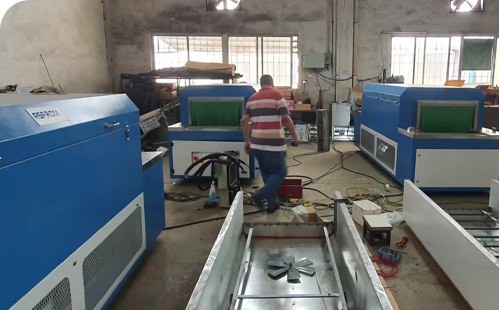
A1:AS‑775M is an inline high‑speed freeze‑setting machine for footwear mass‑production lines. It is applicable for rapid cooling and shape‑fixing of sports shoes, casual shoes, work boots and other footwear styles. It is especially well‑suited for high‑grade shoe manufacturing that demands high shaping speed and dimensional precision. After rapid cryogenic treatment, shoes can be de‑lasted immediately, shortening last occupation cycle and improving the turnover efficiency of shoe lasts.
二. Core Features & Advantages FAQs
Q2: What are the highlights of its intelligent multi‑mode conveying system?
A2: Equipped with automatic photo‑electric eye sensing unit to realize seamless workpiece conveying and reduce manual intervention. Four selectable conveying modes are available: auto photo‑eye fast feed, photo‑eye feed, manual fast feed and manual feed. Operators can switch modes flexibly to match different production rhythms, which helps boost line throughput.
Q3: What is the performance of its closed refrigeration system?
A3:It adopts imported French compressors with closed‑loop cooling architecture. It features powerful cooling capacity, low energy consumption and environmental‑friendly operation. The internal circulating fans distribute cold air evenly inside the cavity, and the minimum achievable temperature can reach ‑20℃. Integrated automatic defrost device regularly melts frost accumulated on condenser surfaces, prevents frost buildup from degrading cooling performance and lowers routine maintenance workload.
Q4: What benefits does ultra‑fast freeze‑setting bring to shoe‑making workshops?
A4:It greatly cuts cooling cycle time. Finished shoes can perform de‑last operation right after coming out from chiller. It reduces shoe‑last occupancy time significantly, so factories can reuse shoe lasts more frequently and cut the quantity of lasts required for production. Precise temperature control avoids shoe‑body deformation and rebound defects, raising finished‑product qualification rate and customer satisfaction.
Q5: About operation and comprehensive‑cost advantages?
A5:It supports one‑touch operation together with intelligent automatic defrost function, lowering operating difficulty and staff training cost. Combined effect of automated conveying, flexible speed adjustment and high‑efficient last reuse shortens overall production cycle, increases daily output and reduces comprehensive manufacturing cost.
三. Complete Technical Parameters FAQs
Q6:What are the complete official specifications of AS‑775M?
A6:
| Item | Specification |
|---|---|
| Model | AS‑775M High‑speed Chiller Machine |
| Power supply | 380V / 50Hz / 3‑Phases |
| Installed Power | 10.5 KW |
| 10‑Hour Production Capacity | 2800 Pairs |
| Minimum working temperature | ‑20℃ |
| Overall dimensions (L×W×H) | 3500 × 1250 × 1300 mm |
| Net Weight | 900 KG |
四.On‑Site Installation & Environment Matching FAQs
Q7: What pre‑conditions are required before installation?
A7:‑ Power supply: Stable three‑phase 380V power supply; adopt 3‑phase 4‑wire wiring method, reliable protective earthing must be completed.
‑ Space allocation: Reserve enough space at inlet and outlet for shoe loading‑unloading. Keep sufficient rear‑side ventilation clearance for condenser heat dissipation.
‑ Environment: Place in well‑ventilated workshop. Avoid high‑humidity and heavy‑dust environment to protect compressors, photo‑electric sensors and electrical parts.
‑ Floor: Install on flat, solid horizontal concrete ground for stable running.
五.Standard Startup & Production Operation SOP FAQs
Q8: What is complete standardized operating procedure from power‑on to mass‑production?
ए8:
- Pre‑start‑up inspection: Check power supply for phase loss risk; inspect conveyor chain condition; test emergency‑stop button; confirm no foreign objects inside cooling chamber.
- Power‑on & parameter setup: Turn on main power, activate control‑panel power switch, start‑up switch and run switch. Set target cooling temperature according to shoe‑material requirements. Select proper conveying mode among four available options.
- Idle test‑run: Run several empty conveying cycles. Check conveyor movement, fan rotation, refrigeration unit status and automatic defrost triggering logic. Observe temperature reading until cavity temperature stabilizes.
- Sample debugging: Feed sample shoes onto conveyor inlet. Evaluate freeze‑setting effect, check whether shoe deforms or rebounds after de‑lasting. Fine‑tune temperature and conveying speed to meet factory internal quality standards.
- Formal mass‑production: Continuously feed shoes at machine inlet. Conduct random sampling inspection each shift. Monitor indicator lights on control panel for abnormal alarms.
- Shift‑end shutdown: Stop feeding workpieces, wait for all shoes to finish conveying. Shut down refrigeration system first, keep internal‑circulation fan running for a period. Cut‑off main power afterwards. Clean conveyor and inner‑chamber residues; empty water container generated by defrosting.
⚠️ Safety warning: Do not open chamber access doors during low‑temperature refrigeration operation to prevent frost‑bite injury. Operators must receive relevant operation training before using this machine.
六.Common Abnormality & Trouble‑Shooting Tips FAQs
Q9: What frequent‑seen faults may happen in daily workshop, and quick check points for operators?
ए9:
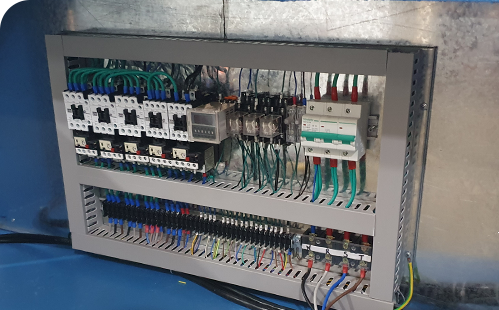
• Phenomenon 1: No refrigeration / cooling capacity insufficient Check points: Observe compressor running status; check power‑phase loss; inspect high‑low‑pressure alarm indicator lamps; verify AC contactor actuation; check if excessive frost covers condenser caused by defrost failure.
• Phenomenon 2: Conveyor does not run Check points: Check whether conveying motor burns out; inspect AC contactor status; check whether power protection trips.
• Phenomenon 3: Poor freeze‑setting, shoe rebounds or deforms after de‑lasting Check points: Verify temperature setting matches shoe‑material; check actual cavity temperature; inspect conveying speed is too fast for insufficient cooling duration; check door sealing for cold‑air leakage.
• Phenomenon 4: Red fault indicator light keeps lit on control panel Check points: Locate corresponding faulty component according to alarm lamp position. Do not disassemble by yourself, contact professional maintenance personnel or supplier technical support.
⚠️ Warning: Operators shall NOT disassemble refrigeration compressors, refrigerant pipelines, sensor assemblies without professional‑technical guidance. Contact supplier‑technical‑support for complex faults.
七.Tiered Complete Routine Maintenance FAQs
Q10: What maintenance items need to be done daily / weekly / monthly / quarterly?
ए10:
✅Daily (before and after each production shift) Check power supply for phase loss; inspect motor and conveyor running status; add lubricant for transmission chain; empty defrost‑water plastic kettle; check for loose screws; clean shoe scraps on conveyor surface.
✅Weekly Tighten loose mechanical fasteners; clean dust on condenser and control‑cabinet heat‑dissipation vents; inspect door sealing strips for cold‑leakage risk.
✅Monthly Calibrate temperature controller reading; inspect wear condition of conveyor chain; check working performance of automatic defrost assembly.
✅Quarterly Full performance test for freeze‑setting quality; comprehensive inspection of compressor, fan, photo‑electric eye sensors and whole electrical‑circuit terminals; replace severely aged wearing‑parts.
八.Delivered Accessories & Technical Documents FAQs
Q11: What items will be delivered together with the machine?
A11:
- Technical documents (paper hard‑copy + PDF electronic version): Complete English‑language operation manual, electrical schematic diagram, spare‑parts list and common‑fault‑troubleshooting manual.
- मानक रूप से प्रदान की जाने वाली सहायक उपकरण: दैनिक मशीन समायोजन और रखरखाव कार्य के लिए मानक उपकरण किट का एक पूरा सेट।.
九. Warranty Scope & After‑Sales Technical Support FAQs
Q12: What is the exact warranty scope, and which parts are excluded?
A12:12‑month full‑machine warranty for non‑consumable parts, calculated from goods arrival at buyer’s premises.
Consumable‑wearing parts excluded from warranty: conveyor‑chain components, door sealing strips, photo‑electric eye sensors, fan blades, filter elements. Damage caused by mis‑operation, improper installation‑ventilation environment and unauthorized disassembly is not covered under warranty.
Q13: What after‑sales technical services are provided?
ए13:
- Remote‑video debugging and remote‑fault‑diagnosis service.
- Online‑operator‑operation‑skill‑training guidance; door‑to‑door on‑site service can be arranged as required.
- ग्राहक के फॉलो-अप प्रतिस्थापन के लिए कारखाना लागत मूल्य पर आजीवन स्पेयर पार्ट्स की आपूर्ति।.
- Process‑technical support: assist customers to optimize temperature and conveying‑speed parameters for different shoe‑material constructions.
Supplementary note: This machine adopts imported French compressors; do not replace refrigerant with non‑specified model. Operators must read the whole operation manual before commissioning.