
ASFROM Heel Side Lasting Equipment FAQ
ASFROM Heel Side Lasting Equipment FAQ
Heel Side Lasting Equipment Base Q&A
I. Häufig gestellte Fragen zu Anwendung und Marktpositionierung
Q1: What shoe styles and production scenarios is AB‑680E intelligent memory heel and side lasting machine suitable for?
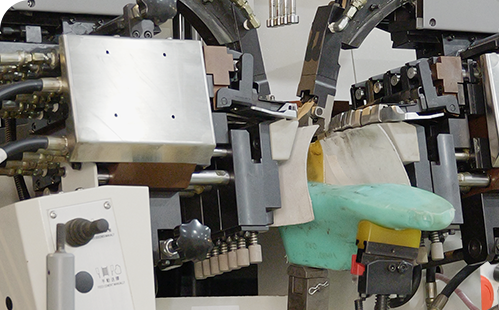
A1: AB‑680E is an intelligent memory‑type heel‑and‑side lasting machine, designed to replace traditional manual hand‑pull waist‑heel lasting procedures and cut labor input on production lines. It is equipped with left‑&‑right‑foot automatic exchange function. It is ideal for production lines with frequent shoe‑model switching, and widely applies to mass‑production of sports shoes and ladies’ leather shoes. It fits medium‑and‑large shoe factories, and supports stable single‑shift or two‑shift high‑intensity continuous assembly‑line production.
Frage 2: Welche zentralen Probleme von Schuhfabriken kann diese Anlage lösen?
A2: Conventional manual hand‑pull waist‑heel lasting relies heavily on skilled workers, resulting in unstable finished‑shoe consistency, frequent defects including heel wrinkles, “double‑eyelid” heel‑edge folds and poor upper fitting. Ordinary old‑type hydraulic heel‑side lasting machines easily suffer excessive oil temperature during long‑time operation, which brings pressure drift, oil leakage and shortened service life of hydraulic components. Without recipe memory function, operators need repeated manual debugging for every new shoe‑last, causing long downtime for frequent‑order switching.
AB‑680E adopts low‑temperature constant‑temperature hydraulic system and PLC recipe memory function. It lowers operator skill threshold, greatly shortens shoe‑style change‑over time, stabilizes lasting forming quality and reduces reject ratio in mass‑batch production.
Frage 3: Worin bestehen die wesentlichen Wettbewerbsvorteile dieses Modells?
A3:
- Low‑temperature constant‑temperature hydraulic system: Oil temperature is stabilized at around 50℃, restrains over‑heating faults and extends service life of hydraulic parts;
- PLC auto‑memory recipe function: Stores up to 200 groups of shoe‑last parameters, one‑click recall for shoe‑style switching to reduce debugging downtime;
- Fourteen sets of core special lasting technologies: Optimize waist‑heel fitting performance and effectively eliminate common lasting defects;
- Left‑&‑right‑foot automatic exchange function: Realize differentiated action logic for left‑foot and right‑foot lasts for better inner‑outer‑waist lasting compactness;
- Dual‑pressure independent control for waist and heel: Two‑stage pressure output adapts to diverse upper‑material hardness;
- Circuit integrated modular design: Stable hardware performance, convenient inspection and component replacement for easy daily maintenance;
- Optional center‑seat forward‑backward moving function: Further optimize lasting effect for special‑shape shoe lasts and accelerate wiper replacement.
二. Intelligent Control System FAQs
Q4:What are the key features of AB‑680E control system?
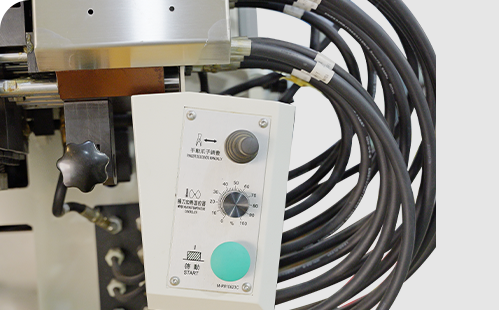
A4:It adopts industrial PLC plus color touch‑screen HMI. It can store up to 200 Gruppen von Rezepturen für Schuhleistenparameter, covering pressure, speed and travel parameters for various shoe lasts. Operators can call pre‑saved parameters with one click during shoe‑model replacement to avoid repeated manual debugging. Shortcut keys for pointed‑toe, round‑toe and square‑toe shoes are built‑in for quick selection. Built‑in machine self‑inspection function and shift‑based production‑output counting function support factory production‑data statistics.
Frage 5: Welche Funktionen für das Produktionsmanagement sind integriert?
A5:Built‑in shift‑output counting module for production‑data statistics. Machine self‑check monitors hydraulic status and executing‑mechanism signals and pops‑up alarm for abnormal conditions. Operation log records parameter‑modification history to realize production‑quality traceability.
Q6: Is there permission management for parameter modification?
A6:Yes, two‑level authority is configured. Ordinary‑operator account is limited to recipe calling and basic start‑stop operation. Modification of core pressure, stroke and timing parameters requires engineer‑level password, preventing mass upper scrap caused by mis‑operation of front‑line staff.
三. Low‑Temperature Hydraulic Core System FAQs
Q7: What is the highlight of AB‑680E hydraulic system?
A7:Equipped with efficient heat‑dissipation circulation device, it keeps hydraulic oil temperature stably around 50℃. Under long‑term two‑shift continuous‑running conditions, it avoids hydraulic‑oil viscosity decline, oil leakage and pressure fluctuation caused by overheating. It improves overall‑machine running stability and extends service life of hydraulic sealing rings and valve blocks.
Q8:What protection mechanisms are built‑in for hydraulic system?
A8:Equipped with hydraulic over‑pressure protection and oil‑temperature over‑limit alarm. When pressure or oil temperature exceeds safe threshold, the system triggers alarm and restricts machine executing actions to prevent pipeline burst and component damage. Recommended hydraulic oil: 68# anti‑wear hydraulic oil; select 46# hydraulic oil for low‑temperature cold‑climate workshops.
四.Fourteen‑Group Special‑Skill Mechanism FAQs
Q9: What are the fourteen‑group core special‑skill functions of AB‑680E?
A9:
- Last‑back highest adjustment: Wide‑range height adjustment, compatible from children’s‑shoe lasts up to high‑top‑shoe lasts;
- Analog and true tensioner: Computer‑simulation optimized tensioner structure, wide adaptability for different shoe‑last data;
- Last self‑balance stock: Automatically balance according to shoe‑last contour to guarantee flat lasting effect for irregular lasts;
- Low‑temperature hydraulic system: Stabilize oil temperature near 50℃, enhance stability and component service life;
- Double‑finger force‑flat function: Apply sufficient even pressure on upper material to make lasting surface flatter;
- Extrusion side‑angle leveling function: Eliminate “double‑eyelid” heel‑fold quality defects;
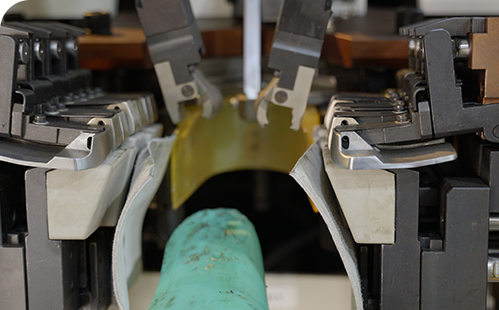
- Pincer lasting pull‑rear‑strap mechanism: Pincers pull heel upper to achieve tighter fitting effect;
- Press‑edge double‑balance attach‑last mechanism: Dual interactive balance structure, maximize fitting area between upper and shoe‑last;
- The center‑seat automatically moves forward and backward (optional): Optimize heel‑waist joint transition effect, assist fast wiper replacement;
- PLC auto‑memory function: Store 200 shoe‑type parameter groups, one‑click recall to cut adjustment time;
- Left‑&‑right‑foot auto‑exchange function: Improve lasting compactness for inner‑waist and outer‑waist positions;
- Waist & heel lasting high‑low‑press function: Two‑stage pressure control to acquire better lasting result for waist‑heel zones;
- Press‑cylinder bidirectional precise control: Dual‑hydraulic‑cylinder design to match suitable running speed and pressure output;
- Circuit integrated modularization: Compact modular electrical layout, durable and easy‑maintenance.
Frage 10: Wie viel Zeit lässt sich beim Formatwechsel im Vergleich zu herkömmlichen Anlagen einsparen?
A10: For existing shoe‑types, operators only need one‑click recipe recall. For brand‑new shoe lasts, combined with multiple mechanical quick‑adjust knobs, the whole re‑adjustment cycle is largely shortened compared with conventional heel‑side lasting machines, effectively reducing assembly‑line downtime loss caused by frequent order switching.
V. Technische FAQs zu „Core Lasting Forming“ und „Upper‑Protection“
Q11: What key technologies guarantee stable finished‑shoe quality?
A11:
- Last‑seat self‑balancing technology: Automatically adapt to irregular shoe‑last shapes for uniform stress distribution, reduce risk of upper tearing;
- Dual‑pressure independent control for waist‑heel area: Set separate high/low pressure for shoe waist and heel according to upper‑material hardness and shoe‑last structure;
- Press‑edge double‑balance attach‑last mechanism: Up‑and‑down symmetrical dual press‑edge units, raise fitting rate between upper and shoe‑last;
- Extrusion side‑angle leveling function: Special extrusion mechanical structure greatly reduces “double‑eyelid” heel‑fold defects;
- Pincer pull‑heel tightening function: Pincer mechanism pulls rear upper to fit shoe‑last tightly without loose edges;
- Integrierte Technologie für Daten, Simulation und Werkzeugkonstruktion: Optimize movement track of tensioner, pincers and wiper to improve product consistency in mass‑batch production.
Frage 12: Mit welchen optionalen mechanischen Modulen lässt sich die Formqualität weiter verbessern?
A12:Center‑seat forward‑backward moving function (optional): Optimize transition effect of heel‑waist joint for special‑shape shoe lasts, also help wiper quick replacement.
Q13:How do these technologies perform under mass continuous two‑shift production?
A13:Benefiting from low‑temperature constant‑temperature hydraulic system, pressure output remains stable in long‑time high‑intensity operation. Multi‑dimensional mechanical optimization restrains common defects such as heel wrinkle, waist loose‑edge and “double‑eyelid” folds. According to official evaluation indicators, it gains good scores on side‑angle flatness, fabric freedom, lasting true‑congruence, production efficiency, adjustment efficiency and operability.
VI. Optionale Funktionsmodule & FAQs zu Auswahlempfehlungen
Q14: What production benefits will optional center‑seat forward‑backward moving function bring?
A14:This optional module optimizes the natural transition of heel‑waist joint position for special‑curve shoe lasts, improves finished‑shoe appearance quality. Meanwhile it simplifies wiper disassembly‑replacement steps and shortens part‑changing time. For mass‑production of regular‑contour sports shoes and ladies’ leather shoes, this option can be omitted to save procurement cost.
VII. Häufig gestellte Fragen zu technischen Parametern
Q15: What are the full official specifications of AB‑680E?
A15: ‑ Model: AB‑680E Intelligent Memory Heel And Side Lasting Machine
‑ Power supply: 380V / 50Hz / 3‑Phases
‑ Heating Power: 1000W
‑ Motor Power: 2HP
‑ 8‑Hour Production Capacity: 1800 Pairs
‑ Working Hydraulic Pressure: 40‑45KG/CM²
‑ Hydraulic Oil Tank Volume: 100 Liters
‑ Recommended Hydraulic Oil: 68# anti‑wear hydraulic oil (46# for cold‑climate workshops)
‑ Overall Machine Dimension: 1550 mm × 1350 mm × 1800 mm
‑ Export Package Dimension: 1700 mm × 1300 mm × 2100 mm
‑ Net Weight: 950 KG
VIII. Häufig gestellte Fragen zur Installation vor Ort und zur Anpassung an die Umgebungsbedingungen
Frage 16: Welche Anforderungen hinsichtlich Stromversorgung, Platzbedarf und Umgebungsbedingungen gelten vor der Installation?
A16:
- Stromversorgung: Es ist eine stabile dreiphasige 380-V-Stromquelle erforderlich; zum Schutz der elektrischen Sicherheit muss eine zuverlässige Erdungsverbindung hergestellt werden;
- Platzbedarf: Halten Sie rund um die Maschine einen Arbeitsfreiraum von mindestens 1,2 Metern ein, damit sich der Bediener bewegen und Bauteile austauschen kann;
- Environment: The workshop shall maintain good ventilation; avoid heavy‑dust and high‑humidity circumstance to protect hydraulic valve blocks and modular electrical components;
- Ground: Installation ground shall be flat and solid to bear machine weight, preventing equipment offset induced by long‑time vibration.
IX. Häufig gestellte Fragen (FAQ) zu den Standard-SOPs für Inbetriebnahme und Produktionsbetrieb
Frage 17: Wie lautet die vollständige standardisierte Arbeitsanweisung vom Einschalten bis zur Serienproduktion?
A17:
- Pre‑startup inspection: Check power‑supply grounding condition; confirm hydraulic‑oil level stays within normal scale; test emergency‑stop‑button validity; clean glue residues on tensioner, pincers and wiper surfaces;
- Power‑on: Switch on main power supply, enter PLC touch‑screen interface; recall corresponding shoe‑last recipe or manually set pressure‑related parameters;
- Idle test run: Execute multiple empty cycles without shoe last, check for abnormal noise, oil‑leakage or system‑alarm prompts; observe whether hydraulic‑oil temperature rises normally;
- Sample debugging: Place shoe last and upper on working station, produce test‑sample piece. Fine‑tune pressure, tension and travel parameters until waist‑heel lasting quality fully meets factory internal‑quality standards;
- Formal mass‑production: Launch batch production; operators conduct random‑sampling inspection focusing on heel‑edge flatness and waist fitting effect during each shift;
- Abschaltung am Schichtende: Kleberrückstände von der Oberfläche entfernen; zuerst die Heizfunktion ausschalten, dann den Hauptmotor anhalten; bei längerer Außerbetriebnahme die gesamte Stromversorgung unterbrechen.
X. Häufige Störungen und Tipps zur Fehlerbehebung – Häufig gestellte Fragen (FAQ)
Frage 18: Welche häufig auftretenden Fehler können im täglichen Werkstattbetrieb auftreten, und welche Punkte sollten die Bediener bei einer Schnellprüfung beachten?
A18:
• Phenomenon 1: Upper tearing in waist‑heel lasting process
Check points: Verify whether hydraulic pressure value is over‑high; check tensioner pressure setting; inspect whether pincer jaws have sharp wear burrs.
• Phenomenon 2: Heel “double‑eyelid” fold / waist wrinkle & loose‑edge defect
Check points: Recheck shoe‑last recipe parameters; inspect wiper and tensioner wear status; verify last‑seat self‑balance working status.
• Phänomen 3: Hydraulischer Hochtemperaturalarm
Check points: Check workshop ventilation and heat‑dissipation channel dust blockage; check whether hydraulic‑oil is aging and deteriorated.
• Phänomen 4: Die Maschine kann nach dem Auslösen des Zyklus keine Aktion ausführen
Zu überprüfende Punkte: Status der Not-Aus-Rückstellung bestätigen; die auf dem Touchscreen angezeigten Informationen zur Alarmmeldung lesen.
⚠️ Warning: Operators are forbidden to disassemble hydraulic‑valve blocks and internal‑electrical modular components without professional‑technical guidance. For complex faults, please contact supplier‑technical‑support team.
XI. Häufig gestellte Fragen zur gestaffelten vollständigen routinemäßigen Wartung
Frage 19: Welche Wartungsarbeiten müssen täglich, wöchentlich, monatlich bzw. vierteljährlich durchgeführt werden?
A19:
✅ Täglich (vor und nach jeder Produktionsschicht):
Clean glue residues on tensioner, pincers, wiper surfaces; check hydraulic‑oil level, pressure and oil‑temperature data; test emergency‑stop‑button function; wipe dust on touch‑screen surface.
✅Wöchentlich:
Add lubricant to all moving‑guide shafts, tensioner and pincer‑linkage mechanisms; inspect all hydraulic‑pipe joints for oil‑leakage; clear dust of electric‑cabinet heat‑dissipation openings; fasten loose‑mechanical screws.
✅Monatlich:
Verify stored shoe‑last recipe data; calibrate hydraulic‑working‑pressure and oil‑temperature‑control parameters; inspect wear status of consumables such as tensioner, pincers and wiper; check aging degree of hydraulic‑sealing rings.
✅Vierteljährlich:
Carry out sample‑test for overall waist‑heel lasting forming performance; analyze oil‑pollution degree of hydraulic‑oil and replace hydraulic‑oil if necessary; comprehensively inspect machine self‑inspection and alarm functions.
12. Häufig gestellte Fragen zu mitgeliefertem Zubehör und technischen Unterlagen
Frage 20: Welche Teile werden zusammen mit der Maschine geliefert?
A20:
- Technical documents (paper hard‑copy + PDF electronic version): Complete English‑language operation manual, hydraulic‑circuit schematic diagram, electrical‑modular schematic diagram, spare‑parts list, parameter‑setting guide and common‑fault‑troubleshooting manual;
- Im Lieferumfang enthaltenes Standardzubehör: Ein vollständiger Satz Standardwerkzeuge für die täglichen Einstell- und Wartungsarbeiten an der Maschine.
十三. Warranty Scope & After‑Sales Technical Support FAQs
Frage 21: Wie sieht der genaue Umfang der Garantie aus, und welche Teile sind davon ausgeschlossen?
A21: 12 Monate Garantie auf das gesamte Gerät für nicht verschleißbare Teile.
Consumable‑wearing parts excluded from warranty: tensioner accessories, pincers, wiper, hydraulic‑sealing rings.
Frage 22: Welche technischen Kundendienstleistungen werden angeboten?
A22:
- Remote‑video debugging and remote‑fault‑diagnosis service;
- Anleitung zur Schulung der Bediener in der Online-Bedienung; bei Bedarf kann ein Vor-Ort-Service von Tür zu Tür vereinbart werden;
- Lebenslange Ersatzteilversorgung zum Herstellerpreis für den späteren Austausch durch den Kunden.