
ASFROM Multi Function Shoe Lasting Equipment FAQ
ASFROM Multi Function Shoe Lasting Equipment FAQ
Multi Function Shoe Lasting Equipment Base Q&A
I. Häufig gestellte Fragen zu Anwendung und Marktpositionierung
Q1: What shoe styles and production scenarios is AB‑838 machine suitable for?
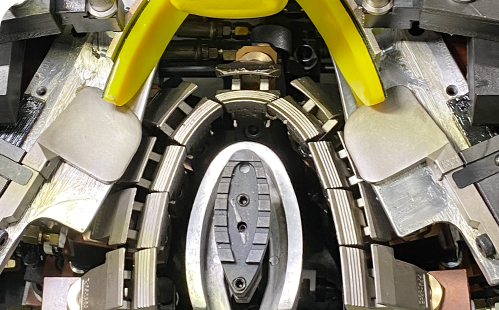
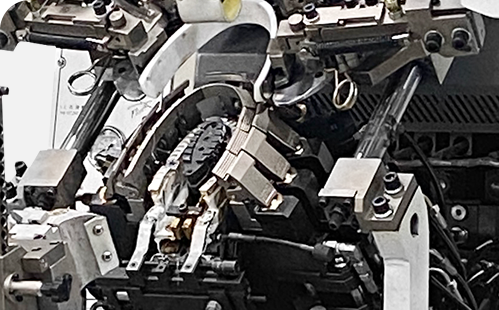
A1: AB‑838 is a mid‑range toe lasting machine, specially developed for production lines and sample rooms with frequent shoe‑style change‑over demands. It features powerful automatic adjustment functions and low skill requirements for maintenance operators. It is the preferred equipment for sample workshops and boutique production lines. It is applicable for mass‑production of leather shoes, sports shoes and casual shoes.
Frage 2: Welche zentralen Probleme von Schuhfabriken kann diese Anlage lösen?
A2:Traditional toe lasting machines require long‑time complex debugging when switching shoe lasts and rely heavily on experienced senior technicians. Frequent style changes cause long‑time production‑line downtime loss. Improper parameter settings easily generate defects such as vamp tearing, toe deformation and shoe‑waist wrinkles. AB‑838 comes with abundant quick‑adjust structures to greatly shorten style‑change cycle, lower operator technical threshold and reduce defective‑product rate.
Frage 3: Worin bestehen die wesentlichen Wettbewerbsvorteile dieses Modells?
A3:
- Abundant quick‑adjust mechanisms, realizing fast shoe‑model conversion and reducing downtime loss;
- Mature high‑quality lasting technical suite to guarantee stable finished‑shoe forming quality;
- Multi‑dimensional upper‑protection design to effectively prevent vamp rupture and material damage;
- Optional automatic hot‑melt gluing (auto‑cement) module for labor‑saving and bonding‑quality improvement;
- Intuitive mechanical adjustment layout, easy‑to‑learn for front‑line workers, well‑suited for sample‑room and boutique‑line scenarios.
二. Control System FAQs
Q4: What are the key features of AB‑838 control system?
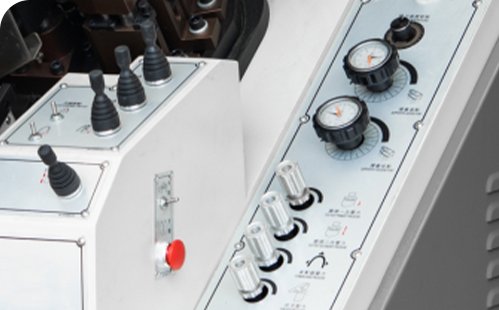
A4:AB‑838 adopts mature PLC control system. Most adjustment items are operated through external mechanical knobs and buttons, without large‑scale touch‑screen recipe memory function. The operation layout is intuitive with scale marks, new operators can master basic debugging after short‑term training. It supports real‑time action adjustment during production.
Q5: Does it support production‑data statistics and authority management?
A5:This model does not support mass shoe‑last recipe storage, remote transmission or multi‑level password authority management. Adjustment parameters need to be manually reset for each new shoe‑last. It is more oriented towards small‑batch, frequently‑changed‑style production for sample rooms and boutique lines.
三. Hydraulic Core System FAQs
Q6: What is the highlight of AB‑838 hydraulic system?
A6:It adopts stable standard hydraulic circuit design. The hydraulic system outputs stable driving force to complete each lasting cycle. The welded heavy‑duty frame improves anti‑vibration performance, adapting to single‑shift or medium‑intensity two‑shift production environment.
Q7: What protection mechanisms are built‑in for hydraulic system?
A7:Equipped with hydraulic over‑pressure protection function. When working pressure exceeds safe threshold, the system will restrict machine movements to avoid hydraulic‑pipe burst and component damage. Operators need to keep hydraulic oil within standard liquid‑level range in daily work.
IV. Häufig gestellte Fragen zum „Quick-Adjust“- und werkzeuglosen Austauschmechanismus
Q8: What quick‑adjust and tool‑free replacement configurations are covered by the 20‑group special skills?
A8:
- Tool‑free quick‑change for pincers, wiper and toe band;
- Electric quick‑adjust for head‑stock, just press buttons to complete setting;
- Automatic movement of first‑pincer assembly; fast gap adjustment between first pincer and supporter;
- Manual toe‑deflection adjustment for offset‑toe shoe lasts, ensuring compact toe forming matching shoe‑toe radian;
- Second‑pincer toe‑size radian automatic adjustment and toe‑width automatic positioning;
- Automatic width‑locking for first pincer for convenient pincer replacement;
- Adjustable operating‑table inclination angle, adapts operators of different heights and relieves long‑shift fatigue;
- External‑valve quick‑adjust structure with clear scales; no need to open machine housing for parameter tuning;
- Integrated stroke quick‑adjustment for all executing mechanisms.
Q9: How much time can be saved during style change‑over compared with traditional equipment?
A9:Key‑part replacement time comparison:
‑ Adjust distance between pincer and supporter: 10 s vs traditional 10 min
V. Technische FAQs zu „Core Lasting Forming“ und „Upper‑Protection“
Q10: What key technologies guarantee stable finished‑shoe quality and prevent upper damage?
A10:
- Patentierte Spitzschuh-Technologie: Makes shoe‑toe compact without shifting or deformation, improves appearance texture of pointed‑toe footwear;
- Rear‑pincer corner automatic adjustment function: Automatically fits shoe‑last waist radian, eliminates waist‑position wrinkles and loose‑edge defects;
- Technologie zum automatischen Ausgleich des Eindringdrucks: Automatically balances pressing‑force distribution, prevents vamp tearing and relative displacement between upper and mid‑sole;
- Unterstützt zweistufige Aufwärtsfunktion: Slow‑rise buffer‑movement restrains upper rebound and avoids shoe‑last retreating;
- Pincer‑slide function: Realizes free sliding of upper material during clamping, releases partial fabric tension and protects delicate uppers;
- Integrierte Technologie für Daten, Simulation und Werkzeugkonstruktion: Optimizes mechanical movement‑track through data‑driven simulation and improves product consistency.
Q11: What optional mechanical modules can further upgrade molding quality
A11:
- Zusätzliches Zehenband (optional): Restrains upper spring‑back force in lasting process and prevents vamp outward bouncing. Recommended for soft‑elastic‑material shoes; can be omitted for hard‑material simple‑style shoes to cut procurement cost.
- Zusatzwischer (optional): Arbeitet mit dem Hauptwischer zusammen, um im Bereich der Schuhtaille eine feine Laminierung zu erzielen. Sehr empfehlenswert für hochwertige Lederschuhe mit komplexen Rundungen; nicht zwingend erforderlich für Freizeitsportschuhe mit glatter Oberfläche.
Q12: How do these technologies perform under actual production?
A12:Oriented towards sample‑room and boutique‑line production scenarios. Under medium‑intensity continuous‑running conditions, multi‑layer upper‑protection structures effectively restrain common defects such as toe wrinkle, waist loose‑edge and vamp tearing. According to official evaluation indicators, it achieves good scores on side‑angle flatness, fabric freedom, lasting true‑congruence, adjustment efficiency and controllability.
VI. Optionale Funktionsmodule & FAQs zu Auswahlempfehlungen
Q13: What production benefits will optional auto‑cement bring?
A13: The optional automatic hot‑melt gluing module adopts high‑temperature hot‑melt adhesive. It precisely controls glue dosage and coating position, reduces glue overflow and waste caused by manual brushing. It can save labor for gluing station and stabilize bonding flatness and adhesive strength.
VII. Häufig gestellte Fragen zu technischen Parametern
Q14: What are the full official specifications of AB‑838?
A14:‑ Model: AB‑838 New‑Type Multi‑Functional Toe Lasting Machine
‑ Gesamtabmessungen der Maschine: 1660 mm × 980 mm × 1980 mm
VIII. Häufig gestellte Fragen zur Installation vor Ort und zur Anpassung an die Umgebungsbedingungen
Q15:What power, space and environmental requirements before installation?
A15:
- Stromversorgung: Es ist eine stabile dreiphasige 380-V-Stromquelle erforderlich; zum Schutz der elektrischen Sicherheit muss eine zuverlässige Erdungsverbindung hergestellt werden;
- Platzbedarf: Halten Sie rund um die Maschine einen Arbeitsfreiraum von mindestens 1,2 Metern ein, damit sich der Bediener bewegen und Bauteile austauschen kann;
- Umgebungsbedingungen: Die Werkstatt muss gut belüftet sein; stark staubbelastete und feuchte Umgebungen sind zu vermeiden, um die Hydraulikventilblöcke und elektrischen Komponenten zu schützen;
- Ground: Installation ground shall be flat and solid to bear machine weight, preventing equipment offset induced by long‑time vibration.
IX. Häufig gestellte Fragen (FAQ) zu den Standard-SOPs für Inbetriebnahme und Produktionsbetrieb
Q16: What is the complete standardized operating procedure from power‑on to mass‑production?
A16:
- Überprüfung vor dem Anfahren: Den Erdungszustand der Stromversorgung prüfen; sicherstellen, dass der Hydraulikölstand im normalen Bereich liegt; die Funktionsfähigkeit des Not-Aus-Schalters testen; Klebstoffreste an den Oberflächen von Greifern, Abstreifer und Spannband entfernen;
- Power‑on: Switch on main power supply; adjust each mechanical knob and button according to shoe‑last characteristics;
- Idle test run: Execute multiple empty cycles without shoe last, check for abnormal noise, oil‑leakage or abnormal phenomena;
- Sample debugging: Place shoe last and upper on working station, produce test‑sample piece. Fine‑tune mechanical parameters until lasting quality fully meets factory internal‑quality standards;
- Formal production: Carry out batch or small‑sample production; operators conduct random‑sampling inspection for finished shoes;
- Shift‑end shutdown: Clean surface glue residue; cut off total power supply for long‑time off‑duty.
X. Häufige Störungen und Tipps zur Fehlerbehebung – Häufig gestellte Fragen (FAQ)
Q17: What frequent‑seen faults may happen in daily workshop, and quick check points for operators?
A17:
• Phänomen 1: Risse im Obermaterial / im Vorderblatt während des Sohlenanbringens
XI. Häufig gestellte Fragen zur gestaffelten vollständigen routinemäßigen Wartung
Q18: What maintenance items need to be done daily / weekly / monthly / quarterly?
A18:
✅ Täglich (vor und nach jeder Produktionsschicht):
✅Wöchentlich:
✅Monatlich:
✅Vierteljährlich:
12. Häufig gestellte Fragen zu mitgeliefertem Zubehör und technischen Unterlagen
Q19: What items will be delivered together with the machine?
A19:
- Technical documents (paper hard‑copy + PDF electronic version): Complete English‑language operation manual, hydraulic‑circuit schematic diagram, electrical‑schematic diagram, spare‑parts list and common‑fault‑troubleshooting manual;
- Im Lieferumfang enthaltenes Standardzubehör: Ein vollständiger Satz Standardwerkzeuge für die täglichen Einstell- und Wartungsarbeiten an der Maschine.
十三. Warranty Scope & After‑Sales Technical Support FAQs
Q20: What is the exact warranty scope, and which parts are excluded?
A20:12‑month full‑machine warranty for non‑consumable parts.
Von der Garantie ausgenommen sind Verschleißteile: Greifer, Abstreifer, Spannband, Klebstoffpumpe, hydraulische Dichtungsringe, Gummigriffhülsen.
Q21:What after‑sales technical services are provided?
A21:
- Remote‑video debugging and fault‑guidance service;
- Online operator‑operation‑skill‑training guidance; door‑to‑door on‑site service can be arranged as required;
- Lebenslange Ersatzteilversorgung zum Herstellerpreis für den späteren Austausch durch den Kunden.