
ASFROM Automatic Shoe Buffing Machine FAQ
ASFROM Automatic Shoe Buffing Machine FAQ
Automatic Shoe Buffing Machine Base Q&A
一.Application & Market Positioning FAQs
Q1: What shoe‑making processing scenarios is AF‑623Y automatic buffing machine suitable for?
A1: AF‑623Y is a shoe‑industry special‑purpose buffing / roughening work‑station. It is mainly used for edge roughening, edge grinding and profile correction for shoe uppers, midsoles and outsoles. It adapts to shoe‑factory assembly‑lines, manual polishing workshops and sample‑room working stations, applicable for continuous single‑shift production. It handles both coarse roughening and fine finishing, especially good for curve corners and intricate fine‑feature areas of shoe components.
Q2: What core pain points of shoe factories can this equipment solve?
A2: Traditional open‑type manual buffing generates large amounts of leather dust and debris, polluting workshop air and harming operator health. Ordinary grinding devices produce high noise, and struggle to obtain consistent fine‑finish effect on curved corner positions. AF‑623Y integrates grinding and dust‑extraction in one closed‑structure unit. It effectively collects grinding dust, lowers working noise, improves fine‑grinding quality for curved profiles; the movable stand‑alone design can be flexibly deployed at different positions on production lines to raise overall processing efficiency.
Q3: What are the full core competitive advantages of this model?
A3:
- Coarse‑and‑fine dual‑purpose buffing: Supports both heavy roughening and precision fine‑grinding, excels at curved‑corner and intricate‑area finishing;
- Buffing‑cum‑dust‑collection integrated closed‑design: Powerful built‑in dust‑extraction system captures grinding dust and leather debris, improves workshop hygiene;
- Low‑noise operation: Closed housing structure reduces running noise, meets environmental‑protection requirements for shoe‑making workshops;
- Flexible mobile layout: Compact stand‑alone unit, easy to move and re‑position, simple operation, improves production efficiency;
- Small footprint, light‑weight body, easy integration with existing shoe‑factory production lines.
二. Core Mechanism Technical FAQs
Q4: What are the key functional modules of AF‑623Y?
A4:
- Buffing working chamber: Closed protective‑housing provides safe grinding operating space, prevents dust spill‑over;
- Powerful integrated dust‑collector: Real‑time suction for dust and leather scraps generated during grinding work;
- Mobile base: Equipped with casters for flexible relocation on workshop floor;
- Pneumatic‑assisted buffing assembly: Matches shoe‑component edge‑grinding and correction operations.
Q5: What practical production value does this machine bring?
A5:It solves dust‑pollution and high‑noise pain points of manual open‑air grinding. It delivers stable fine‑grinding effect for curved edges of uppers, midsoles and outsoles. Its movable layout can be flexibly arranged at different stations of assembly‑lines without complex civil‑work modification.
三. Complete Technical Parameter FAQs
Q6: What are the full official specifications of AF‑623Y?
A6:‑ Model: AF‑623Y Automatic Buffing Machine
‑ Power supply: 380V / 50Hz / 3‑Phases
‑ Motor Power: 1 KW
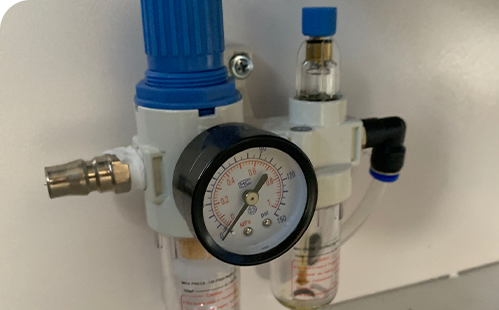
‑ Working Air Pressure: 0.5 MPa
‑ Overall Machine Dimension: 930 mm × 600 mm × 1360 mm
‑ Export Package Dimension: 1030 mm × 700 mm × 1460 mm
‑ Net Weight: 80 KG
四.On‑Site Installation & Environment Matching FAQs
Q7: What power, space and environmental requirements before installation?
A7:
- Power supply: Stable three‑phase 380V power source; reliable grounding connection for electrical‑safety protection;
- Air source: Compressed‑air supply with stable working pressure of 0.5 MPa;
- Space: Reserve at least 1.0‑meter operating clearance around machine for operator movement and dust‑bag replacement;
- Environment: Workshop requires good ventilation; keep away from open‑flame and flammable materials (leather dust is flammable);
- Ground: Flat workshop floor; casters enable machine to be freely moved and fixed in position.
五.Standard Startup & Production Operation SOP FAQs
Q8: What is the complete standardized operating procedure from power‑on to work completion?
A8:
- Pre‑startup inspection: Check power‑supply grounding status; confirm compressed‑air pressure reaches 0.5 MPa; inspect dust‑bag for full‑load condition; check buffing tool / grinding‑wheel wear condition;
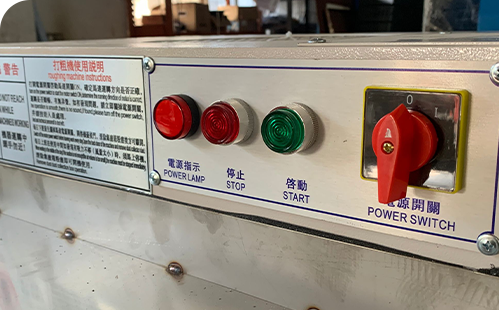
- Power‑on: Switch on main power supply; start dust‑collection system first, then start buffing‑spindle motor;
- Idle test run: Run machine without workpiece, check for abnormal noise and air‑leakage, confirm dust‑suction effect;
- Formal processing: Hold shoe‑part workpiece and perform roughening / fine‑grinding / edge‑correction operation; focus on curved corner fine finishing; operators shall wear dust‑proof personal protective gear;
- Shift‑end shutdown: Stop buffing‑spindle motor first; keep dust‑collector running for a short while to fully clear residual dust inside chamber; then power‑off; clean grinding‑chamber interior; inspect and replace saturated dust‑collection bag.
六.Common Abnormality & Trouble‑Shooting Tips FAQs
Q9: What frequent‑seen faults may happen in daily workshop, and quick check points for operators?
A9:
• Phenomenon 1: Poor dust‑collection effect, dust escapes out of working chamber
Check points: Check dust‑bag for clogging / saturation; inspect sealing condition of chamber cover; check dust‑fan normal‑operation status.
• Phenomenon 2: Abnormal noise during buffing‑spindle running
Check points: Inspect grinding‑wheel wear, chipping or unbalance; check for foreign‑object inside buffing chamber.
• Phenomenon 3: Insufficient pneumatic‑driving force
Check points: Verify compressed‑air pressure reaches 0.5 MPa; inspect air‑pipe joints for air‑leakage.
• Phenomenon 4: Machine cannot start after power‑on
Check points: Confirm power‑supply connection status; check emergency‑stop button reset state.
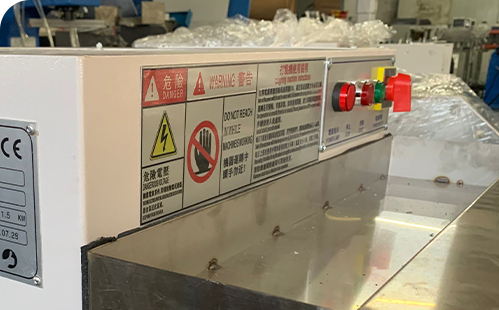
⚠️ Warning: Operators shall wear dust‑proof masks and protective goggles during operation. Do not open closed buffing‑housing cover when spindle is rotating. Do not disassemble motor and dust‑fan components without professional guidance. Contact supplier‑technical‑support for complex faults.
七.Tiered Complete Routine Maintenance FAQs
Q10: What maintenance items need to be done daily / weekly / monthly?
A10:
✅Daily (before and after each production shift):
Clean leather dust and debris inside buffing chamber; check dust‑bag saturation and replace in time; inspect grinding‑wheel wear; test emergency‑stop function.
✅Weekly:
Check air‑pipe joints for air‑leakage; clean dust‑fan impeller dust accumulation; check cabinet‑door sealing rubber strips; fasten loose mechanical screws.
✅Monthly:
Comprehensively inspect grinding‑spindle running status; check aging of air‑pipe fittings; thoroughly clean internal dust‑passage pipeline; inspect caster wheel wear and locking‑brake function.
八. Delivered Accessories & Technical Documents FAQs
Q11: What items will be delivered together with the machine?
A11:
- Technical documents (paper hard‑copy + PDF electronic version): Complete English‑language operation manual, spare‑parts list and common‑fault‑troubleshooting manual;
- Standard delivered accessories: Standard tool kit for daily maintenance.
九. Warranty Scope & After‑Sales Technical Support FAQs
Q12: What is the exact warranty scope, and which parts are excluded?
A12:12‑month full‑machine warranty for non‑consumable parts.
Consumable‑wearing parts excluded from warranty: grinding‑wheel / buffing‑tools, dust‑collection bag, air‑pipe fittings, casters.
Q13: What after‑sales technical services are provided?
A13:
- Remote‑video debugging and remote‑fault‑guidance service;
- Online‑operator‑operation‑skill‑training guidance; door‑to‑door on‑site service can be arranged as required;
- Lifelong spare‑parts supply at factory‑cost price for customer follow‑up replacement.