
ASFROM Shoe Making Equipment FAQ
ASFROM Shoe Making Equipment FAQ
Shoe Making Equipment Base Q&A
一.Application & Market Positioning FAQs
Q1: What shoe styles and production scenarios is AB‑859E machine suitable for?
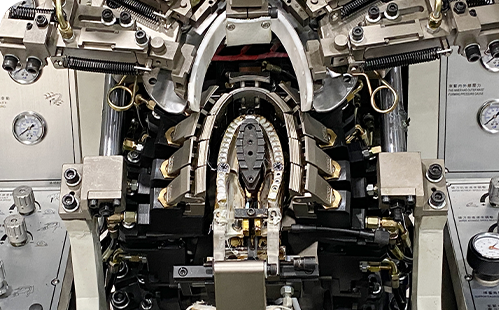
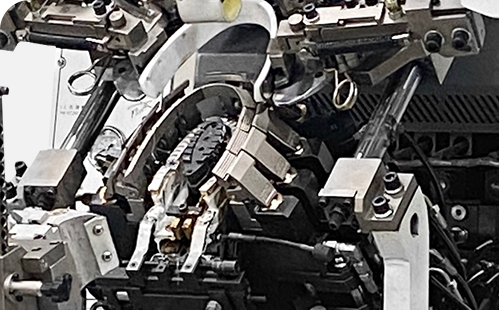
A1: AB‑859E is a high‑end intelligent toe lasting machine co‑developed by ASFROM and Italian RECES. It merges Italian mature high‑grade lasting craftsmanship with ASFROM easy‑operation core technology, implementing the design concept of “Make easy shoe, Easy make shoe”. Its selling price is only 50% of imported equivalent European models, delivering outstanding cost‑performance for international shoe manufacturers.
It applies to mass‑production of high‑grade leather shoes, sports shoes, casual shoes. It fits medium‑and‑large shoe factories with frequent multi‑style small‑batch mixed‑production, as well as production lines running two‑shift continuous operation.
Q2: What core pain points of shoe factories can this equipment solve?
A2: Traditional old‑type toe lasting machines heavily rely on highly‑skilled veteran operators. Frequent shoe‑last switching brings extremely long debugging downtime, raising production loss. Improper parameter setting easily causes mass defective products including vamp tearing, toe wrinkling, waist loose‑edge and mid‑sole offset. Besides, long‑time continuous operation leads to excessive hydraulic oil temperature, triggering unstable machine action and unexpected shutdown. AB‑859E targets all above‑mentioned pain points, lowering technical threshold for operators, shortening style‑change time, reducing defect rate and improving continuous‑running stability.
Q3: What are the full core competitive advantages of this model?
A3:
- 29‑group special quick‑adjust functions with multiple tool‑free quick‑change structures, greatly cutting style‑switch debugging downtime;
- Complete high‑quality lasting technology suite for stable forming quality in long‑term mass production;
- Multi‑layer upper‑protection mechanism to effectively reduce vamp‑tearing defective rate;
- Optional automatic hot‑melt gluing (auto cement) module to save manual gluing labor;
- Italian‑origin low‑temperature oil‑saving hydraulic system, stable pressure output and energy‑saving performance;
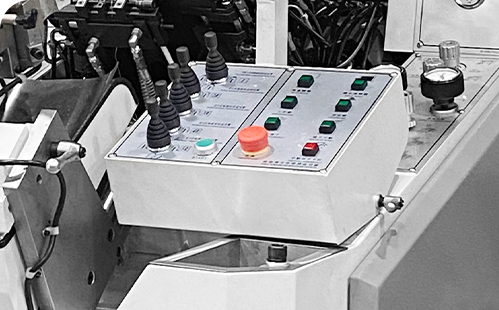
- New V3.0 PLC intelligent touch‑screen operating system with recipe storage, multi‑language, remote transmission and remote diagnosis function.
二. Intelligent V3.0 Control System FAQs
Q4: What are the key features of the V3.0 control system?
A4:The V3.0 system adopts industrial PLC plus color touch‑screen human‑machine interface, supporting multi‑language display for overseas workshops. It can store up to 200 groups of shoe‑last parameter recipes. When switching shoe styles, operators can recall saved parameters with one‑click automatic adjustment, avoiding repeated manual debugging. It supports remote data transmission; technical staff can remotely read machine running data and complete fault diagnosis without on‑site arrival, improving after‑sales response efficiency. The graphic‑based operation interface is intuitive; new operators can finish basic operation training within short time.
Q5: What production‑management‑oriented functions are built‑inside?
A5:Built‑in real‑time production‑output counting function, recording daily shift output data for factory production statistics. Machine self‑inspection function can detect abnormal status of hydraulic pressure, temperature and executing mechanisms in advance and trigger prompt warning. It retains operation log to review historical parameter modification records, convenient for production traceability.
Q6: Is there permission management for parameter modification?
A6:Yes, two‑level authority is configured. Ordinary operator account only allows calling existing shoe‑last recipes and simple start‑stop operation. Core action‑time, pressure and stroke modification are protected by engineer‑level password, preventing mis‑adjustment by front‑line workers which may cause large‑area vamp scrap.
三. Italian Low‑Temperature Oil‑Saving Hydraulic Core System FAQs
Q7: What is the highlight of this hydraulic system?
A7:It introduces Italian low‑temperature oil‑saving hydraulic design. During two‑shift non‑stop workshop production, it effectively controls hydraulic oil temperature rise. Comparing with traditional hydraulic toe lasting machines, pressure fluctuation is minimized in each lasting cycle, ensuring consistent pressing force. Meanwhile it reduces invalid power consumption, realizing energy‑saving effect. Stable oil temperature can extend service life of hydraulic valves, sealing rings and other core wearing components.
Q8: What protection mechanisms are built‑in for hydraulic system?
A8:Equipped with hydraulic over‑pressure protection, high‑oil‑temperature alarm function. When oil temperature exceeds safe threshold or pressure surges abnormally, the system will pop‑up alarm prompt and restrict machine executing actions, to avoid hydraulic‑component damage, oil‑pipe burst and safety hazards.
四.Quick‑Adjust & Tool‑Free Replacement Mechanism FAQs
Q9: What tool‑free quick‑change functions does the machine equip?
A9:This machine owns total 29 groups of special adjustment functions:
- Tool‑free quick‑change for pincers, wiper and toe band;
- External‑valve quick‑adjust structure with clear scale marking; no need to open machine housing for parameter tuning;
- Manual toe‑deflection adjustment, specially for offset‑toe shoe lasts to realize compact toe forming;
- Second‑pincer toe‑size radian automatic adjustment, toe‑width automatic positioning;
- Automatic width adjustment for first pincer; rapid gap adjustment between supporter and first pincer;
- Adjustable wiper size, reduces frequency of wiper replacement;
- Electric head‑stock quick adjustment, finish setting simply by pressing buttons;
- Freely tiltable operation table, adapts operators of different heights and relieves long‑time‑working fatigue;
- Forward‑backward quick adjustment for supporter group and heel supporter.
Q10: How much time can be saved during style change‑over compared with traditional equipment?
A10:Key‑part replacement time comparison:
- Change pincer: 10 s vs traditional 2 min
- Change wiper: 15 s vs traditional 3 min
- Change toe band: 20 s vs traditional 4 min
- Electric head‑stock adjustment: 10 s vs traditional 8 min
五.Core Lasting Forming Technical FAQs
Q11: What key technologies guarantee stable finished‑shoe quality?
A11:
- Pointed‑shoe patented technology: Makes shoe‑toe part compact without shifting or deformation, greatly improving appearance texture of pointed‑toe footwear;
- Indenter pressure self‑balancing technology: Automatically balances pressing force distribution, effectively prevents vamp tearing and relative displacement between upper and mid‑sole;
- Electro‑hydraulic dual‑control bonding technology: Combines numerical‑control logic and hydraulic power output to achieve optimal lasting effect;
- Left‑right foot automatic exchange function: Automatically adapts lasting requirement for left‑foot and right‑foot shoe lasts;
- Independent pincer loose‑time setting: Supports secondary micro‑adjustment for vamp, keeps uniform vamp elasticity and good shoe contour;
- Supporter two‑stage ascending function: Slow‑rising action reduces upper rebound risk;
- Pincer slide & pincer‑grip material relaxation function: Provides buffer during clamping process to protect delicate upper materials;
- Injector left‑right foot automatic conversion: Optimizes bonding length and quality on shoe side;
- Integrated data‑simulation tooling‑design technology: Optimizes movement track of each executing component via data‑driven simulation, improving consistency for mass‑batch production.
Q12: How do these technologies perform under mass continuous two‑shift production?
A12:Under long‑term two‑shift continuous operation, the hydraulic system keeps stable oil temperature and pressure output. The multi‑protection mechanisms effectively restrain common defects such as toe wrinkle, waist loose‑edge and vamp tearing. The overall finished‑product qualification rate can be steadily maintained at high level even under high‑intensity continuous‑production conditions.
六.Optional Functional Modules & Selection Suggestion FAQs
Q13: What optional accessories are available? Which scenarios recommend enabling them?
A13:
- Auxiliary toe band (optional): Restrains upper spring‑back force during lasting process, prevents vamp bouncing outward. Recommend to select for shoes made of soft elastic upper materials; for hard‑material simple‑style shoes, you can skip this option to save procurement cost.
- Auxiliary wiper (optional): Realizes fine laminating treatment for shoe‑waist position. Highly recommended for complex‑curve, high‑grade men’s & women’s leather shoes; not mandatory for plain‑surface casual‑sport shoes.
Q14: What production benefits will optional auto‑cement bring?
A14:The optional automatic hot‑melt gluing module can replace manual brushing‑gluing station. It precisely controls glue dosage and coating position, reducing glue overflow, insufficient gluing and glue waste caused by manual operation. It saves 1‑2 workers for each production line and stabilizes bonding quality.
七.Complete Technical Parameter FAQs
Q15: What are the full official specifications of AB‑859E?
A15:
- Model: AB‑859E Auto‑Memory Intelligent Toe Lasting Machine
- Overall Machine Dimension: 1660 mm × 1100 mm × 1950 mm
八. On‑Site Installation & Environment Matching FAQs
Q16: What power, space and environmental requirements before installation?
A16:
- Power supply: Stable three‑phase power supply must be provided, reliable grounding connection is mandatory for electrical safety;
- Space: Reserve at least 1.2‑meter operating clearance around the machine for operator movement and component replacement;
- Environment: The workshop shall keep well‑ventilated; avoid heavy dust and high‑humidity circumstance to protect hydraulic valve blocks and electrical components;
- Ground: The ground shall be flat and solid to bear machine weight, preventing machine offset during long‑time vibration.
九.Standard Startup & Production Operation SOP FAQs
Q17: What is the complete standardized operating procedure from power‑on to mass‑production?
A17:
- Pre‑startup inspection: Check power‑supply grounding status; confirm hydraulic oil level stays within normal scale; inspect whether emergency‑stop button works normally; clean residual glue on pincers, wiper and toe‑band;
- Power‑on: Switch on main power supply, enter V3.0 system interface; call corresponding shoe‑last recipe or manually set parameters;
- Idle test run: Execute several empty cycles without shoe last, check for abnormal noise, oil leakage or abnormal alarm prompts;
- Sample debugging: Put shoe last and upper in working station, produce test sample piece. Fine‑tune parameters until lasting quality fully meets factory quality standard;
- Formal mass‑production: Start batch production; operators make random sampling inspection for finished shoes during shift;
- Shift‑end shutdown: Clean machine surface glue residue; shut down heating function first; stop main motor finally; cut off total power supply for long‑time off‑duty.
十. Common Abnormality & Trouble‑Shooting Tips FAQs
Q18: What frequent‑seen faults may happen in daily workshop, and quick check points for operators?
A18:
• Phenomenon 1: Upper / vamp tearing during lasting
Check points: Whether hydraulic pressure value is too high; whether pincer stroke is over‑adjusted; whether pincer jaws are worn with sharp burrs.
• Phenomenon 2: Toe / waist wrinkle, loose‑edge defect
Check points: Verify shoe‑last recipe parameters; inspect wear status of wiper and toe band; check supporter position setting.
• Phenomenon 3: Hydraulic high‑temperature alarm
Check points: Check workshop ventilation; check whether hydraulic oil is aging and deteriorated; check if heat‑dissipation channel is blocked by dust.
• Phenomenon 4: Machine cannot execute action after triggering cycle
Check points: Check emergency‑stop status; check system alarm prompt information.
十一. Tiered Complete Routine Maintenance FAQs
Q19: What maintenance items need to be done daily / weekly / monthly / quarterly?
A19:
✅Daily (before and after each production shift):
Clean glue residues on pincers, wiper, toe‑band surfaces; check hydraulic oil level and pressure; test emergency‑stop button function; clear surface dust of touch‑screen.
✅Weekly:
Add lubricant to all moving guide shafts and rotating hinges; inspect all hydraulic pipe joints for oil‑leakage; clean dust of electric‑cabinet heat‑dissipation openings; fasten loose mechanical screws.
✅Monthly:
Verify stored shoe‑last recipe data; calibrate hydraulic working‑pressure parameters; inspect wear degree of pincers, wiper and toe‑band consumables; check aging condition of hydraulic sealing rings.
✅Quarterly:
Sample‑test overall lasting forming performance; analyze oil‑pollution degree of hydraulic oil, replace hydraulic oil if necessary; comprehensively inspect remote‑transmission communication function.
十二. Delivered Accessories & Technical Documents FAQs
Q20: What items will be delivered together with the machine?
A20:
- Technical documents (paper hard‑copy + PDF electronic version): Complete English operation manual, hydraulic circuit schematic diagram, electrical schematic diagram, spare‑parts list, parameter‑setting guide and common‑fault troubleshooting manual;
- Standard delivered accessories: A set of standard tool kit for daily machine adjustment and maintenance.
十三. Warranty Scope & After‑Sales Technical Support FAQs
Q21: What is the exact warranty scope, and which parts are excluded?
A21:12‑month full‑machine warranty for non‑consumable parts.
Consumable wearing parts excluded from warranty: pincers, wiper, toe band, glue pump, hydraulic sealing rings, rubber gripping sleeves.
Q22: What after‑sales technical services are provided?
A22:
- Remote video debugging and remote fault diagnosis service;
- Online operator operation‑skill training guidance; door‑to‑door on‑site service can be arranged as required;
- Lifelong spare‑parts supply at factory cost price for customer follow‑up replacement.