ASFROM Rotary Sole Marking Machine FAQ
ASFROM Rotary Sole Marking Machine FAQ
Rotary Sole Marking Machine Base Q&A
一.Application & Market Positioning FAQs
Q1: What shoe‑making processing scenarios is FB‑M8825 360° rotation outsole marking machine suitable for?
A1: FB‑M8825 is a special‑purpose shoe‑making marking machine. It is mainly used for positioning marking on shoe outsoles. The marking lines serve as reference lines for subsequent gluing, roughening and bonding procedures. It fits shoe‑factory assembly‑line stations and sample‑room production. It adapts to continuous single‑shift production for various shoe styles.
Q2: What core pain points of shoe factories can this equipment solve?
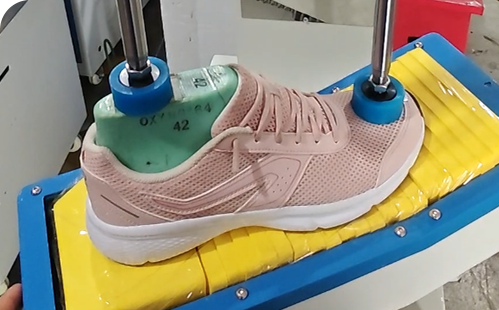
A2: Traditional manual marking has inconsistent positioning, large human‑made errors, and needs to produce special marking molds for different shoe lasts, raising mold‑making cost and mold‑management workload. Manual repeated adjustment for shoe‑last height wastes production time and reduces work efficiency. FB‑M8825 adopts floating‑bottom rubber‑block structure, which self‑adapts to outsole contours without marking molds. Cylinder‑driven automatic pressure adjustment eliminates manual height tuning, lowers operation difficulty and improves marking consistency.
Q3: What are the full core competitive advantages of this model?
A3:
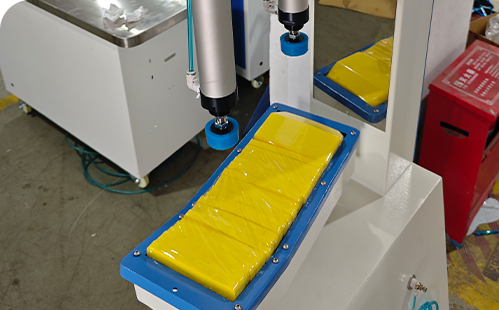
- Floating‑bottom high‑strength tough rubber‑block assembly: Automatically fits various outsole shapes, keeps uniform front‑rear‑inner height; no marking molds required, saves mold cost;
- Cylinder‑driven automatic pressure adjustment: Front‑rear pressure rods auto‑balance pressure, no manual shoe‑last height adjustment, save labor and boost throughput;
- Zero‑error laminating performance: No padding material needed, outsole and shoe‑last fit closely to reduce marking deviation;
- 360‑degree rotation function: Flexible operation, accurate marking trace, well‑matched for follow‑up roughening, gluing and bonding processes;
- Compact footprint, light‑weight unit, easy to deploy on existing shoe‑production lines.
二. Core Mechanism Technical FAQs
Q4: What are the key functional modules of FB‑M8825?
A4:
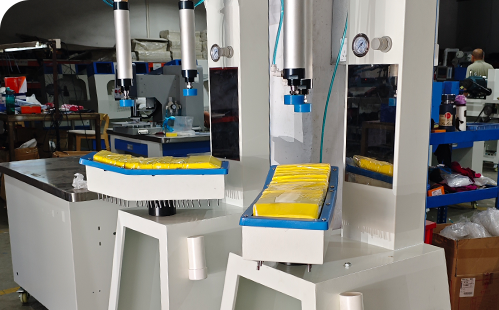
- Floating‑bottom high‑strength tough rubber‑block group: Self‑adjust curvature following outsole profile, realize even pressure distribution;
- Pneumatic cylinder‑controlled front‑rear pressure‑rod unit: Automatically balance pressing force without manual shoe‑last height tuning;
- 360° rotating working station: Flexible multi‑angle positioning for outsole marking work.
Q5: What practical production value does this machine bring?
A5:It cancels custom‑made marking molds for different shoe styles, reduces mold investment and storage. Automatic pressure adjustment cuts repeated manual tuning work during frequent shoe‑model switching. Stable marking reference lines improve quality consistency of subsequent gluing / buffing / bonding processes.
III. Câu hỏi thường gặp về các thông số kỹ thuật đầy đủ
Q6: What are the full official specifications of FB‑M8825?
A6:‑ Model: FB‑M8825 360° Rotation Outsole Marking Machine
‑ Working Air Pressure: 0.6 MPa
‑ 8‑Hour Production Capacity: 1800 Pairs
‑ Overall Machine Dimension: 500 mm × 650 mm × 1620 mm
‑ Net Weight: 70 KG
四.On‑Site Installation & Environment Matching FAQs
Q7: What power, space and environmental requirements before installation?
A7:
- Air source: Stable compressed‑air supply at working pressure 0.6 MPa;
- Space: Reserve ≥1.0‑meter operating clearance around machine for operator movement and rubber‑block replacement;
- Environment: Workshop shall maintain good ventilation; avoid heavy‑dust circumstance to protect pneumatic components;
- Ground: Flat solid floor, convenient for machine placement.
五.Standard Startup & Production Operation SOP FAQs
Q8: What is the complete standardized operating procedure from power‑on to work completion?
A8:
- Pre‑startup inspection: Check compressed‑air pressure reaches 0.6 MPa; inspect rubber‑blocks for wear and damage; check pneumatic pipe joints for air leakage;
- Power‑on / Air supply: Turn on air source; confirm cylinder‑driven pressure‑rods move smoothly;
- Idle test run: Execute several idle cycles without workpiece, check for abnormal noise and air leakage;
- Sample debugging: Mount shoe‑last and outsole; test marking operation; verify marking trace position meets production‑process requirements;
- Formal production: Perform outsole marking work; make random spot‑check for marking‑line accuracy during shift;
- Shift‑end shutdown: Cut off compressed‑air supply; clean rubber‑block surface dirt and debris.
六.Common Abnormality & Trouble‑Shooting Tips FAQs
Q9: What frequent‑seen faults may happen in daily workshop, and quick check points for operators?
A9:
• Phenomenon 1: Marking trace offset, uneven pressure
Check points: Inspect wear / deformation of floating‑bottom rubber blocks; verify air‑pressure value; check pressure‑rod cylinder working condition.
• Phenomenon 2: Air leakage at pneumatic circuit
Check points: Inspect air‑pipe connectors, check aging of air tubes; re‑tighten or replace fittings.
• Phenomenon 3: Pressure‑rod fails to act
Check points: Confirm air‑source supply status; check cylinder jamming or mechanical stuck‑point.
• Phenomenon 4: Poor rotation flexibility of working table
Check points: Clean rotary‑shaft dust and debris; add proper lubricant.
⚠️ Warning: Do not disassemble pneumatic cylinders and rotating‑mechanism assemblies without professional‑technical guidance. Contact supplier‑technical‑support for complex faults.
七.Tiered Complete Routine Maintenance FAQs
Q10: What maintenance items need to be done daily / weekly / monthly?
A10:
✅Daily (before and after each production shift): Clean dirt and debris on rubber‑block surfaces; check air‑pressure; inspect for air‑leakage of pipe joints.
✅Weekly: Add lubricant for rotating shaft and moving‑joint positions; check rubber‑block wear status; fasten loose mechanical screws.
✅Monthly: Comprehensively inspect cylinder working performance; replace severely worn rubber‑block consumables; check aging status of air hoses.
八. Delivered Accessories & Technical Documents FAQs
Q11: What items will be delivered together with the machine?
A11:
- Technical documents (paper hard‑copy + PDF electronic version): Complete English‑language operation manual, pneumatic schematic diagram, spare‑parts list and common‑fault‑troubleshooting manual;
- Standard delivered accessories: Standard tool kit for daily maintenance.
九. . Warranty Scope & After‑Sales Technical Support FAQs
Q12:What is the exact warranty scope, and which parts are excluded?
A12:12‑month full‑machine warranty for non‑consumable parts.
Consumable‑wearing parts excluded from warranty: floating‑bottom rubber blocks, air hoses and pneumatic fittings.
Q13: What after‑sales technical services are provided?
A13:
- Remote‑video debugging and remote‑fault‑guidance service;
- Online‑operator‑operation‑skill‑training guidance; door‑to‑door on‑site service can be arranged as required;
- Lifelong spare‑parts supply at factory‑cost price for customer follow‑up replacement.