Câu hỏi thường gặp về dây chuyền sản xuất ép dán đế giày bằng tia hồng ngoại ASFROM
Câu hỏi thường gặp về dây chuyền sản xuất ép dán đế giày bằng tia hồng ngoại ASFROM
Infrared Shoe Sole Laminating Production Line Base Q&A
一.Application
Q1: What types of footwear is ACL-A128 infrared bonding line suitable for?
A1: It fits mid-to-high-end shoes including basketball shoes, running shoes, casual shoes, work boots, mountaineering boots and electrical insulation shoes. It performs best for thick multi-layer soles that require high bonding strength.
二. Oven & Temperature Control
Q2: What flexible design does the oven have?
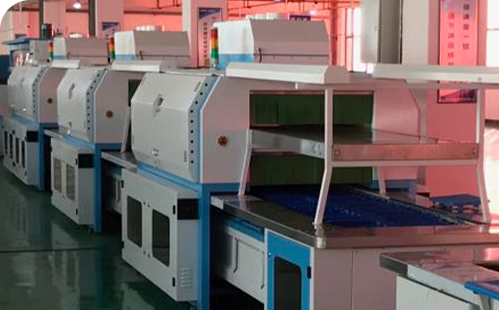
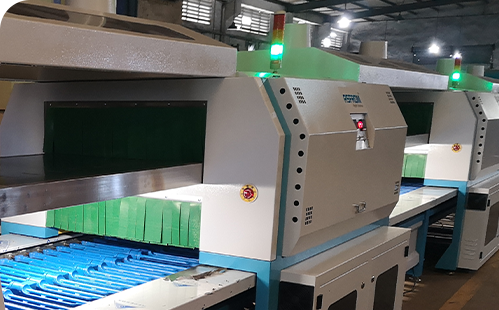
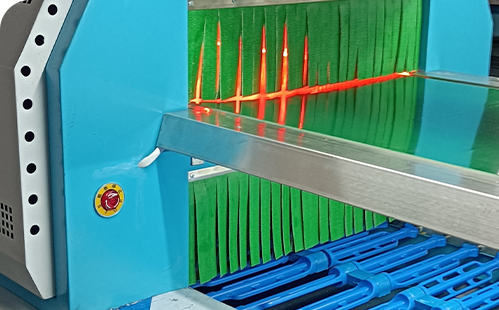
A2: The oven position can be adjusted freely for different shoe styles, with independent temperature control for each zone to support variable production processes.
Q3: What temperature control system is adopted and how accurate is it?
A3:It uses PID algorithm to regulate infrared heating modules with ±1℃ precision. It keeps glue at the optimal viscosity range of 80–120℃, preventing shoe material deformation and poor adhesion caused by overheating.
Q4: How fast can the oven heat up?
A4:It only takes about 5 minutes to heat the oven from room temperature to the working temperature of 65℃.
Q5: How does the production line save energy?
A5:1. The oven uses SCR thyristor power controller; heating power automatically drops by 40℃ once constant temperature is reached.
2. The conveyor belt adopts microcomputer frequency conversion control for lower power consumption and noise.
三. Infrared Curing Performance
Q6: What advantages does infrared curing have over traditional steam ovens?
A6:Infrared rays penetrate EVA and rubber soles to trigger molecular crosslinking of glue. The curing time is reduced by 60%-70%, and one bonding cycle is within 30 seconds. Glue penetrates deeper for firmer, uniform bonding.
四.Double-Layer Synchronous Lamination System
Q7: What independent adjustment functions does the double-layer design have?
A7:1. Separate upper and lower pressure system with real-time pressure sensors; pressure is adjustable from 5 to 20MPa to eliminate offset, bubbles and degumming of multi-layer materials.
2. Each layer is equipped with independent infrared heaters and temperature sensors, with temperature difference ≤±1℃ to match heating curves of different materials.
Q8: How much production efficiency can the double-layer synchronous process improve?
A8:Traditional process takes 30 seconds per cycle, while this machine only needs 8–12 seconds, tripling the output.
五.Conveyor System
Q9: What supporting equipment forms the complete forming production line?
A9: The conveyor adopts microcomputer frequency conversion control with precise speed adjustment, featuring low noise and energy-saving operation during long continuous production.
六.Whole Line Configuration & Frame Structure
Q10: What supporting equipment forms the complete forming production line?
A10: It includes a 13.5m high-temperature rubber conveyor, multiple infrared ovens (2 sets of 2m ovens + 1 supplementary 2m oven, optional 1.5/2/2.5m single ovens), a 4.8m six-station vacuum vulcanizer, high-speed cold forming machine and refrigeration unit with automatic defrost function.
Q11: What materials are used for the machine frame?
A11: The upper bracket is made of 40*80 stainless steel, the lower plate is 15mm steel and the stand uses 20mm steel. It is equipped with 70mm transport rollers and full anti-rust frame treatment. The ovens are fitted with lamp fault detection and timer speed regulation.
七.Comprehensive Production Advantages
Q12: What are the overall strengths of this production line?
A12: 1. Flexible process layout with movable ovens for mixed production of various shoe styles.
2. Fast heating speed and low overall energy consumption.
3. Precise dual control of temperature and pressure reduces defective products like bubbles and degumming.
4. High automation level for simple operator operation.