
ASFROM Sole and Upper Pressing Machine FAQ
ASFROM Sole and Upper Pressing Machine FAQ
Sole and Upper Pressing Machine Base Q&A
一.Application & Market Positioning FAQs
Q1: What shoe‑making scenarios is AB‑918A wall‑type sole pressing machine suitable for?
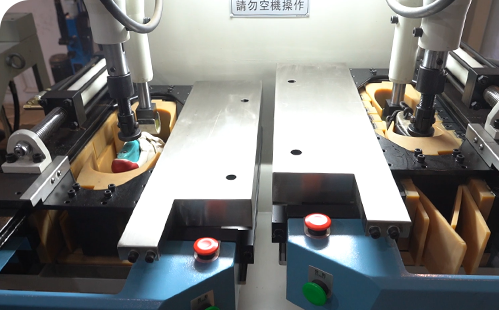
A1: AB‑918A is hydraulic wall‑type sole attaching press equipment for shoe factories. It is used for sole‑upper bonding & pressing procedure. It is widely applied for leather shoes, casual shoes, sports‑style footwear. It fits medium‑and‑large shoe‑making assembly‑lines and sample workshops, supports stable single‑shift or two‑shift continuous production. Different shoe‑last sizes can be adapted via simple mechanical adjustment.
Q2: What core pain points of shoe factories can this machine solve?
A2: Conventional pressing equipment often brings problems such as uneven pressing force, poor sole fitting, easy delamination / bubble defects. Some old‑model machines are complicated to adjust when switching shoe styles and highly rely on skilled operators. AB‑918A adopts multi‑cylinder hydraulic driving structure, independent adjustment for pressing‑head, edge‑pressing and clamping‑tightening movements. It reduces operator skill requirement, improves sole‑upper fitting compactness and lowers reject ratio caused by poor pressing effect.
Q3: What are the full core competitive advantages of this model?
A3:
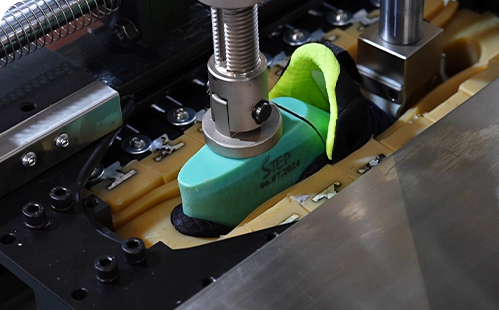
- Integrated multi‑action hydraulic system: Press‑head pressing, edge‑pressing and front‑rear clamping‑tightening actions can be completed in one cycle or operated independently, flexible for diverse shoe‑type demands;
- Adjustable pressing‑head mechanism: Press‑head position can be moved and positioned, adapt to various shoe‑last outlines;
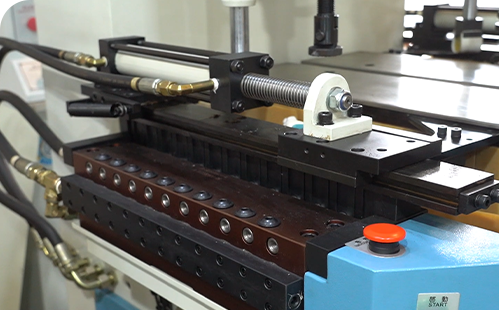
- Modular hydraulic‑circuit & electrical layout: Clear component division, convenient for inspection, disassembly and parts replacement;
- Dual‑hand start safety design: Prevent mis‑operation injury, improve workshop operation safety;
- Simple parameter setting: Each group of timers independently controls action time, easy to debug for new shoe styles.
二.Core Mechanism Technical FAQs
Q4: What are the key functional modules of AB‑918A?
A4:
- Press‑head assembly: Includes left‑right pressing‑head, rotating oil‑cylinder, front‑rear foot oil‑cylinder for main sole pressing work;
- Edge‑pressing mechanism: Left‑right edge‑pressing oil‑cylinders and rubber blocks for side‑wall edge compaction;
- Front‑rear clamping‑tightening mechanism: Clamping oil‑cylinders and rubber blocks to fasten shoe front‑rear position during pressing;
- Hydraulic power unit: Oil tank, main motor, manifold valve block, pressure regulating handles and pressure gauges for power output;
- Control panel: Multiple timers, selector switches, emergency‑stop & dual‑hand start‑buttons for mode selection and action‑time setting.
Q5: What practical production value does AB‑918A bring?
A5:It realizes reliable pressing for sole‑upper bonding procedure. Multi‑group independent adjustment meets the production demands of multiple shoe‑types. Dual‑hand start improves operational safety. Modular structure shortens fault‑handling time and reduces production‑line downtime loss.
III. Câu hỏi thường gặp về các thông số kỹ thuật đầy đủ
Q6: What are the full official specifications of AB‑918A?
A6:‑ Model: AB‑918A Wall‑Type Sole Pressing Machine
‑ Power supply: 380V / 50Hz / 3‑Phases
‑ Motor Power: 3HP
‑ Working Hydraulic Pressure: 0‑50 kgf/cm²
‑ Hydraulic Oil Tank Volume: 70 Liters
‑ Recommended Hydraulic Oil: 68# anti‑wear hydraulic oil; select 46# for cold‑climate workshops
‑ Overall Machine Dimension: 1149 mm × 1074 mm × 1900 mm
‑ Net Weight: 1200 KG
四.On‑Site Installation & Environment Matching FAQs
Q7: What power, space and environmental requirements before installation?
A7:
- Power supply: Stable three‑phase 380V power source, reliable grounding for electrical safety; After motor wiring, verify rotation direction; swap any two power‑line wires if pressure cannot reach standard value;
- Hydraulic oil: Fill approx.70L recommended hydraulic oil before commissioning; oil temperature shall exceed 10℃ before formal operation;
- Space: Reserve ≥1.2‑meter operating & maintenance clearance around machine; lifting shall use designated lifting lugs with qualified steel rope;
- Environment: Workshop with good ventilation; avoid heavy‑dust environment to protect hydraulic valve blocks and electrical components;
- Ground: Flat, solid ground to bear machine weight and avoid offset caused by long‑time vibration.
五.Standard Startup & Production Operation SOP FAQs
Q8: What is the complete standardized operating procedure from power‑on to mass‑production?
A8:
- Pre‑startup inspection: Remove anti‑rust grease; check power‑supply grounding; confirm hydraulic‑oil liquid level; test emergency‑stop button function; lubricate all lubrication nozzles; clean rubber‑block residues;
- Power‑on: Switch on main power supply; set each timer for action‑duration; select working‑mode via selector switches;
- Idle test run: Perform multiple empty cycles without shoe workpiece; check for abnormal noise, oil‑leakage and each‑group action coordination;
- Sample debugging: Place shoe last + assembled shoe on work station; run test pressing; adjust pressure, time and mechanical‑position parameters until pressing quality meets factory internal‑standards;
- Formal mass‑production: Put shoes in place, trigger dual‑hand start‑buttons to execute pressing cycle; carry out random sampling inspection of finished shoes each shift;
- Shift‑end shutdown: Clean rubber‑block and station dirt; stop main motor; cut off main power for long‑time stand‑by.
⚠️ Safety warning: Do NOT put hands into the space between shoe box and pressing‑head during machine running. Do NOT set working pressure above 50 kgf/cm².
六.Common Abnormality & Trouble‑Shooting Tips FAQs
Q9: What frequent‑seen faults may happen in daily workshop, and quick check points for operators?
A9:
• Phenomenon 1: No power input, indicator light off
Check points: Check power‑supply connection, main switch and fuse status.
• Phenomenon 2: Motor does not run
Check points: Inspect fuse, motor power‑on condition and ground connection.
• Phenomenon 3: Motor reverses rotation, pressure cannot rise
Check points: Power‑wire connection error; swap any two three‑phase wires.
• Phenomenon 4: Abnormal noise from oil pump
Check points: Inspect hydraulic‑oil volume, pump wear condition, motor‑bearing and joint damage.
• Phenomenon 5: Solenoid valve / selected‑switch without action
Check points: Check electrical‑signal input status and PLC working condition.
• Phenomenon 6: Poor pressing effect, sole bubble / delamination
Check points: Re‑check pressure‑value and timer parameters; inspect pressing‑head, edge‑pressing rubber‑block wear status.
⚠️ Warning: Operators shall NOT disassemble hydraulic valve blocks and internal‑electrical components without professional‑technical guidance. For complex faults, please contact supplier‑technical‑support team.
七.Tiered Complete Routine Maintenance FAQs
Q10:What maintenance items need to be done daily / weekly / monthly / quarterly?
A10:
✅Daily (before and after each production shift):
Clean glue and dirt on pressing‑head, edge‑pressing rubber‑blocks and clamping‑tightening components; check hydraulic‑oil level & pressure; test emergency‑stop function; inspect oil‑pipe joints for oil‑leakage.
✅Weekly:
Add lubricant for all moving guide‑shafts and hinge positions; tighten loose mechanical screws; clear dust of electric‑cabinet heat‑dissipation openings.
✅Monthly:
Calibrate each‑group pressure and timer parameters; inspect wear‑degree of pressing‑head, rubber‑blocks and other wearing‑parts; check aging status of hydraulic sealing rings.
✅Quarterly / Yearly:
Carry out sample pressing performance test; replace hydraulic oil and filter screen once per year (replace immediately if oil is polluted); comprehensive inspection of oil‑pump, solenoid valves and whole‑machine electrical‑circuit terminals.
八. Delivered Accessories & Technical Documents FAQs
Q11: What items will be delivered together with the machine?
A11:
- Technical documents (paper hard‑copy + PDF electronic version): Complete English‑language operation manual, hydraulic‑circuit schematic diagram, electrical schematic diagram, spare‑parts list, exploded‑view component drawings and common‑fault‑troubleshooting manual;
- Standard delivered accessories: A full set of standard‑tool kit for daily‑machine adjustment and maintenance work.
九. Warranty Scope & After‑Sales Technical Support FAQs
Q12: What is the exact warranty scope, and which parts are excluded?
A12:12‑month full‑machine warranty for non‑consumable parts (counted from goods arrival at buyer’s site).
Consumable‑wearing parts excluded from warranty: pressing rubber‑blocks, clamping‑tightening rubber‑blocks, hydraulic sealing rings. Damage caused by mis‑operation, overload and man‑made destruction is not covered by warranty.
Q13: What after‑sales technical services are provided?
A13:
- Remote‑video debugging and remote‑fault‑guidance service;
- Online‑operator‑operation‑skill‑training guidance; door‑to‑door on‑site service can be arranged as required;
- Lifelong spare‑parts supply at factory‑cost price for customer follow‑up replacement.