
ASFROM Rotary Sole Press Machine FAQ
ASFROM Rotary Sole Press Machine FAQ
Rotary Sole Press Machine Base Q&A
一.Product Application FAQs
Q1:What production process is the APR‑989 rotary wall‑type sole pressing machine used for?
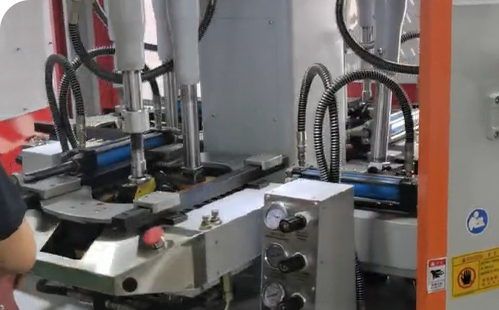
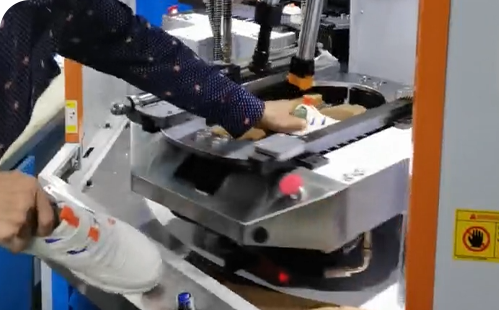
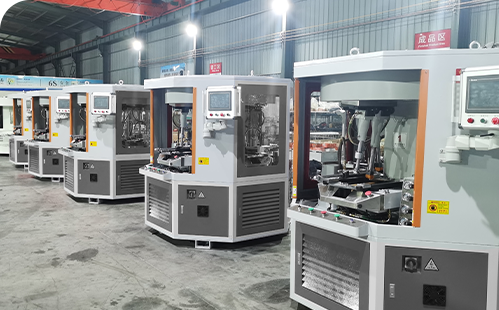
A1: APR‑989 series includes two variants: APR‑989A (4‑station) and APR‑989B (6‑station). It is a full‑hydraulic rotary wall‑type sole press for shoe factories, dedicated to pressing and bonding of outsoles and uppers. It fits sports shoes and casual shoes with flat or wall‑type soles. The machine handles sole and side‑wall pressing simultaneously. The applicable workpiece dimension range: length 130‑140 mm, width ≤150 mm, height ≤200 mm, side‑wall height 65‑80 mm. It is suitable for large‑volume continuous assembly‑line production.
二. Core Features & Advantages FAQs
Q2: What are the highlights of its rotary workstation architecture?
A2: It adopts 4‑station (APR‑989A) or 6‑station (APR‑989B) rotary structure with fast‑positioning function. While one station executes pressing cycle, operators can load and unload shoes at other stations, shortening overall production cycle and lifting output significantly.
Q3: What intelligence functions does the control system have?
A3:Controlled by PLC with touch‑screen HMI. It supports saving and recalling multiple shoe‑type parameter recipes for fast style switching. Real‑time production counting is displayed on screen for output tracking. Built‑in fault‑warning function outputs error messages directly on touch screen to accelerate troubleshooting and cut downtime.
Q4:What hydraulic‑system optimizations improve cycle efficiency?
A4:Equipped with pre‑fill valve for upper pressing cylinder, which accelerates upward‑stroke movement and optimizes whole‑cycle tact time. It is full‑hydraulic driven to deliver stable pressing force for sole and shoe‑side wall.
Q5: How flexible is the mechanical adjustment for different shoe styles?
A5:‑ Rear‑stroke of front‑rear pressure pads is adjustable to cover various shoe sizes.
‑ Left‑right movable dual balancing pressure rods, no need to adjust rod length for different shoe heights.
‑ 8‑22 independent‑cylinder‑driven edge‑pressing pads closely follow complex shoe‑side contours. Stop pins for side pads can be enabled or disabled according to process requirements.
‑ Multiple interchangeable toe‑pad shapes are selectable to match diverse shoe‑last geometries.
三. Complete Technical Parameters FAQs
Q6: What are the full official specifications of APR‑989 series?
A6:
| Item | APR‑989A (4‑stations) | APR‑989B (6‑stations) |
|---|---|---|
| Model | APR‑989 Rotary Type Walled Sole Pressing Machine | APR‑989 Rotary Type Walled Sole Pressing Machine |
| Motor Power | 3 mã lực | 3 mã lực |
| 8‑Hour Production Capacity | 4000 pairs | 5500 pairs |
| Overall dimension (L×W×H) | 2000 × 2000 × 2000 mm | 2300 × 2300 × 2200 mm |
| Packing dimension | 2200 × 2200 × 2200 mm | 2450 × 2450 × 2300 mm |
| Net Weight | 3150 KGS | 4350 KGS |
| Gross Weight | 3450 KGS | 4650 KGS |
| Applicable shoe dimension | Length 130‑140 mm, width ≤150 mm, height ≤200 mm, side‑wall height 65‑80 mm | Same as left |
四.On‑Site Installation & Environment Matching FAQs
Q7: What pre‑conditions are required before installation?
A7:‑ Power: Prepare stable 3‑phase 380V power supply with sufficient capacity; reliable protective earthing is mandatory. Voltage stabilizer is recommended if local mains voltage fluctuates heavily.
‑ Space: Reserve ample clearance around machine for rotary‑station movement, shoe loading‑unloading and cabinet‑door opening for maintenance.
‑ Environment: Workshop shall be dry and well‑ventilated; avoid heavy dust which may contaminate hydraulic valves and touch‑screen; keep away from heat sources.
‑ Floor: Must be flat, high‑strength solid concrete ground to sustain heavy machine weight and suppress vibration during rotary indexing. Level machine with adjustable foot pads. ‑
Hydraulic oil: Fill qualified anti‑wear hydraulic oil as specified in manual after installation.
五.Standard Startup & Production Operation SOP FAQs
Q8: What is complete standardized operating procedure from power‑on to mass‑production?
A8:
- Pre‑start‑up inspection: Check power‑supply grounding status; inspect hydraulic‑oil level; verify rotary‑station indexing, emergency‑stop and safety‑interlock functions; clear debris from pressing stations.
- Power‑on: Switch on main power; boot touch‑screen HMI; load stored shoe‑type recipe or manually configure pressing‑time, pressure, pad‑action parameters.
- Idle test‑run: Run full rotary cycles without work‑pieces. Confirm smooth indexing, no oil‑leakage, no abnormal noise; verify fault‑alarm response.
- Sample debugging: Mount lasted shoes onto station fixtures; execute complete pressing cycle. Fine‑tune pressure, stroke and edge‑pad activation until pressing quality meets factory internal standards, save updated recipe.
- Formal mass‑production: Continuously load/unload shoes at idle stations while machine runs rotary cycles. Perform random sampling inspection every shift, check sole‑upper bonding tightness and side‑wall pressing effect. Monitor real‑time production‑count on HMI.
- Shift‑end shutdown: Finish all work‑pieces inside rotary loop first; shut down hydraulic unit; clean pressing pads and stations; cut‑off main power after equipment cools down.
⚠️ Safety warning: Never put hands or tools into pressing zones or rotary moving range during machine running.
六.Common Abnormality & Trouble‑Shooting Tips FAQs
Q9: What frequent‑seen faults may happen in daily workshop, and quick check points for operators?
A9:
• Phenomenon 1: Rotary station fails to index or positioning offset
Check points: Check positioning sensor and wiring; inspect rotary‑drive transmission parts; check for mechanical jamming caused by shoe‑scraps.
• Phenomenon 2: Poor pressing quality, side‑wall incomplete bonding
Check points: Recheck pressure‑time recipe parameters; inspect wear condition of edge‑pressing pads; verify stop‑pin configuration; confirm station positioning accuracy.
• Phenomenon 3: Touch‑screen pops‑up fault warning
Check points: Read exact alarm code on HMI; check corresponding sensor, cylinder or hydraulic component according to alarm hint; eliminate fault then reset system.
• Phenomenon 4: Hydraulic pressure unstable
Check points: Inspect oil‑level; check air entrapped in hydraulic circuit; inspect seal wear and pipe‑joint oil‑leakage; calibrate pressure‑control components.
• Phenomenon 5: Low actual output capacity
Check points: Check whether loading‑unloading rhythm matches rotary tact; optimize parameter recipe to shorten cycle time; inspect indexing‑action delay caused by sensor drift.
⚠️ Warning: Operators shall not disassemble rotary‑indexing mechanism, hydraulic manifold or internal electric assemblies without professional‑technical guidance. Contact supplier‑technical‑support for complex faults.
七.Tiered Complete Routine Maintenance FAQs
Q10: What maintenance items need to be done daily / weekly / monthly / quarterly?
A10:
✅Daily (before and after each production shift):
Clean shoe‑glue residues from pressing pads and rotary stations; test emergency‑stop and safety‑interlock; check hydraulic‑oil level and pipe joints for oil‑leakage; observe abnormal noise during rotary indexing.
✅Weekly:
Add lubricant for rotary‑indexing transmission parts and guide‑sliding mechanisms; tighten loose mechanical bolts; clear dust of control‑cabinet heat‑dissipation vents; inspect edge‑pressing‑pad wear.
✅Monthly:
Calibrate pressing‑pressure and timing parameters; inspect sensor mounting firmness; check aging status of hydraulic sealing elements; test recipe‑storage function of touch‑screen HMI.
✅Quarterly:
Carry‑out sample pressing‑quality evaluation; comprehensive inspection of rotary drive assembly, hydraulic power‑pack and full‑set electrical terminals; replace heavily‑worn pressing‑pads and sealing accessories.
八. Delivered Accessories & Technical Documents FAQs
Q11: What items will be delivered together with the machine?
A11:
- Technical documents (paper hard‑copy + PDF electronic version): Complete English‑language operation manual, hydraulic‑circuit schematic diagram, electrical schematic diagram, spare‑parts list and common‑fault‑troubleshooting manual; parameter reference for typical shoe‑types.
- Standard delivered accessories: A full set of standard‑tool kit for daily‑machine adjustment and maintenance; partial spare wearing‑parts.
九. Warranty Scope & After‑Sales Technical Support FAQs
Q12: What is the exact warranty scope, and which parts are excluded?
A12:12‑month full‑machine warranty for non‑consumable parts, calculated from goods arrival at buyer’s premises.
Consumable‑wearing parts excluded from warranty: pressing edge‑pads, toe pads, hydraulic sealing rings, sensors. Damage caused by mis‑operation, overload, foreign‑object impact and unauthorized disassembly is not covered under warranty.
Q13: What after‑sales technical services are provided?
A13:
- Remote‑video debugging and remote‑fault‑diagnosis service.
- Online‑operator‑operation‑skill‑training guidance; door‑to‑door on‑site service can be arranged as required.
- Lifelong spare‑parts supply at factory‑cost price for customer follow‑up replacement.
- Process‑technical support: assist customers to optimize pressing‑parameter recipes for their own shoe‑styles.