
ASFROM RF Welding Machine FAQ
ASFROM RF Welding Machine FAQ
RF Welding Machine Base Q&A
I. Основная информация о продукте
Q1: What is the HF-815 Double-head Pneumatic High-frequency Welding Machine?
A1:The HF-815 Double-head Pneumatic High-frequency Welding Machine is a high-frequency welding machine specifically designed for industries such as footwear and apparel, luggage, medical supplies, inflatable toys, packaging bags and automotive interiors. It is suitable for bonding and shaping various materials including artificial leather, mesh fabric, EVA, foam, TPU and hot melt adhesives. This machine is a high-frequency device that generates a high-frequency electromagnetic field through a vacuum tube self-excited oscillator. The workpiece is placed between the upper and lower electrodes with a high-frequency electromagnetic field applied. The internal molecules of the workpiece are excited to move at high speeds, generating heat through friction, which causes the material to melt. Under the pressure of the mold, the purpose of welding or embossing is achieved. The machine features a dual-head pneumatic system, high-frequency generator, sturdy structure and operating platform, safety-oriented humanized design and high efficiency, economical and practical characteristics.
Q2: What is the HF-815 used for?
A2:It is mainly used for bonding and shaping. Specific applications include:
-
Bonding and shaping of artificial leather.
-
Bonding and shaping of mesh fabric.
-
Bonding and shaping of EVA.
-
Bonding and shaping of foam.
-
Bonding and shaping of TPU.
-
Bonding and shaping of hot melt adhesives.
-
Embossing and welding of various PVC (polyvinyl chloride) plastic products with different shapes, such as wardrobes, toys, medical supplies, trademarks, stationery, slippers, handbags, raincoats, belts, automotive interior accessories.
-
Welding of transparent blister packaging.
Q3: What are the key technical parameters of the HF-815?
A3:Key technical parameters of the HF-815 are as follows:
-
Model: HF-815
-
H.F Output: 4KW, 5KW, 8KW, 10KW, 12KW
-
Oscillation Frequency: 40.68MHZ (4KW, 5KW), 27,12 МГц (8KW, 10KW, 12KW)
-
Источник питания: AC380V 50HZ 3P
-
Input Power: 6.5KVA, 8.5KVA, 15KVA, 18KVA, 21KVA
-
Oscillation Tube: 7T84RB E3062TW, 7T85RB, 7T69RB, E3069, E3130
-
Rectifier: Silicon Diode
-
Max Pressure: 500KG (4KW, 5KW), 500–1500KG (8KW, 10KW, 12KW)
-
Distance between upper & lower electrodes: 175mm (4KW, 5KW, 8KW), 210mm (10KW, 12KW)
-
Working space: 50 мм (4KW, 5KW, 8KW), 60mm (10KW, 12KW)
-
Electrode size: 350×700mm
-
Operation: T: Foot pedal; Taf: Pneumatic & Foot Pedal
-
Вес нетто: 300/320kg, 330/350kg, 350/380kg, 450/500kg, 500/550kg
-
Полная масса: 390/410kg, 420/440kg, 470/500kg, 500/550kg, 550/600kg
-
Measurement: 1180×1700×1650mm, 1180×1700×1800mm, 1180×1950×1900mm
Supplementary parameters from the manual (HF-815-5KW):
-
RF Power: 5000W
-
Tube Model: 7T85RB
-
Oscillation Frequency: 27,12 МГц
-
Welding Time Range: 0~10S
-
Upper electrode template area: 120×300 (mm²)
-
Max. Distance Between Electrodes: 100mm
-
Upper Electrode Template Area: 50~60mm
-
Working Air Pressure: 5-8Kg/cm²
-
Max. Solid Welding Area: 250cm²
-
Max. Welding Current: 0.8A
-
Габаритные размеры станка: 1800×1100×1800MM
-
N.W: 350Kg
The H.F output and input power affect welding capability, oscillation frequency affects welding effect, max pressure affects welding firmness, distance between electrodes and working space determine the processable material thickness, and electrode size determines the processable material area.
Q4: What are the main features of the HF-815?
A4:Main features include:
-
Dual-Head Pneumatic System: Features a vertical pneumatic assembly with two heads capable of independent or alternating operation. Delivers stable, uniform pressure for robust, sealed welds. Particularly suited for processes requiring cooling time, enhancing overall efficiency.
-
High-Frequency Generator: Utilizing vacuum tube oscillation technology with frequencies of 27.12MHz/40.68MHz, it delivers rapid heating with precise adjustment of time, pressure, and temperature to accommodate diverse materials and processes.
-
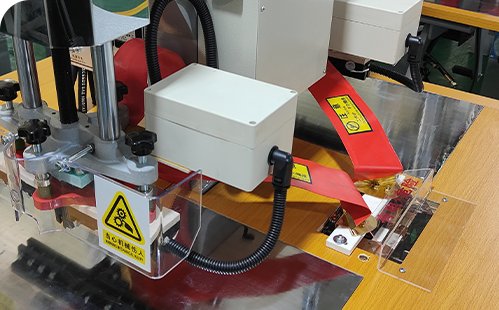
Sturdy Structure and Operating Platform: The cabinet integrates electrical controls and cooling systems, featuring a spacious work surface that supports custom mold installation, ensuring stable long-term operation.
-
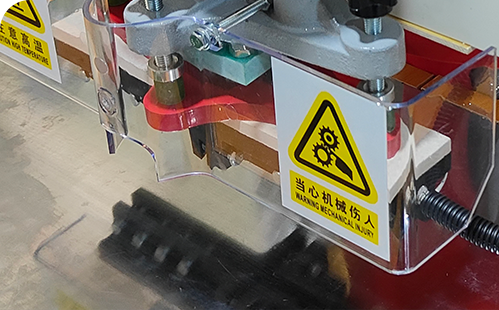
Safety-Oriented Humanized Design: Features multiple protections including overcurrent protection, high-frequency shielding, and pneumatic safety valves. Compact structure with clearly color-coded zones ensures safe and straightforward operation.
-
Highly Efficient, Economical, and Practical: Featuring a simple structure and easy maintenance, it operates quickly with low noise and no pollution. Powered by pneumatic pressure, it is ideal for applications demanding high efficiency, such as small-scale plastic heat sealing and garment embossing.

II. Применимые отрасли и материалы
Q5:What materials can the HF-815 process?
A5:The HF-815 is suitable for the following materials:
-
Artificial leather
-
Mesh fabric
-
EVA
-
Foam
-
TPU
-
Hot melt adhesives
-
PVC (polyvinyl chloride) plastic products
-
Transparent blister packaging
Q6: What industries or factories use the HF-815?
A6: It is widely used in the following industries:
-
Footwear and apparel industry
-
Luggage industry
-
Medical supplies industry
-
Inflatable toys industry
-
Packaging bags industry
-
Automotive interiors industry
-
Trademarks, stationery, slippers, handbags, raincoats, belts and other industries
三. Functions & Performance
Q7: How does the HF-815 work?
A7:The working principle of the HF-815 is as follows:
-
This machine is a high-frequency device.
-
It generates a high-frequency electromagnetic field through a vacuum tube self-excited oscillator.
-
The workpiece is placed between the upper and lower electrodes with a high-frequency electromagnetic field applied.
-
The internal molecules of the workpiece are excited to move at high speeds, generating heat through friction, which causes the material to melt.
-
Under the pressure of the mold, the purpose of welding or embossing is achieved.
Q8:What are the electromechanical features of the HF-815?
A8:Electromechanical features include:
-
High Output and Performance: Equipped with a low-loss coaxial oscillator and a specially designed tuner to enhance output, reduce welding time, and improve production efficiency.
-
Spark Suppressor: Standard configuration includes a relay-type spark suppressor. An optional advanced electronic spark suppression circuit (available upon request) offers high sensitivity and reliability, minimizing damage to molds, materials, and insulation caused by arcing.
-
Safety Protection Devices: This machine is equipped with over voltage and over current protection devices. In case of abnormalities, they can automatically cut off the power supply or stop the machine from working, so as to protect valuable components such as the oscillation tube from damage.
-
Reliability and High Efficiency: This machine uses a pneumatic pressure mechanism to ensure consistent welding results for products, thereby improving product quality. High-quality and reliable components are selected to minimize the maintenance rate of the equipment.
Q9: What are the advantages of the dual-head pneumatic system on the HF-815?
A9:The advantages of the dual-head pneumatic system include:
-
Features a vertical pneumatic assembly.
-
Two heads capable of independent or alternating operation.
-
Stable and uniform pressure.
-
Robust and sealed welds.
-
Particularly suited for processes requiring cooling time.
-
Enhancing overall efficiency.
Q10: What are the features of the high-frequency generator on the HF-815?
A10:The features of the high-frequency generator include:
-
Utilizing vacuum tube oscillation technology.
-
Frequencies of 27.12MHz/40.68MHz.
-
Rapid heating.
-
Precise adjustment of time, pressure, and temperature.
-
Accommodates diverse materials and processes.
Q11: What safety protection functions does the HF-815 have?
A11:Safety protection functions include:
-
Overcurrent protection.
-
High-frequency shielding.
-
Pneumatic safety valves.
-
Over voltage protection.
-
Over current protection devices, which can automatically cut off the power supply or stop the machine from working in case of abnormalities, so as to protect valuable components such as the oscillation tube from damage.
-
Spark suppressor, minimizing damage to molds, materials, and insulation caused by arcing.
Q12: What are the features of the structure and operating platform of the HF-815?
A12:Structure and operating platform features include:
-
The cabinet integrates electrical controls and cooling systems.
-
Spacious work surface.
-
Supports custom mold installation.
-
Ensures stable long-term operation.
-
Compact structure with clearly color-coded zones.
-
Ensures safe and straightforward operation.
四.Installation & Operation
Q13: What should be noted during HF-815 installation?
A13:Installation notes include:
-
This machine should be used in a dry, indoor environment with minimal dust and no corrosive gases.
-
The power supply for this machine must be equipped with an air switch and a qualified grounding wire to ensure safety.
-
Connection Between Machine and Electric Box: Position the main box beside the machine. Align the aluminum plate of the resonance tank inside the main box with the adjustment capacitor enclosure under the machine, then slide it in. Secure the adjustment capacitor enclosure to the resonance tank using the M4 self-tapping screws provided. Next, connect the copper strip on the base of the resonance tank to the machine’s support frame. Finally, fasten the conductive strip from the resonance tank onto the corresponding mounting holes of the middle aluminum plate of the machine’s adjustment capacitor. Ensure the conductive strip does not come into contact with the aluminum plates on either side.
-
Electron Tube Installation: Open the top cover of the main box. Carefully place the electron tube into the center of the resonance tank. Adjust its orientation and secure it to the mounting base with screws. Connect the filament wires to the filament screws of the electron tube. When tightening the nuts, use two appropriate wrenches to hold the upper and lower nuts simultaneously. This prevents damage to the ceramic body of the electron tube, which could render it inoperable. Secure the grid copper strip to the grid of the electron tube with screws. Ensure it is tightly fastened without any looseness.
-
Connecting Plugs and Installing Power Cables: Insert the control wire plug and spark wire plug from the middle of the machine’s support frame into the corresponding sockets on the main box, and secure them tightly. The machine uses a 5-core power cable. The yellow-green wire is for grounding, “N” connects to the neutral wire, and the remaining three wires (A, B, C) connect to the live wires (phase sequence does not matter). Ensure the power supply is connected to a three-phase 380VAC, 32-63A air switch. For personal safety, the grounding wire must be securely connected.
-
Air Source Installation: Connect a suitable air source to the machine’s pneumatic filter using a 10mm plastic air pipe.
Q14:What is the operating method of the HF-815?
A14:The operating method is as follows:
-
Connect the air source. Pull up the knob of the air pressure regulator and adjust the pressure to 5-8 kg/cm².
-
Power on the machine. Turn on the power switch on the control box and the main power switch on the machine. You should hear the fan running inside. The power indicator (green) will light up, and the filament of the electron tube in the resonance tank will glow.
-
Install the mold. Secure the mold onto the upper die heating base.
-
Adjust the mold. Press the foot pedal with your right foot to lower the mold. Turn the handwheel above the machine head to adjust the spring pressure until it feels at the foot pedal is fully depressed. Lock the handwheel. Adjust the horizontal screws on the upper die frame to ensure the mold is parallel to the worktable. Tighten all adjustment screws after setting.
-
Test the high-frequency output. Turn off the air (or hydraulic) switch. Step on the electric pedal without lowering the mold. The anode current should indicate around 0.2A. If arcing occurs in the resonance tank due to dust or debris from transportation/installation, repeatedly step on the high-frequency switch to clear it.
-
Set up welding parameters. Fix the insulation board on the worktable and place the workpiece. Lower the mold to align with the workpiece. Turn the tuner clockwise to set the pointer to zero. Set the welding time to 10 seconds. Step on the electric pedal to start welding. Slowly adjust the tuner to increase the current while observing the ammeter. Release the pedal once the workpiece is welded. Wait 1-2 seconds for cooling, then release the foot pedal to raise the mold. Inspect the welding result. Reset the welding time (typically 2-4 seconds) and adjust the current accordingly. After several test runs, turn on the air (or hydraulic) switch for normal production.
-
Mold preheating (optional). The upper die base has a heating element and thermostat. Set the desired temperature according to the material (e.g., 120℃ for PVC, 80℃ for PET). Wait for the thermostat indicator to turn off before starting production. Preheating improves efficiency.
-
Protection features. The machine will automatically stop if: Arcing occurs between the molds. Current exceeds 0.8A (5000W model), 1.4A (8000W model), or 1.8A (10000W model).
-
Shutdown procedure. Let the machine idle for 5 minutes. Turn off the control box power switch. Turn off the main power switch.
五.Maintenance
Q15: What are the machine maintenance requirements for the HF-815?
A15:Machine maintenance requirements include:
-
Regularly apply liquid or solid lubricant to all moving parts. Wipe off excess lubricant to prevent contamination.
-
Key Caution: Dust and moisture are major threats to high-frequency machines! Use dry compressed air, a dry cloth, or a hairdryer to remove dust and moisture from: Inside the RF tank (especially around the electron tube), spark plates and all RF circuit pathways. Perform maintenance weekly during humid seasons and monthly during dry seasons. If the machine has been idle for multiple days, complete the above maintenance before restarting. If arcing occurs due to dust or moisture, wipe off soot and use a blade or sandpaper to remove arcing marks. Failure to remove marks may exacerbate arcing and damage components.
Q16: What are the mold maintenance requirements for the HF-815?
A16:Mold maintenance requirements include:
-
Molds are typically customized by professional manufacturers based on customer-provided samples. Our factory also offers mold customization services. Regular maintenance ensures stable production performance.
-
Upper Mold: Commonly made of brass or aluminum alloy plates. After prolonged use, heating and internal stress may cause deformation. Re-flatten the mold before continuing use. If sparks burn the mold surface, repair by soldering the damaged area, then file it flat.
-
Lower Mold: Usually consists of aluminum alloy plates, epoxy insulation boards, and high-temperature adhesive tape. High-Temperature Tape Replacement: This is the most vulnerable component. Replace it regularly, ensuring the number of adhesive layers remains consistent. Epoxy Insulation Board Replacement: If arcing burns through the board, replace it promptly with an epoxy board of the same thickness.
六.Troubleshooting
Q17: What to do if the power indicator doesn’t light up after turning on the power switch on the control box panel of the HF-815?
A17:If the power indicator doesn’t light up, check:
-
No power input, phase loss, or main power switch not turned on.
-
Power fuse in the electrical box is blown; replace it after checking the circuit.
-
Power switch on the control box panel is faulty, or the control wire plug is not properly connected.
Q18: What to do if the ammeter shows no reading during welding on the HF-815?
A18:If the ammeter shows no reading during welding, check:
-
Grid resistor is open-circuited. Repair the open point or replace the resistor.
-
High-voltage DC circuit failure: Positive high-voltage DC does not reach the electron tube anode, repair the open point; High-voltage rectifier bridge is damaged, replace it; High-voltage transformer is damaged, replace it; Welding time controller is damaged, replace it.
-
Electron tube has no filament voltage (circuit fault or filament transformer damage). Troubleshoot or replace the transformer.
-
High-voltage negative pole is open-circuited with ground (circuit fault or ammeter open circuit). Troubleshoot or replace the ammeter.
-
Electron tube cathode (generally filament) is open-circuited with ground. Reconnect it.
-
Electron tube is damaged. Replace it.
-
AC contactor is damaged or line is broken. Replace the AC contactor or repair the line.
-
Ammeter is broken, replace the ammeter.
Q19: What to do if the anode current slowly rises automatically within seconds after connecting high voltage under no-load on the HF-815?
A19: If the anode current slowly rises automatically within seconds after connecting high voltage under no-load:
-
Grid current is too high; reduce the grid current appropriately.
Q20: What to do if the no-load anode current is too high on the HF-815?
A20:If the no-load anode current is too high (normal value is about 0.2A), and the resonance tank output port overheats:
-
The capacitance of the tank-side capacitor is too small; reduce the gap between the capacitor aluminum plates to increase the capacitance.
Q21: What to do if the anode current rises rapidly to a large value under no-load and the machine triggers protection on the HF-815?
A21:If the anode current rises rapidly to a large value under no-load and the machine triggers protection with the overcurrent spark indicator on, check:
-
Arcing inside the resonance tank. Remove dust or foreign objects.
-
Arcing in the tank-side capacitor. Clean the aluminum plates and repair the arcing points.
-
Poor connection between the resonance tank and the machine shell. Remove rust and tighten the connecting screws.
-
Conductive strip from the resonance tank touches the cavity or the grounded aluminum plate of the tank-side capacitor. Adjust the position of the conductive strip.
-
Poor contact between the aluminum cover of the resonance tank and the cavity. Remove, polish with sandpaper, reinstall, and tighten the fixing screws.
-
Electron tube filament bypass capacitor is open-circuited. Replace it.
-
Grid capacitor is open-circuited. Replace it.
-
Grid connection copper strip is not firmly connected. Tighten the screws.
Q22: What to do if the anode current rises rapidly during welding and triggers protection on the HF-815?
A22:If the anode current rises rapidly during welding and triggers protection with the overcurrent spark indicator on, check:
-
Mold arcing; inspect the workpiece or insulation board to find and eliminate the cause.
-
Tuner setting is too high. Lower the setting.
Q23:What to do if the anode current rises slowly during welding on the HF-815?
A23: If the anode current rises slowly during welding:
-
The capacitance of the tank-side capacitor is too large; increase the gap between the aluminum plates to reduce the capacitance.
Q24:What to do if the electron tube brightness significantly weakens as the output power increases during welding and the AC contactor fails to hold firmly on the HF-815?
A24:If the electron tube brightness significantly weakens as the output power increases during welding and the AC contactor fails to hold firmly:
-
Power supply voltage is too low, or the power cable is too thin.
Q25:What to do if the AC contactor chatters and fails to hold during welding on the HF-815?
A25:If the AC contactor chatters and fails to hold during welding, or makes obvious noise after holding, check:
-
One or two groups of the bridge-type high-voltage rectifier are short-circuited. Replace it.
-
High-voltage capacitor in the high-voltage DC circuit is broken down, or the circuit is grounded. Replace the high-voltage capacitor or eliminate the short circuit.
-
High-voltage transformer is short-circuited. Replace it.
Q26:What to do if the mold frequently arcs during welding on the HF-815?
A26:If the mold frequently arcs during welding, check:
-
Mold has burrs or is too dirty. Polish or clean the mold.
-
Mold is not leveled. Readjust the level between the mold and the fixed plate.
-
Lower mold insulation material is damaged, or arcing marks are not cleaned. Replace the insulation material or clean the arcing marks.
-
Welding current is too high. Decrease the welding current.
-
Workplace contains too much moisture or impurities. Improve the workpiece.
Q27:What to do if overcurrent protection triggers at a low welding current on the HF-815?
A27:If overcurrent protection triggers at a low welding current, or fails to trigger when the welding current exceeds the maximum allowable value (0.8A for 5000W model, 1.4A for 8000W model, 1.8A for 10000W model):
-
The overcurrent protection adjustable resistor (30W10) is not properly set. Readjust it.
Q28:What to do if no spark protection triggers during mold arcing on the HF-815?
A28:If no spark protection triggers during mold arcing, or the mold is severely damaged despite protection, check:
-
Spark protection sensitivity is too low. Turn the potentiometer on the circuit board clockwise to increase sensitivity.
-
Spark plug signal wire is open-circuited. Repair the open point.
-
Spark circuit board is faulty. Replace or repair it.
-
Protection relay is damaged. Replace it.
Q29: What to do if protection triggers immediately at the start of welding on the HF-815?
A29: If protection triggers immediately at the start of welding, check:
-
Spark protection sensitivity is too high. Turn the potentiometer on the circuit board counterclockwise to decrease sensitivity.
-
Heating element of the upper mold electric base is leaking electricity. Replace the heating element.
-
Spark plug signal wire is touching the machine shell. Inspect and eliminate the issue.
-
Spark circuit board is faulty. Replace or repair it.
-
Welding current setting is too high. Adjust the tuner to decrease the welding current setting.
-
Protection relay is damaged. Replace it.
七.Precautions & After-sales
Q30: What should be noted when using the HF-815?
A30:Precautions include:
-
Preheating Requirement: Before using the machine, power it on and let it run for 5 minutes to ensure the electron tube works properly and extends its service life.
-
Electrode Contact Prohibition: Do not allow the upper and lower electrodes to touch directly during operation. Direct contact may cause a short circuit, damaging the mold and machine components.
-
Safety during Welding: Never touch the upper electrode template or mold with bare skin during welding to avoid burns.
-
High-Voltage Safety: The machine contains high-voltage circuits. Before maintenance or repair: Turn off the main power switch and wait at least 15 minutes before opening the machine cover to ensure personal safety.
Q31: How to choose the HF-815 Double-head Pneumatic High-frequency Welding Machine?
A31:Choose based on the following factors:
-
Actual production needs: Confirm whether high-frequency welding functions are needed.
-
Processing materials: Confirm whether it is artificial leather, mesh fabric, EVA, foam, TPU, hot melt adhesives, etc.
-
H.F Output: Confirm whether 4KW, 5KW, 8KW, 10KW, 12KW meets welding capability requirements.
-
Oscillation Frequency: Confirm whether 40.68MHZ or 27.12MHZ meets process requirements.
-
Max Pressure: Confirm whether 500KG or 500–1500KG meets welding firmness requirements.
-
Distance between electrodes and working space: Confirm whether it meets processable material thickness requirements.
-
Electrode size: Confirm whether 350×700mm meets processable material area requirements.
-
Operation: Confirm whether it is Foot pedal or Pneumatic & Foot Pedal.
-
Power conditions: Confirm whether the factory has AC380V 50HZ 3P power.
-
Installation space: Confirm whether the packaging size fits the installation space.
-
Machine weight: Confirm whether net weight and gross weight require consideration for handling and load-bearing.
-
After-sales support: Confirm whether the manufacturer provides installation guidance, operation training and after-sales service.
Q32: What should I consider when buying the HF-815?
A32:Buyers should consider the following factors:
-
H.F output and input power: Confirm whether they meet production needs.
-
Oscillation Frequency: Whether 40.68MHZ or 27.12MHZ meets process requirements.
-
Power Supply: Whether AC380V 50HZ 3P meets local power conditions.
-
Oscillation Tube: Confirm whether the model meets process requirements.
-
Max Pressure: Whether 500KG or 500–1500KG meets welding firmness requirements.
-
Distance between electrodes and working space: Confirm whether it meets processable material thickness requirements.
-
Electrode size: Whether 350×700mm meets processable material area requirements.
-
Operation: Confirm whether it is Foot pedal or Pneumatic & Foot Pedal.
-
Net weight and gross weight: Confirm whether they require consideration for handling and load-bearing.
-
Measurement: Confirm whether it fits the installation space.
-
Плесень: Confirm whether customized molds are needed.
-
Spare parts availability: Confirm supply of oscillation tube, electron tube, spark suppressor and other consumables.
-
After-sales support: Confirm installation guidance, operation training and after-sales service.
-
Delivery time and warranty period: Confirm delivery time and warranty policy.
Q33: Can the HF-815 be customized?
A33:Customization can be confirmed with the manufacturer according to actual requirements. Possible customization directions include:
-
Working voltage
-
Power interface
-
H.F output
-
Oscillation frequency
-
Electrode size
-
Operation method
-
Плесень
-
Appearance color
Before customization, clarify production needs, material types, welding area, welding thickness requirements, power conditions and installation space so the manufacturer can provide a suitable solution.
Q34: Does the manufacturer provide installation and technical support?
A34:The manufacturer can provide the following services:
-
Installation guidance
-
Commissioning support
-
Operation training
-
Послепродажное обслуживание
-
Spare parts supply
-
Mold customization
Specific service scope depends on order and region. Please confirm with the supplier before purchase. It is recommended to clarify installation, training, warranty and spare parts supply in the purchase contract.