
ASFROM EVA Embossing Machine FAQ
ASFROM EVA Embossing Machine FAQ
EVA Embossing Machine Base Q&A
I. Основная информация о продукте
Q1: What is ASL‑831A Automatic EVA Embossing & Molding Machine?
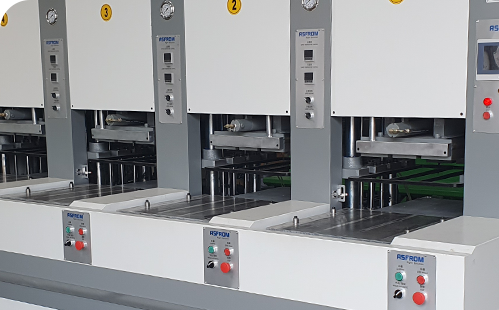
A1: ASL‑831A Automatic EVA Embossing & Molding Machine is a four‑station independent hydraulic shoe‑material forming equipment. It is equipped with four independent mold stations (1#‑4#). Process parameters of each station can be set independently without mutual interference. Adopting Mitsubishi PLC with Chinese‑English switchable touch‑screen control system, it completes full procedures of hot‑press vulcanization and cold‑press shaping. It supports manual and automatic modes.
Extension: Different embossing molds can be installed on each station. Fault on single station will not shut down whole machine, other stations can keep running to minimize production loss. It fits mass‑production & multi‑style embossing, pressing and vulcanization of EVA insoles and EVA outsoles.
Q2: What are the core technical parameters of ASL‑831A Automatic EVA Embossing & Molding Machine?
A2:
1.Model No.: ASL‑831A
2.Station quantity: 4 independent mold stations (1#‑4#)
3.Control system: Mitsubishi PLC, Chinese‑English bilingual touch screen
4.Pressure‑switch setting range: 90‑120 kg/cm²; Max working pressure per station:410Kgf
5.Time setting range: Hot‑press / Cold‑press time 0.0‑99.9S; All system delay 0.0‑99.9S
6.Operation mode: Manual / Automatic, independent control for each station
7.Consumable requirement: Use specified hydraulic oil; oil level shall stay between upper‑lower limit of oil tank sight window
Extension: Reference cycle time per station:20‑40 seconds. Theoretical full‑load capacity 360‑720 pcs/hour. Actual output varies with material hardness and vulcanization parameters.
Q3:What are the main features of ASL‑831A Automatic EVA Embossing & Molding Machine?
A3:1.Four fully‑independent mold stations. Hot‑press time, cold‑press time, hot‑press pressure and cold‑press pressure for station 1#‑4# can be set separately without interference. Four different‑process products can be produced simultaneously. Molds can be assembled & disassembled easily for quick style change‑over.
2.Hydraulic drive for pressing action. Equipped with automatic oil‑pump shutdown function. Oil pump will stop automatically upon idle timeout to protect motor and save power consumption.
3.Mitsubishi PLC plus Chinese‑English switchable touch screen. Five main pages: working parameters, I/O monitoring, working status, alarm indication, system parameters. I/O monitoring facilitates fast electrical troubleshooting. Alarm page records fault occurrence time and faulty components for after‑sales traceability.
4.Each station is equipped with local operation panel including clamping / open‑mold buttons, manual‑auto selector and independent emergency‑stop button. Auto mode executes full automatic cycle: feeding‑hot‑press‑cold‑press‑return.
5.Independent production counter per station with single‑station counter reset function. Multiple system delay parameters configurable to adapt molds of different thickness.
6.Multi‑safety protection: global emergency‑stop plus per‑station emergency‑stop; travel limit protection; buzzer alarm for faults; auto oil‑pump shutdown under no‑load condition.
Extension: Physically separated stations. Debugging for one item will not affect mass‑production on other stations. Mixed production of small‑batch sampling and large‑batch orders is supported.

II. Применимые отрасли и материалы
Q4:What products and materials can ASL‑831A Automatic EVA Embossing & Molding Machine process?
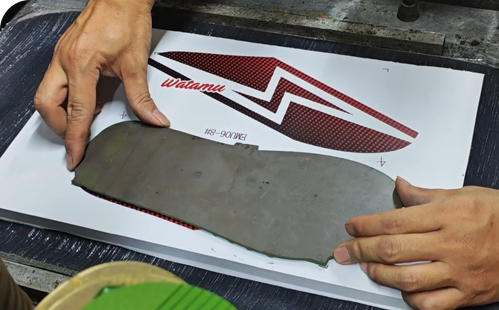
A4:Suitable for embossing, texture pressing and vulcanization shaping of EVA insoles and EVA shoe outsoles.
Extension: Compatible with regular EVA and high‑elastic EVA. Not suitable for direct pressing of PU, rubber or textile fabric. Material hardness fluctuation will change embossing depth, pressure & hot‑press time need readjustment accordingly.
Q5:What production scenarios is ASL‑831A Automatic EVA Embossing & Molding Machine mainly used for?
A5:Applied for EVA shoe‑material forming procedure in shoe factories. Four‑station parallel operation for mass‑production of multi‑spec EVA insoles and outsoles. It belongs to post‑forming process; it can cooperate with BMF‑228 skiving machine and A‑292 / AFB‑202 folding machine for upstream processing.
Extension: Ideal for shoe factories with many styles and frequent mold change‑over, supporting both mass‑order and multi‑style sampling. Not recommended for small workshops with single small‑volume orders and long‑time idle stations.
三. Utility, Installation & Commissioning
Q6: What utility conditions are required for ASL‑831A Automatic EVA Embossing & Molding Machine?
A6:Power supply: three‑phase power, reliable protective earthing is mandatory. No external air‑source required. Prepare specified hydraulic oil. Machine requires flat load‑bearing foundation. Reserve surrounding space for operation and maintenance.
Extension: Recommended workshop ambient temperature 10‑35℃. Low ambient temperature reduces hydraulic‑oil fluidity and slows pressing response. Suggest dedicated dust‑proof storage area for spare hydraulic oil.
Q7: What are requirements for installation & placement of ASL‑831A Automatic EVA Embossing & Molding Machine?
A7:Place machine on compacted flat hard load‑bearing foundation; level machine and fasten all pipe joints. Keep away from humid and dusty environment. Ensure oil level is between upper‑lower mark of oil‑tank sight window. Never start oil‑pump motor without sufficient hydraulic oil. Extension: Machine has heavy weight, foundation must meet load requirement. Reserve rear‑side maintenance clearance for hydraulic valve service, do not place close against wall. Avoid sharp bending of hydraulic hoses.
Q8:What is complete test‑running operating procedure for ASL‑831A Automatic EVA Embossing & Molding Machine?
A8:
1.Confirm flat foundation and reliable earthing. Fill specified hydraulic oil to reach sight‑window level. Verify motor rotation direction matches oil‑pump marking. Tighten all hydraulic pipe connections.
2.Power‑on, select Chinese or English interface on touch screen. Non‑professionals shall not modify system parameters arbitrarily.
3.Enter working‑parameter page, set hot‑press time, cold‑press time, hot‑press pressure, cold‑press pressure for station 1#‑4# respectively; reset station counter as required. Extension: After mold replacement, pressure & time must be re‑commissioned. Reusing old parameters with different mold thickness will cause over‑deep or shallow embossing defects.
4.Switch to manual mode, test clamping, mold‑open, feed & retract actions station‑by‑station. Confirm limit, emergency‑stop and home‑position signals via I/O monitoring page.
5.shtur trial with sample workpiece and verify embossing‑vulcanization quality. Switch corresponding station to auto‑mode for mass‑production after sample acceptance.
6.Enable auto oil‑pump shutdown energy‑saving function during production. Check alarm page for fault information when abnormality occurs.
7.Cut off main power before maintenance and shutdown.
Q9: What precautions for hydraulic‑pressure setting?
A9:Recommended pressure‑switch setting:90‑120 kg/cm². Max working pressure per station shall not exceed 410Kgf. Do not operate machine beyond maximum stroke. Prevent water and dust impurities from mixing into hydraulic oil.
Extension: Avoid continuous full‑pressure operation which accelerates oil‑cylinder seal aging. Harder EVA material requires higher pressing force. For same mold in cold winter, moderately increase pressure or hot‑press time.
IV. Конструкция и узлы машины
Q10: What are the 5 core assemblies of ASL‑831A Automatic EVA Embossing & Molding Machine?
A10:5 modular core assemblies:
1.Heavy‑duty machine frame assembly; 2.Four‑station hydraulic mold‑station actuator unit; 3.Hydraulic pump‑station assembly; 4.Per‑station local‑operation assembly; 5.PLC touch‑screen electrical control system.
‑Heavy‑duty machine frame: main base and mounting base for four mold stations.
‑Four‑station hydraulic mold‑station actuator unit: 1#‑4# mold‑station oil cylinders, mold‑frame clamping cylinders, hot‑press & cold‑press mold bases.
‑Hydraulic pump‑station assembly: oil‑pump motor, oil tank, filter screen, hydraulic valve banks, pressure switch.
‑Per‑station local‑operation assembly: independent panel for each station (clamp / open‑mold buttons, manual‑auto selector, emergency‑stop button).
‑PLC touch‑screen electrical control system: Mitsubishi PLC, Chinese‑English touch screen, I/O acquisition module, alarm buzzer.
Extension: Wearing‑parts include oil‑cylinder seal rings, filter screen, proximity limit switches. Spare‑part stock is recommended to reduce downtime.
Q11:What is the function of I/O monitoring page?
A11:Real‑time display for all machine I/O signal status. Red icon means signal ON, white icon means signal OFF. Maintenance staff can quickly judge status of limit switches, emergency‑stop, cylinder home‑position and oil‑pump signals to locate electrical faults rapidly.
Extension: During mold change‑over, you may open I/O page to check sensor signal loss caused by mold blockage and avoid repeated trial runs.
Q12: What are functions of automatic oil‑pump shutdown function?
A12:Set idle timeout value. Oil‑pump motor will shut down automatically when machine keeps idle for preset time. It protects motor against long‑time no‑load running and achieves energy‑saving effect.
Extension: Recommended to enable during day‑shift production. Always cut off main power for night‑shift maintenance; do not rely solely on auto oil‑pump shutdown function.
五.Safety, Maintenance & Troubleshooting
Q13:What safety notes for ASL‑831A Automatic EVA Embossing & Molding Machine?
A13:
1.Machine must be reliably earthed against electric‑shock hazard for three‑phase power supply.
2.Keep hands out of mold‑closing zone during machine running to avoid crush injury. Clean mold cavity residues only after machine stops completely.
3.Never start oil‑pump motor with insufficient hydraulic oil.
4.Do not run machine beyond maximum stroke. Keep solenoid coils away from water and oil contamination.
5.Cut off main power supply before any maintenance work.
6.Press per‑station emergency‑stop or global emergency‑stop button under emergency condition.
7.Non‑professionals shall not arbitrarily modify touch‑screen system parameters.
Extension: Operators shall not wear loose sleeves or gloves near moving mold stations. Multiple‑operator scenario requires mutual status confirmation to prevent accidental injury.
Q14: What is maintenance schedule for ASL‑831A Automatic EVA Embossing & Molding Machine?
A14:Per shift: Check oil‑tank level; inspect hydraulic pipe for leakage; test emergency‑stop and buzzer alarm; verify station actions; clear EVA debris inside mold cavity.
Weekly: Clean oil‑tank filter screen; inspect pressure‑switch setting; calibrate limit‑sensor signals; check pipe joints.
Every half‑year: Check hydraulic‑oil quality and replace oil if deteriorated; fasten all electrical terminals; inspect oil‑cylinder seals for oil seepage.
Yearly: Complete machine overhaul. Evaluate wear condition of oil pump, valve banks and oil cylinders; replace aged & worn spare parts.
Extension: Shorten hydraulic‑oil replacement cycle in humid workshop. If machine will be idle for more than two weeks, retract oil‑cylinders to home position and apply dust‑proof protection.
Q15:Common faults and troubleshooting guidelines?
A15:
- Loud noise from oil‑pump: Check oil‑tank level; clean clogged filter screen; confirm no air suction from oil inlet; check whether water or impurities mixed into hydraulic oil.
- Pressure drops rapidly after pressurization: Inspect hydraulic pipes and joints for oil leakage; check oil‑return port overflow‑valve leakage.
- Station cannot enter auto‑mode: Open I/O monitoring page and verify emergency‑stop, limit and home‑position signals; check touch‑screen alarm history.
- Thermal‑relay fault alarm: Inspect motor load and check loose electrical wiring connections.
- Abnormal mold‑station action: Verify system delay parameters on touch screen; inspect hydraulic valve bank of corresponding station. Extension‑added frequent site faults:
- Shallow / blurry embossed pattern: Verify actual output pressure; extend hot‑press vulcanization time; inspect mold surface wear; raise process parameters if incoming EVA material is too hard.
- Uneven embossing depth on product edges: Check mold‑frame level; confirm mold‑frame clamping cylinder reaches full stroke; check workpiece placement offset.
- Pressure fails to build‑up on single station while others work fine: Troubleshoot hydraulic valve bank of this station and check internal leakage of corresponding pipeline.
六.Model Selection
Q16: Which customers are suitable for ASL‑831A Automatic EVA Embossing & Molding Machine?
A16:Recommended for shoe factories producing embossing, texture pressing and vulcanization shaping for EVA insoles and outsoles. Suitable for users requiring four independent stations for multi‑process parallel mass‑production. Select BMF‑228 for pre‑process skiving; A‑292 / AFB‑202 for edge‑folding; AF‑IM / ALT series for heat‑transfer labeling.
Extension:
✅ Suitable scenarios: many product styles, frequent mold‑change, multi‑order parallel running, sampling together with mass‑production.
❌ Unsuitable scenarios: processing only PU / rubber / fabric; small‑volume single‑style orders with most stations idle; workshop foundation cannot meet load‑bearing requirement.
Alternative suggestion: For low‑volume demand, single‑station hydraulic EVA molding machine can be considered to reduce investment.