ASFROM Non Molded Sole Machine FAQ
ASFROM Non Molded Sole Machine FAQ
Non Molded Sole Machine Base Q&A
一.Product Overview & Application FAQs
Q1: What is the AC-700SF and what production scenarios is it suitable for?
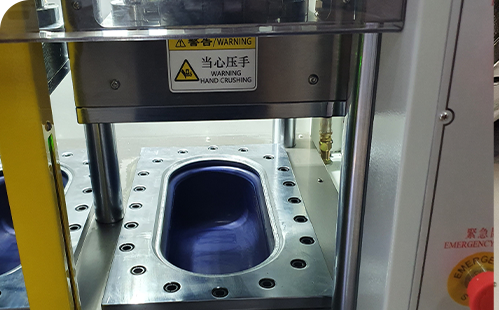
A1: The AC-700SF is a high-performance servo-driven moldless sole pressing machine designed for modern footwear manufacturing. Based on the principles of pressure extrusion and expansion-compression, it delivers omnidirectional uniform compression through a flexible bladder to achieve seamless and firm bonding between uppers and outsoles. It is applicable to three core processes: outsole lamination for multi-layer sole components, upper-to-outsole sole attaching on lasting lines, and secondary hold-pressing to reinforce adhesive strength. It fits running shoes, basketball shoes, outdoor hiking shoes, casual sneakers and other footwear with complex sole structures, and can be deployed on mass-production molding lines, sole preparation workshops as well as R&D sample development rooms.
Q2:What core pain points of shoe factories can this equipment solve compared with traditional wall-type sole presses?
A2:
- High mold cost: traditional presses need custom molds for each size and each left/right foot, bringing high expenses on mold manufacturing, storage and maintenance.
- Slow style changeover: mold replacement and re-adjustment takes hours, which cannot adapt to small-batch quick-turn orders.
- Insufficient and unstable pressure: hydraulic wall presses usually have a pressure ceiling of 15-20kg/cm², and pressure drifts with oil temperature, leading to high rework rates on complex soles.
- High energy and maintenance cost: hydraulic stations keep consuming power on standby, and have frequent issues like oil leakage and valve blockage. The AC-700SF eliminates mold costs, shortens changeover time, delivers higher stable pressure and reduces energy and maintenance workload.
二. Core Technology & Advantages FAQs
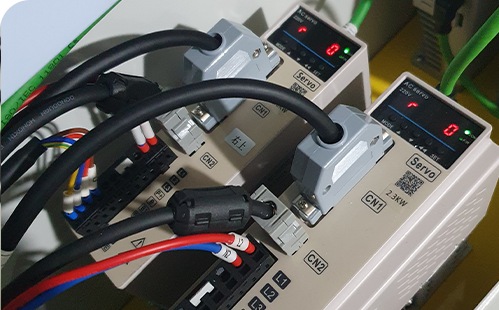
Q3: What are the core competitive advantages of the full servo motor drive system?
എ3:
- Stepless precise pressure adjustment: Pressure is continuously adjustable from 0 to 30 kg/cm², around 50% higher than typical hydraulic wall presses. Pressure profiles can be fine-tuned for different zones (toe, waist, heel) and different materials.
- Stable consistent output: Closed-loop pressure control maintains stable force regardless of voltage fluctuation or mechanical wear, greatly reducing batch-to-batch variation.
- High energy efficiency: The servo system only consumes power during active pressing cycles and consumes almost no power on standby, cutting overall energy use by roughly 30%.
- High reliability: Fewer moving parts and no hydraulic valve clogging or seal aging problems, leading to lower failure rates and less production downtime.
Q4:How does the moldless design work and what value does it bring?
A4:The machine uses a high-strength flexible rubber bladder inside the pressing chamber. When a cycle starts, the bladder expands inward from all sides and wraps around the sole. Fluid pressure distributes evenly across the contact surface and automatically conforms to any sole contour, without custom rigid molds.
It brings three key values:
- Cost saving: eliminates mold manufacturing, inventory and maintenance costs, and savings grow as the number of styles increases.
- Fast changeover: style switching only takes a few minutes via parameter adjustment, with no mold disassembly, ideal for small-batch fast-turn orders.
- Better surface finish: flexible compression leaves no pressure marks or scuffs on outsoles, especially valuable for light-colored, glossy or clear sole designs.
Q5: How does the dual-level safety protection system work?
A5:The machine is built with two layers of safety mechanisms:
- Intelligent obstacle detection: A high-precision photoelectric safety light curtain monitors the opening area in real time. If hands, tools or foreign objects enter the detection zone during operation, the machine triggers an emergency stop within milliseconds and activates an audible-visual alarm to prevent crushing injuries.
- Sensor fault self-locking: The system continuously self-diagnoses the safety sensor. If the sensor fails, is disconnected or is deliberately blocked, the system automatically alarms and locks all pressing functions, preventing operation under disabled safety conditions.
三. Technical Specifications FAQs
Q6: What are the complete technical parameters of the AC-700SF?
എ6:
| Item | Specification |
|---|---|
| Model | AC-700SF Multi-functional Servo-driven Moldless Sole Pressing Machine |
| Power supply | 220V / 60Hz / 1-phase or 380V / 50Hz / 3-phase (optional) |
| 8-hour production capacity | 1900 – 2100 pairs |
| Applicable shoe size | US size 5 – 15 (universal for left and right feet) |
| Drive type | Servo motor |
| Laminating pressure range | 0 – 30 kg/cm², stepless adjustable |
| Overall dimensions (L×W×H) | 1100 × 920 × 1910 mm |
| Net weight | 1260 kg |
| Control interface | Color touch screen |
| Safety features | Photoelectric safety light curtain + sensor fault self-locking |
四.Installation & Site Requirements FAQs
Q7: What are the on-site installation and environmental requirements?
എ7:
- Power & grounding: Prepare a dedicated power circuit matching the ordered voltage. A reliable protective earth connection with grounding resistance ≤ 4Ω is mandatory.
- Space allocation: Leave at least 1.2 meters of clear space in front for loading/unloading. Reserve ≥ 0.8 meters on both sides for maintenance and part replacement. Keep at least 0.5 meters of clearance at the rear for ventilation.
- Environment: Ambient temperature 10 – 40 °C, relative humidity ≤ 85% non-condensing. Keep away from heavy dust, corrosive fumes and strong vibration sources.
- Floor: Place on a flat, solid concrete floor with level variation ≤ 5 mm/m. The machine is fitted with adjustable leveling feet for fine adjustment.
五.Standard Operation Procedure FAQs
Q8: What is the standard operating procedure from startup to shutdown?
എ8:
- Pre-shift inspection: Confirm the emergency stop button is released. Check the safety light curtain for obstruction or dirt. Remove foreign objects from the pressing chamber. Inspect the bladder for wear. Verify cables are firmly connected.
- Power-up & parameter setup: Switch on main power and wait for the system to boot. Load the saved recipe or manually set pressure, hold time and other parameters. Run 2–3 empty cycles to verify smooth movement and normal safety response.
- Sample trial & calibration: Load the first pair of shoes and run a test cycle. Inspect bonding quality and fine-tune parameters. Repeat 2–3 times until quality meets standards, then save the recipe.
- Batch production: Load shoes and run cycles at a steady pace. Conduct random quality checks every 2 hours. For style changeover, simply recall the corresponding recipe.
- End-of-shift shutdown: Exit the running program and stop the servo system first. Clean the chamber and light curtain. Shut down the software, then turn off the main power breaker.
六.Troubleshooting FAQs
Q9: What are the common faults and troubleshooting methods in daily production?
എ9:
- Machine alarms and locks on startup: Check the alarm code to identify safety block or sensor fault. Clean the light curtain if blocked by glue or dust. Re-seat loose sensor cables, then reset the machine.
- Poor bonding, edge opening or bubbles: First verify proper glue activation and uniform application to rule out upstream issues. Increase pressure or extend hold time. Inspect the bladder for wear or leakage and replace if damaged.
- Unstable or fluctuating pressure: Check for unstable supply voltage; do not share the circuit with high-power equipment. Recalibrate the pressure sensor. Lubricate guide rails if mechanical binding exists.
- Abnormal noise or overheating from servo: Reduce pressure or add cycle intervals if running at maximum load continuously. Clear dust from motor ventilation grills. Grease transmission screws and guide rails.
- Touch screen unresponsive: Reboot the machine. Check for loose display cables. Clean the screen with a soft dry cloth to remove static and dust.
七.Preventive Maintenance FAQs
Q10: What is the preventive maintenance schedule for the equipment?
എ പത്ത്:
- Daily (before and after each shift): Wipe glue residue and debris from the chamber and bladder. Clean the safety light curtain and touch panel. Test emergency stop and safety light curtain function.
- Weekly: Apply lubricating grease to lifting guide rails and transmission screws. Tighten loose mechanical fasteners. Clear dust from control cabinet air vents.
- Monthly: Calibrate the pressure sensor against a reference gauge. Inspect the bladder for wear. Check cables for aging or damage. Verify safety light curtain response time.
- Quarterly / semi-annually: Inspect overall condition of the servo drive and transmission assembly. Deep-clean the electrical cabinet and tighten terminals. Replace worn consumable parts. Run a full performance test with sample shoes.
八. Delivered Accessories & After-sales Service FAQs
Q11: What is included in the delivery scope?
എ11:
- Standard delivery: English technical documentation (paper + PDF) including operation manual, electrical schematic, spare parts list and troubleshooting guide; a complete tool kit for routine maintenance; a small set of spare wear parts.
- Optional upgrades: Pressing bladders of different hardness, production data export module, barcode recipe recall system.
Q12: What is the warranty policy?
A12:12-month full-machine warranty for non-consumable parts, effective from delivery date. Pressing bladders, seals, filters and other normal wear parts are excluded. Damage from misuse, unauthorized modification or external impact is not covered.
Q13: What after-sales support is provided?
A13: Remote video troubleshooting service; on-site installation, commissioning and operator training available upon request; lifelong spare parts supply at factory cost; process technical support for parameter optimization.