
ASFROM Fabric Inspection Equipment FAQ
ASFROM Fabric Inspection Equipment FAQ
Fabric Inspection Equipment Base Q&A
ഒന്ന്. അടിസ്ഥാന ഉൽപ്പന്ന വിവരങ്ങൾ
Q1: What is AM‑635 Fabric Inspection & Rewinding Machine?
A1: AM‑635 Fabric Inspection & Rewinding Machine is an integrated textile finishing‑process equipment, integrating fabric inspection, meter‑yard counting, rewinding and electric cutting functions. It is equipped with upper‑lower contrast light‑boxes, infrared fabric‑tail auto‑stop and infrared edge‑alignment system. Tension rack plus differential gear realizes adjustable winding tightness. It applies to knitted, woven and non‑woven fabrics for detecting holes, defects and color difference, completing fabric re‑inspection, rewinding and fixed‑length cutting.
Extension: Compare with XMH‑E series: XMH‑E max speed 60m/min, max roll diameter 350mm, without electric cutter. AM‑635 max speed 50m/min, max roll diameter 380mm, standard‑equipped electric cutting‑knife worktable, suitable for frequent roll‑slitting work. Usually used behind laminating machine for re‑inspection and rewinding of composite fabrics.
Q2: What are the core technical parameters of AM‑635 Fabric Inspection & Rewinding Machine?
A2:
1.Model No.: AM‑635
2.Voltage:380V /50HZ 3‑Phases
3.Total power:1.74KW
4.Effective working width:2100mm
5.Max winding roll diameter:380mm
6.Max running speed:50m/min, dual‑inverter speed‑regulation
7.Roller configuration:5 feeding‑winding shafts;3 stainless‑steel spreading rollers;4 fabric guide shafts
8.Measurement: high‑precision meter/yard counter, accuracy 99.6%
9.Machine dimension:2250×3060×2250mm
10.N.W:900KG;G.W:1000KG
Extension: Do not run continuously at full 50m/min in practical production. Reduce speed for thin & high‑elastic fabric to avoid stretching deformation. Slow down for large‑diameter fabric rolls.
Q3: What are the main features of AM‑635 Fabric Inspection & Rewinding Machine?
A3:
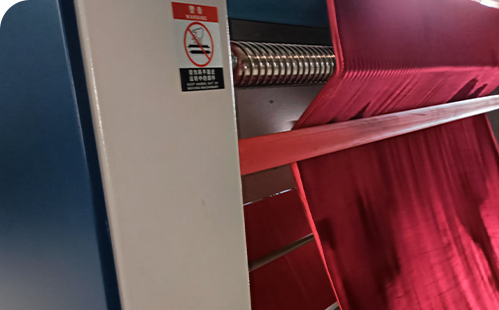
1.Wide‑width roller sets: 5 winding‑feeding shafts,3 stainless‑steel spreading rollers,4 fabric guide shafts. Effective width 2100mm, max roll diameter 380mm. Stainless‑steel rollers avoid fabric scratch.
2.Upper‑lower dual‑light‑box inspection: dual‑side lighting for simultaneous front‑back checking, easy detection of holes, knots, color difference and stains.
3.Infrared control system: infrared auto edge‑correction to prevent fabric wandering; infrared tail‑detect sensor triggers auto‑stop when fabric runs to end.
4.Dual tension adjustment: tension‑compensation tension‑rack cooperating with differential‑gear mechanism, flexible winding‑tightness setting for thin, thick and elastic fabrics.
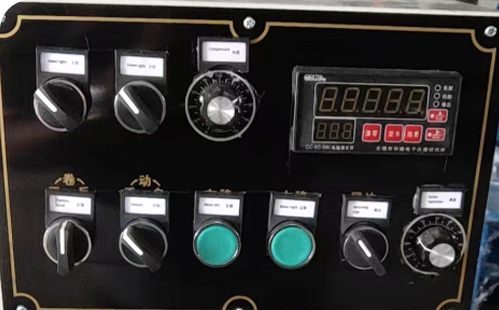
5.Multi‑mode operation: foot‑pedal start‑stop plus rear backup button. Forward for inspection & rewinding, reverse for unwinding. Winding unit can shift left‑right under manual mode.
6.Measurement & cutting: high‑precision meter/yard counter (99.6% accuracy). Standard‑equipped electric cutting‑knife worktable for direct roll slitting.
7.Dual‑inverter stepless speed regulation 0‑50m/min. Square‑tube steel‑plate frame with anti‑rust baking‑paint for stable mechanical performance.
Extension: Keep low tension for elastic knitted fabric; over‑tension causes permanent stretch deformation. Clean infrared sensors periodically, otherwise edge‑tracking or tail‑stop function fails.
2. ബാധകമായ വ്യവസായങ്ങളും വസ്തുക്കളും
Q4:What products and materials can AM‑635 Fabric Inspection & Rewinding Machine process?
A4:Suitable for finished knitted, woven and non‑woven fabrics. Perform defect inspection, meter‑yard counting, rewinding and electric slitting.
Extension: Reduce tension for high‑elastic spandex fabric to prevent stretch damage. Check rollers for burr for easily‑scratched micro‑fiber material. Only for flexible textiles; not for rigid board or foam sheet.
Q5:What production scenarios is AM‑635 Fabric Inspection & Rewinding Machine mainly used for?
A5:Applied in textile mills, shoe factories, luggage & furniture fabric processors. Used for re‑inspection after weaving or laminating, fabric quality‑check, rewinding, fixed‑length slitting. Can be installed behind laminator, output qualified rolls for cutting process.
Extension: Suitable for mass roll‑goods re‑inspection, as well as small‑batch multi‑spec slitting. Not for loose piece‑form fabric without roll.
三. Utility, Installation & Commissioning
Q6: What utility conditions are required for AM‑635 Fabric Inspection & Rewinding Machine?
A6:Power supply:380V 50Hz three‑phase, reliable protective earthing is mandatory. No compressed air required. Avoid excessive workshop ambient light which may interfere infrared sensors. Reserve space for fabric feeding‑outlet and maintenance.
Extension: Machine net weight 900KG, load‑bearing floor required. Prevent direct strong light onto infrared sensors to avoid tracking failure.
Q7: What are requirements for installation & placement of AM‑635 Fabric Inspection & Rewinding Machine?
A7:Place machine on flat hard load‑bearing floor and level the frame. Reserve surrounding clearance for fabric threading and maintenance. Keep away from heavy‑dust environment. Prevent strong direct light hitting infrared sensing parts.
Extension: Confirm doorway & aisle dimension before machine delivery due to large overall dimension. Reserve handling space for fabric rolls.
Q8:What is complete test‑running operating procedure for AM‑635 Fabric Inspection & Rewinding Machine?
A8:
1.Confirm reliable 3‑phase power earthing. Check free rotation of all rollers, clean dust on infrared sensor lenses.
2.Fabric threading: route fabric sequentially through feeding shaft, guide rollers, stainless‑steel spreading rollers, tension rack, upper‑lower inspection light‑box, finally onto winding shaft. Extension: Keep fabric flat & twist‑free during threading; twisted fabric will cause winding wrinkles.
3.Switch selector: Forward = inspection & rewinding; Reverse = unwinding. Manual mode enables left‑right movement of winding assembly.
4.Tension adjustment: Turn knob right for looser tension, left for tighter. Optimal state: tension‑rack lever stays between two fixed stoppers.
5.Winding tightness adjustment: Adjust differential‑gear step‑by‑step while machine is running. Never make one‑step large‑range parameter change.
6.Enable infrared edge‑alignment and fabric‑tail auto‑stop. Set inverter speed, reduce speed for thin elastic fabric.
7.Run trial test, inspect fabric defects under light‑box, check winding flatness, reset meter‑yard counter. Start mass‑production after trial‑run acceptance. Use electric cutter when roll‑slitting required.
8.Stop via foot‑pedal or rear‑panel button. Do not disassemble motor or electric components upon fault.
Q9: What precautions for tension and winding‑tightness adjustment?
A9:Standard lever position of tension‑rack is between two fixed stoppers. Keep looser tension for elastic fabric. Adjust differential‑gear step‑by‑step only during running; avoid large adjustment while machine stopped. Over‑tight winding stretches fabric; over‑loose causes roll collapse & shifting.
Extension: Re‑check tension setting when fabric gram‑weight or elasticity changes between batches; do not reuse old parameters directly.
4. യന്ത്രത്തിന്റെ ഘടനയും ഘടകങ്ങളും
Q10: What are the 5 core assemblies of AM‑635 Fabric Inspection & Rewinding Machine?
A10:5 modular core assemblies:
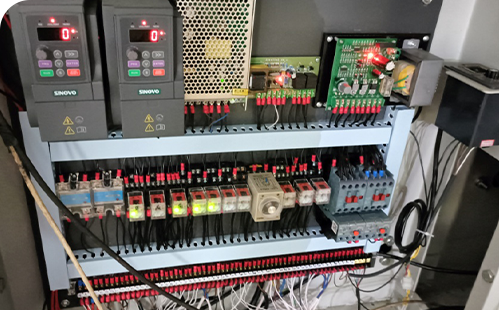
1.Square‑tube steel‑plate frame assembly; 2.Roller fabric‑spreading & conveying unit; 3.Inspection & cutting assembly; 4.Tension‑differential winding actuator; 5.Electric variable‑frequency control system.
‑Square‑tube steel‑plate frame: baking‑paint machine base.
‑Roller fabric‑spreading & conveying unit: winding‑feeding shafts, stainless‑steel spreading rollers, fabric guide shafts.
‑Inspection & cutting assembly: upper‑lower inspection light‑box, infrared edge‑alignment sensor, fabric‑tail tracking sensor, electric cutting‑knife worktable.
‑Tension‑differential winding actuator: tension‑compensation tension rack, differential‑gear mechanism.
‑Electric variable‑frequency control system: inverters, motor groups, meter‑yard counter, foot‑pedal switch, selector knobs.
Extension: Wearing‑parts list: spreading‑roller rubber coating, infrared sensor lens, foot‑pedal switch. Spare‑part stock recommended for less downtime.
Q11: What is the function of upper‑lower contrast inspection light‑box?
A11:Upper and lower simultaneous illumination for double‑side fabric transmission inspection. Help operator quickly detect holes, knots, stains, color difference and weaving defects for fabric quality‑check.
Q12: What are functions of tension‑rack plus differential‑gear combined mechanism?
A12:Tension‑rack provides real‑time tension compensation. Differential‑gear adjusts rotating‑speed difference between feeding and winding side. Combined control realizes adjustable winding tightness, adapts to fabrics of various thickness & elasticity, preventing fabric stretch or roll collapse.
五.Safety, Maintenance & Troubleshooting
Q13: What safety notes for AM‑635 Fabric Inspection & Rewinding Machine?
എ പതിമൂന്ന്:
1.Machine must be reliably earthed for three‑phase power supply against electric‑shock hazard.
2.Keep hands away from rotating rollers and fabric‑roll nip zone during running to avoid winding injury.
3.Keep hands away from cutting edge while using electric cutter. Cut off main power before maintenance.
4.Shutdown & power‑off before cleaning rollers and sensor lenses.
5.Do not open electrical protective cover during machine operation.
6.Protect foot‑pedal switch; avoid heavy‑object pressing pedal which may trigger accidental start‑up.
Extension: Operators with long hair shall wear safety cap to prevent hair winding into rollers.
Q14:What is maintenance schedule for AM‑635 Fabric Inspection & Rewinding Machine?
A14:Per shift: Clean lint from guide & spreading rollers; wipe infrared‑sensor lenses; test foot‑pedal & backup start‑stop button; verify meter‑yard counter reading.
Weekly: Check smooth rotation of all rollers; tighten transmission fasteners; check differential‑gear oil level; remove dust on light‑box surface.
Every half‑year: Fasten all electrical terminals; check motor abnormal noise; inspect foot‑pedal wear; check roller burr and rubber‑coating wear.
Yearly: Complete machine overhaul. Evaluate wear condition of motor, bearings and differential‑gear; replace aged & worn spare‑parts.
Extension: Remove large fabric rolls from shafts for long‑term shutdown, to avoid permanent roller deformation under sustained load.
Q15: Common faults and troubleshooting guidelines?
A15:
- Winding wrinkles: Check twisted fabric during threading; adjust tension‑rack lever to middle position; clean lint adhered on rollers.
- Persistent fabric wandering: Wipe infrared edge‑alignment sensor lens; check edge‑correction‑motor movement; ensure fabric enters sensing zone.
- Inaccurate meter‑yard counting: Ensure measuring‑wheel presses tightly against fabric; clean lint & dust on measuring‑wheel surface.
- No auto‑stop at fabric tail: Wipe fabric‑tail infrared sensor; make sure fabric can block sensing area.
- One‑side loose winding: Check roller horizontal level; readjust tension and differential‑gear; verify fabric feeding skew. Extension‑added frequent site faults:
- Stretched elastic fabric: Tension value too high, loosen tension and reduce machine speed.
- Collapsed loose roll: Overall winding tension insufficient, moderately increase differential‑gear tight‑winding gear.
- Foot‑pedal failure: Inspect pedal wiring for crush damage; use rear‑panel backup button for temporary production.
六.Model Selection
Q16: Which customers are suitable for AM‑635 Fabric Inspection & Rewinding Machine?
എ16:Recommended for textile mills, shoe factories, luggage & furniture fabric processors. For inspection, quality‑check, rewinding and fixed‑length slitting of knitted, woven and non‑woven fabrics. Built‑in electric cutter for frequent roll‑changing & slitting. Can connect upstream laminator (AF‑MS020 / AFM‑W220‑H), inspected rolls go to cutting process.
Extension:
✅ Suitable scenarios: Roll‑form fabric within 2100mm width; requiring defect‑inspection + length‑count + slitting; mixed‑production of elastic, thin and thick fabrics.
❌ Unsuitable scenarios: Loose non‑roll fabric pieces; rigid plate / thick foam; seldom slitting without cutter requirement (choose XMH‑E series instead).
Alternative suggestion: Select XMH‑E fabric inspection rewinding machine if higher line‑speed is preferred and electric cutter is unnecessary.