
Domande frequenti sulla macchina per montaggio su forma a gravità ASFROM
Domande frequenti sulla macchina per montaggio su forma a gravità ASFROM
Gravity Type Lasting Machine Base Q&A
一.Application & Market Positioning FAQs
Q1: What shoe styles and production scenarios is AB‑880E machine suitable for?
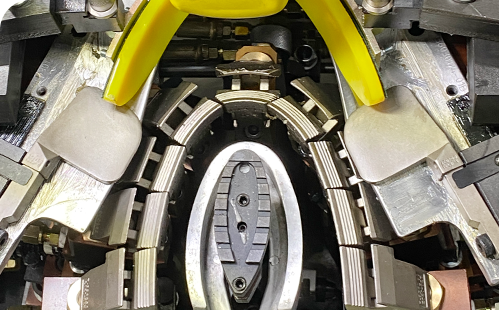
A1: AB‑880E is an upgraded gravity‑type intelligent toe lasting machine iterated from traditional toe‑lasting equipment, following the design concept “Easy to make shoe, Make easy shoe”. It is mainly developed for shoe‑making enterprises suffering from insufficient experienced senior adjusting technicians. It lowers professional skill threshold for operators and reduces reliance on veteran technicians. It is widely applicable for mass‑production of men’s & women’s leather shoes, sports shoes and casual shoes. It fits medium‑sized shoe factories with frequent multi‑style mixed‑batch production, and adapts to continuous single‑shift or two‑shift workshop production lines.
Q2: What core pain points of shoe factories can this equipment solve?
A2: Conventional old‑generation toe lasting machines demand long‑time complicated debugging work during shoe‑last switching, heavily depending on highly‑skilled workers. Improper parameter setting easily triggers common defects such as vamp tearing, toe wrinkles, shoe‑waist loose‑edge and shoe‑last retreating. Core wearing‑part replacement requires disassembly of surrounding mechanical assemblies, which brings long production‑line downtime and higher maintenance cost. AB‑880E is equipped with abundant tool‑free quick‑adjust structures and V3.0 PLC memory‑type control system. It shortens style‑change cycle, cuts defective rate, simplifies component replacement and daily maintenance work.
Q3: What are the full core competitive advantages of this model?
A3:
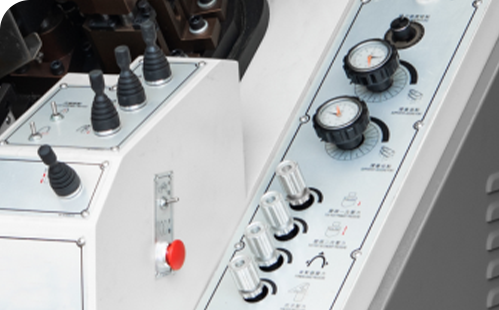
- New‑generation V3.0 intelligent PLC operating system with powerful shoe‑last recipe memory, multi‑language human‑machine interface and machine self‑inspection function;
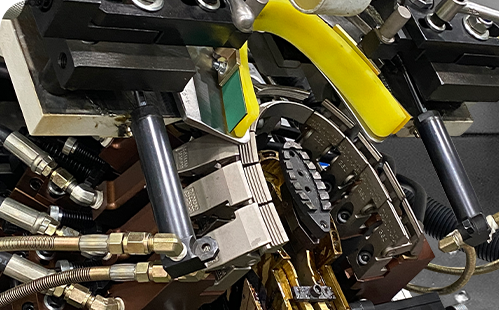
- 18 groups of special quick‑adjust functions, modular tool‑free quick‑change for key wearing components, greatly cutting style‑switch debugging downtime;
- Mature high‑quality lasting technical suite, optimizing forming effect for different shoe‑last contours;
- Multi‑dimensional upper‑protection mechanisms to effectively prevent vamp rupture and shoe‑last displacement;
- Optional self‑developed automatic hot‑melt gluing (auto cement) module to reduce manual‑gluing labor cost;
- Stable gravity‑type hydraulic power system, reliable performance under long‑term continuous mass‑batch production.
二. Intelligent V3.0 Control System FAQs
Q4: What are the key features of the V3.0 control system?
A4:IIt adopts industrial PLC plus color touch‑screen HMI, supporting multi‑language switching to satisfy overseas‑factory usage scenarios. It can store up to 200 groups of shoe‑last parameter recipes. When switching shoe styles, operators can recall pre‑saved parameter files for one‑click automatic adjustment, avoiding repeated manual debugging. The graphic‑based interface is concise and user‑friendly, shortening new‑staff training cycle. Built‑in machine self‑inspection function realizes real‑time monitoring of equipment running status and pop‑up alarm for abnormal signals.
Q5:What production‑management‑oriented functions are built‑inside?
A5:Built‑in production‑output counting function for shift‑based production‑data statistics. The system records key operation logs for production‑quality traceability. Operators can quickly call pre‑configured parameters for pointed‑toe shoes, round‑toe shoes and square‑toe shoes via classified shoe‑type shortcut keys on touch screen.
Q6: Is there permission management for parameter modification?
A6: Yes, two‑level authority management is configured. Ordinary operator account only allows calling existing shoe‑last recipes and performing basic start‑stop operations. Modification of core parameters including action‑time, pressure and stroke is locked behind engineer‑level password, preventing mass vamp scrap caused by mis‑operation of front‑line workers.
三. Gravity‑Type Hydraulic Core System FAQs
Q7: What is the highlight of this gravity‑type hydraulic system?
A7:It adopts mature gravity‑type hydraulic circuit design. The gravity‑type structure delivers steady pressure output with small‑amplitude pressure fluctuation during each lasting cycle. The heavy‑duty welded frame improves anti‑vibration performance, adapting to ordinary‑load workshop continuous‑production environment.
Q8: What protection mechanisms are built‑in for hydraulic system?
A8:It integrates hydraulic over‑pressure protection. When pressure surges beyond safe threshold, the system will trigger alarm prompt and restrict machine executing movements, preventing hydraulic‑pipe burst and damage to hydraulic valve components. Operators shall keep hydraulic oil within standard liquid‑level range during daily production.
四.Quick‑Adjust & Tool‑Free Replacement Mechanism FAQs
Q9: What quick‑adjust and tool‑free replacement configurations are included in the 18‑group special functions?
A9:
- Tool‑free quick‑change for pincers, wiper and toe band;
- External‑valve quick‑adjust structure with clear scale marks; no need to open machine housing for parameter tuning;
- Manual toe‑deflection adjustment, specially for offset‑toe shoe lasts to realize compact toe forming;
- Supporter group forward‑backward quick adjustment; rapid gap adjustment between supporter and first pincer;
- Tool‑free manual quick adjustment for head‑stock;
- Injector left‑right foot automatic conversion function;
- One‑click recall for 200 stored shoe‑last parameter recipes via V3.0 system.
Q10: ow much time can be saved during style change‑over compared with traditional equipment?
A10: Key‑part replacement time comparison:
‑ Change pincer: 10 s vs traditional 2 min
‑ Change wiper: 15 s vs traditional 3 min
‑ Change toe band: 20 s vs traditional 4 min
‑ Head‑stock manual adjustment: 2 min vs traditional 8 min
‑ Toe‑deflection manual adjustment: 20 s vs traditional 20 min
五.Core Lasting Forming & Upper‑Protection Technical FAQs
Q11: What key technologies guarantee stable finished‑shoe quality and prevent upper damage?
A11:
- Rear‑pincer corner automatic adjustment: Rear pincers automatically rotate angle to fit shoe‑last waist radian, eliminating waist‑position wrinkles and loose‑edge defects;
- Left‑right foot automatic exchange function: Automatically adapts lasting requirement for left‑foot and right‑foot shoe lasts, improving overall lasting consistency;
- Supporter two‑stage ascending function: Slow‑rise buffer movement for the supporter, effectively prevents vamp tearing and shoe‑last retreating;
- Pincer slide function: Realizes free sliding of upper material during clamping process, releases partial material tension and avoids vamp rupture;
- Injector left‑right foot automatic conversion: Optimizes bonding length and bonding quality on shoe side;
- Auxiliary toe band (optional): Restrains upper spring‑back force during lasting process and prevents vamp outward bouncing;
- Auxiliary wiper (optional): Cooperates with main wiper to realize fine laminating treatment on shoe‑waist area;
- Integrated data‑simulation tooling‑design technology: Optimizes movement track of each executing component via data‑driven simulation, improving product consistency in mass‑batch production.
Q12: How do these technologies perform under mass continuous two‑shift production?
A12:Under long‑term continuous‑running conditions, the gravity‑type hydraulic system maintains stable pressure output. Multi‑layer upper‑protection structures effectively restrain common bad phenomena such as toe wrinkle, waist loose‑edge and vamp tearing. According to official performance evaluation metrics, it achieves good scores on side‑angle flatness, fabric freedom, lasting true‑congruence, production efficiency, adjustment efficiency and controllability for mixed‑style mass‑production.
六.Optional Functional Modules & Selection Suggestion FAQs
Q13: What optional accessories are available? Which scenarios recommend enabling them?
A13:
- Auxiliary toe band (optional): Restrains upper spring‑back force during lasting process and prevents vamp outward bouncing. Recommend selecting for shoes adopting soft elastic upper fabrics; for hard‑material simple‑style shoes, customers can skip this option to cut procurement cost.
- Auxiliary wiper (optional): Cooperates with main wiper to realize fine laminating treatment on shoe‑waist area. Highly recommended for complex‑curve high‑grade leather shoes; not mandatory for plain‑surface casual‑sport shoes.
Q14: What production benefits will optional auto‑cement bring?
A14:The optional self‑developed automatic hot‑melt gluing module adopts mechanical metering & coating technology. It precisely controls glue dosage and coating position, avoiding glue overflow, insufficient gluing and glue waste caused by manual brushing. It can save manual‑gluing‑station labor and stabilizes bonding quality with high‑temperature hot‑melt adhesive. If customers do not select this module, factories can retain conventional manual gluing workflow for cost‑limited projects.
七.Complete Technical Parameter FAQs
Q15: What are the full official specifications of AB‑880E?
A15: Model: AB‑880E Gravity‑Type Intelligent Toe Lasting Machine
‑ Overall Machine Dimension: 1660 mm × 980 mm × 1980 mm
八. On‑Site Installation & Environment Matching FAQs
Q16: What power, space and environmental requirements before installation?
A16:
- Power supply: Stable three‑phase power source is required; reliable grounding connection must be completed for electrical safety;
- Space: Reserve at least 1.2‑meter operating clearance around the machine for operator movement and component replacement;
- Environment: The workshop shall maintain good ventilation; avoid heavy‑dust and high‑humidity circumstance to protect hydraulic valve blocks and electrical components;
- Ground: Installation ground shall be flat and solid to bear machine weight, preventing equipment offset induced by long‑time vibration.
九. Standard Startup & Production Operation SOP FAQs
Q17: What is the complete standardized operating procedure from power‑on to mass‑production?
A17:
- Pre‑startup inspection: Check grounding condition of power supply; confirm hydraulic oil level stays within normal scale; test emergency‑stop button validity; clean residual glue on pincers, wiper and toe‑band surfaces;
- Power‑on: Switch on main power supply, enter V3.0 touch‑screen interface; recall corresponding shoe‑last recipe or manually set relevant parameters;
- Idle test run: Execute multiple empty cycles without shoe last, check for abnormal noise, oil leakage or system alarm prompts;
- Sample debugging: Place shoe last and upper on working station, produce test sample piece. Fine‑tune parameters until lasting quality fully meets factory internal quality standards;
- Formal mass‑production: Launch batch production; operators conduct random sampling inspection for finished shoes during each shift;
- Shift‑end shutdown: Clean surface glue residue; turn off heating function firstly, then stop main motor; cut off total power supply for long‑time off‑duty.
十.Common Abnormality & Trouble‑Shooting Tips FAQs
Q18: What frequent‑seen faults may happen in daily workshop, and quick check points for operators?
A18:
• Phenomenon 1: Upper / vamp tearing during lasting
十一.Tiered Complete Routine Maintenance FAQs
Q19: What maintenance items need to be done daily / weekly / monthly / quarterly?
A19:
✅Daily (before and after each production shift):
✅Weekly:
✅Monthly:
✅Quarterly:
十二.Delivered Accessories & Technical Documents FAQs
Q20: What items will be delivered together with the machine?
A20:
- Technical documents (paper hard‑copy + PDF electronic version): Complete English‑language operation manual, hydraulic circuit schematic diagram, electrical schematic diagram, spare‑parts list, parameter‑setting guide and common‑fault troubleshooting manual;
- Standard delivered accessories: A full set of standard tool kit for daily machine adjustment and maintenance work.
十三.Warranty Scope & After‑Sales Technical Support FAQs
Q21: What is the exact warranty scope, and which parts are excluded?
A21:12‑month full‑machine warranty for non‑consumable parts.
Consumable wearing parts excluded from warranty: pincers, wiper, toe band, glue pump, hydraulic sealing rings, rubber gripping sleeves.
Q21: What after‑sales technical services are provided?
A21:
- Remote video debugging and remote fault‑diagnosis service;
- Online operator operation‑skill training guidance; door‑to‑door on‑site service can be arranged as required;
- Lifelong spare‑parts supply at factory cost price for customer follow‑up replacement.